

>> Overview
Staphylococcus aureus is a Gram-positive bacterium widely recognized for its clinical importance and ability to cause a broad range of infections. It is commonly found on the skin and in the nasal passages of healthy individuals, but under certain conditions, it can become pathogenic. Its structural features and biochemical properties make it a key organism in microbiology and medical diagnostics.
>> Shape and Arrangement
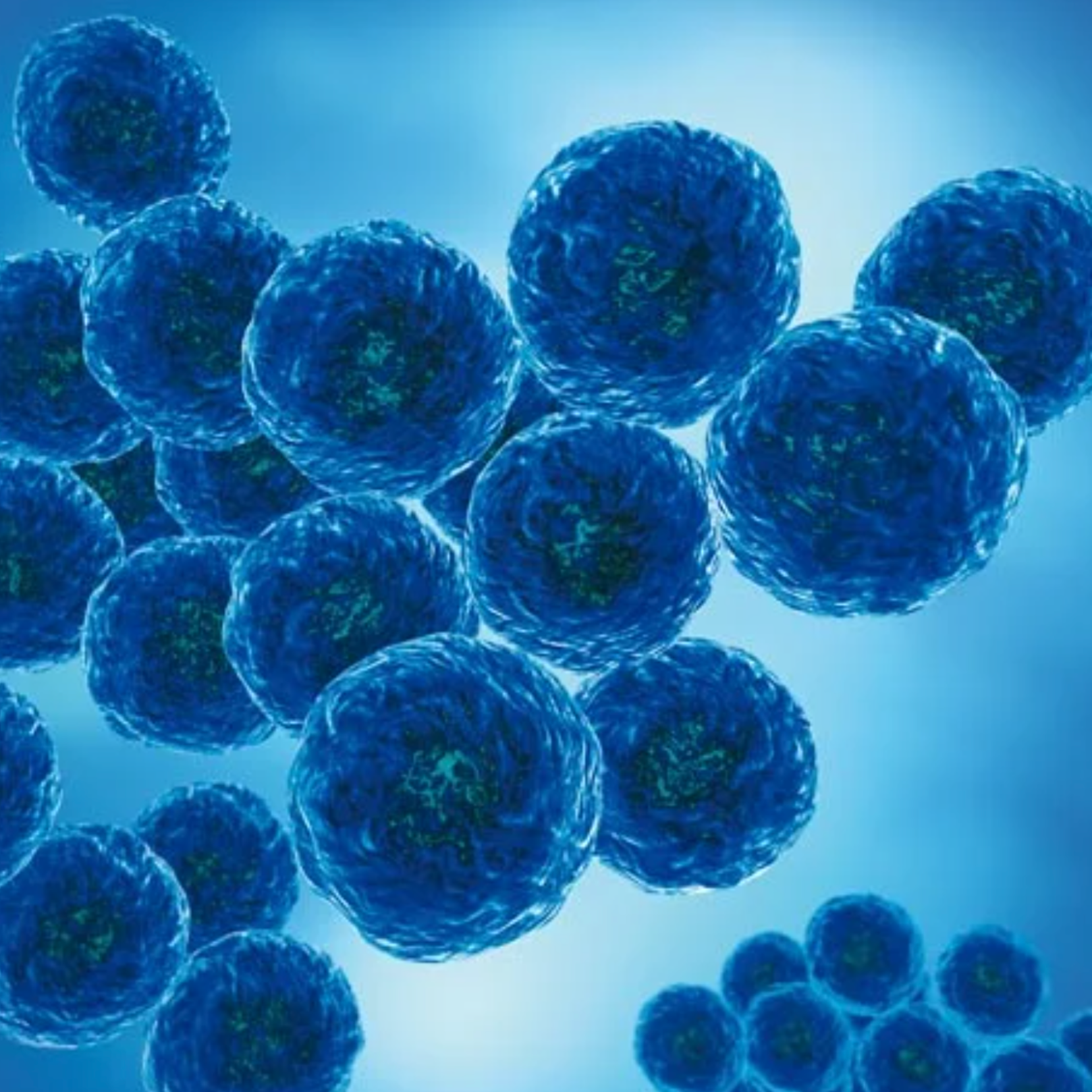
Staphylococcus aureus cells are spherical in shape (cocci) and characteristically arranged in irregular, grape-like clusters. This clustering pattern occurs because the cells divide in multiple planes and remain attached after division. Occasionally, they may appear in pairs or short chains, but clusters remain the most distinctive arrangement.
>> Size
The individual cells of S. aureus typically measure around 0.5 to 1.0 micrometers in diameter. Their small size allows efficient nutrient uptake and contributes to their rapid growth under favorable conditions.
>> Cell Wall and Staining Characteristics
Staphylococcus aureus is classified as a Gram-positive bacterium, meaning it retains the crystal violet stain and appears purple or violet under a microscope after Gram staining. This is due to its thick peptidoglycan layer, which provides structural strength and protection. Unlike Gram-negative bacteria, it lacks an outer membrane, making its cell wall structurally simpler but still robust.
>> Motility and Spore Formation
This bacterium is non-motile, as it does not possess flagella or any structures for movement. Additionally, S. aureus is non-spore forming, meaning it does not produce endospores for survival under harsh environmental conditions. Instead, it relies on other mechanisms such as biofilm formation for persistence.
>> Capsule and Virulence Factors
Some strains of S. aureus produce a capsule composed of polysaccharides, which plays a significant role in its pathogenicity. The capsule helps the bacterium evade the host immune system, particularly by resisting phagocytosis. This contributes to its ability to establish infections and survive within the host.
>> Colony Morphology and Hemolysis
On solid culture media, S. aureus forms round, smooth, and convex colonies. A distinguishing feature is its golden-yellow pigmentation, which gives the organism its name “aureus, ” meaning “golden.”
When grown on blood agar, it typically exhibits beta-hemolysis, producing a clear zone around colonies due to the complete destruction of red blood cells. This hemolytic activity is an important diagnostic characteristic.
>> Biochemical Features
Staphylococcus aureus exhibits several key biochemical properties that aid in its identification:
It is catalase positive, helping it break down hydrogen peroxide
It is coagulase positive, which distinguishes it from other Staphylococcus species
It can ferment mannitol, often used in selective media like Mannitol Salt Agar
These features are routinely used in clinical microbiology labs for confirmation.
>> Clinical Significance
Staphylococcus aureus is responsible for a wide range of infections, including skin and soft tissue infections, abscesses, pneumonia, endocarditis, osteomyelitis, and food poisoning. Some strains, such as Methicillin-resistant Staphylococcus aureus (MRSA), are particularly concerning due to their resistance to multiple antibiotics. It is a major cause of both community-acquired and hospital-acquired infections.