
>> The Core Idea
This article introduces a new CRISPR approach where DNA, instead of RNA, is used to guide Cas12 enzymes toward RNA targets. The researchers created a special DNA guide called ΨDNA, which acts like a CRISPR guide RNA but is more stable, easier to synthesize, and potentially more cost-effective.
>> What the Technology Does
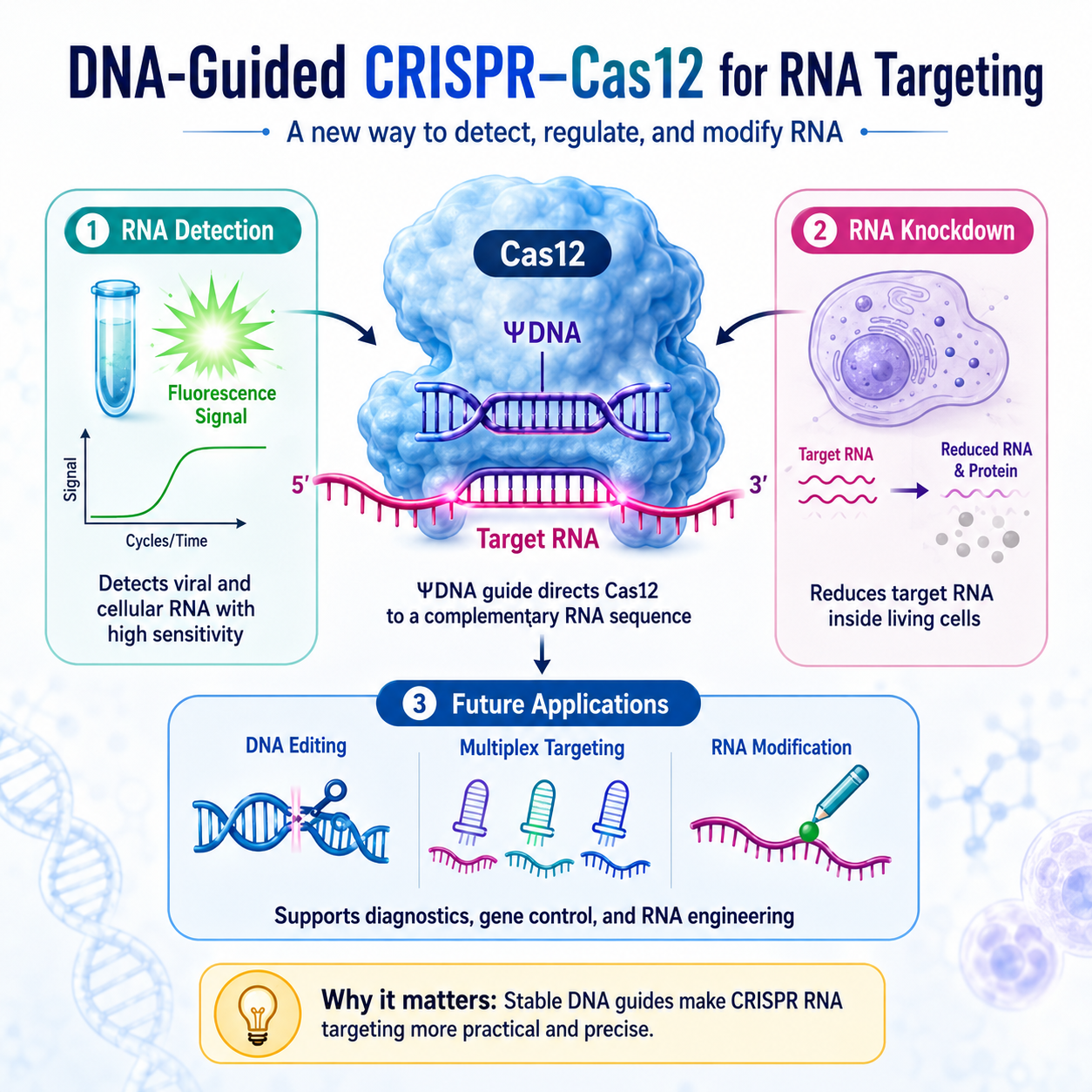
Using ΨDNA, Cas12 enzymes such as AsCas12a and Cas12i1 can detect specific RNA molecules and also reduce RNA levels inside living cells. This expands Cas12 beyond its traditional role in DNA editing and makes it useful for RNA detection, RNA knockdown, and RNA modification.
>> Why It Is Important
RNA controls how genes are expressed and how proteins are made. Being able to precisely detect or reduce RNA can help in disease diagnosis, gene regulation, and future therapeutic research. The study showed that the ΨDNA–Cas12 system could accurately detect viral RNA, including hepatitis C virus RNA in clinical samples.
>> Cellular RNA Control
Inside human cells, ΨDNA-guided Cas12 reduced target RNA transcripts by interfering with translation and promoting RNA reduction. In optimized experiments, the system achieved strong knockdown of multiple genes, reaching around 70–95% reduction.
>> Key Advantage
Compared with some RNA-targeting CRISPR tools like Cas13, this system showed lower off-target effects because it does not broadly cleave RNA. This makes it a cleaner and more precise tool for RNA regulation.
>> Broader Applications
The platform can target multiple RNAs at once, combine DNA editing and RNA knockdown using one Cas12 enzyme, and even modify RNA when Cas12 is fused with enzymes such as RNase H or METTL3.
>> Conclusion
The article shows that ΨDNA-guided CRISPR–Cas12 is a powerful new platform for RNA detection, RNA regulation, and RNA modification. In simple terms, the researchers have turned Cas12 into a more flexible tool that can work not only on DNA, but also on RNA.