
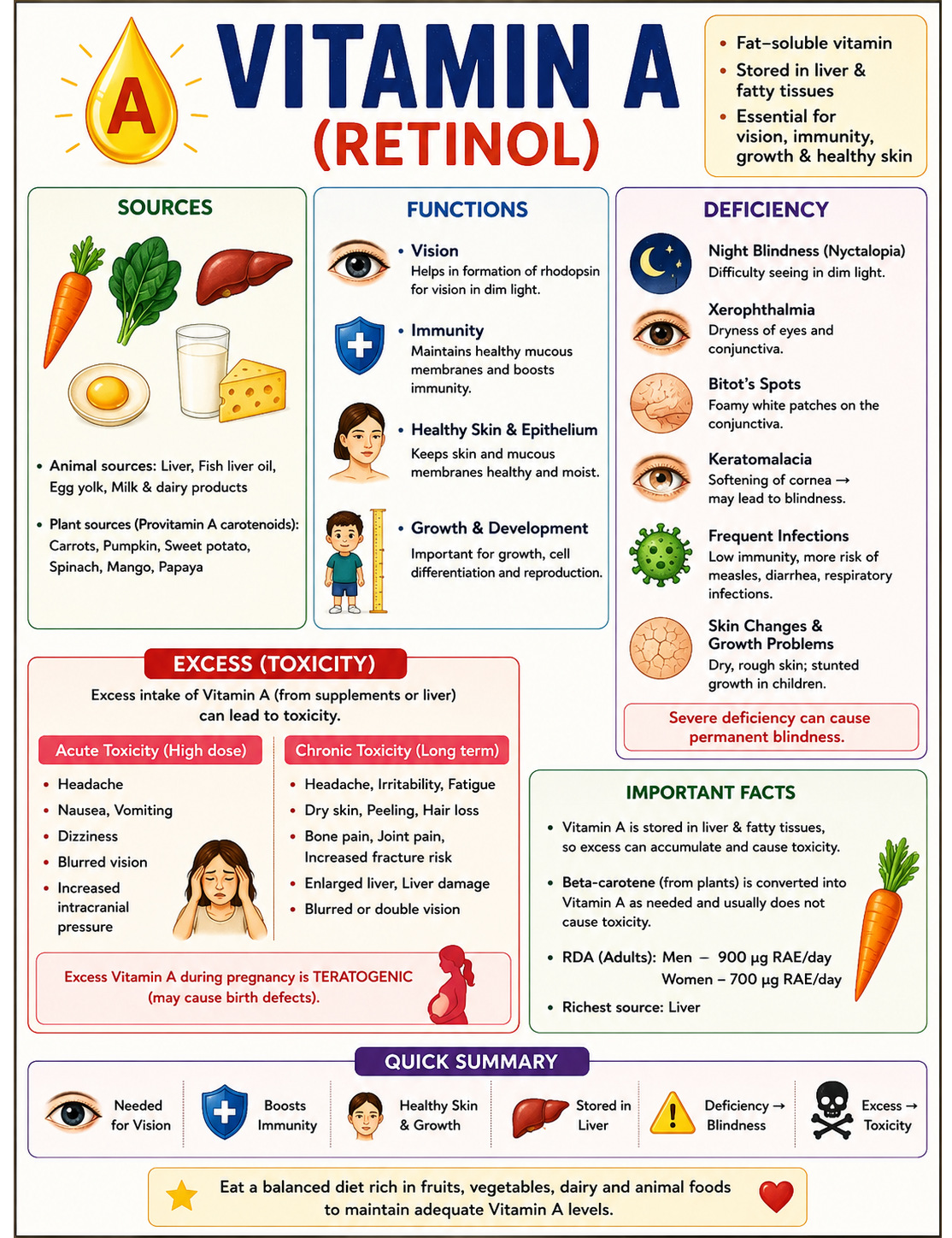
Vitamin A, also known as Retinol, is a fat-soluble vitamin that plays a vital role in maintaining overall health. It is stored in the liver and fatty tissues, allowing the body to utilize it when needed. This essential nutrient supports healthy vision, strengthens immunity, promotes skin health, and contributes to normal growth and development. Since the body cannot produce sufficient amounts on its own, obtaining adequate Vitamin A through diet is crucial for maintaining optimal health.
>> What Are the Major Sources of Vitamin A?
Vitamin A is available from both animal and plant-based foods. Animal sources provide preformed Vitamin A, which is readily utilized by the body, while plant sources contain carotenoids that are converted into Vitamin A as needed.
>> Animal Sources of Vitamin A
Liver and fish liver oil
Egg yolk
Milk and dairy products
Butter and cheese
>> Plant Sources (Provitamin A Carotenoids)
Carrots
Pumpkin
Sweet potato
Spinach and other leafy greens
Mango
Papaya
Including a variety of these foods in your daily diet helps ensure adequate Vitamin A intake.
>> Functions of Vitamin A in the Human Body
> Supports Healthy Vision
Vitamin A is essential for the formation of rhodopsin, a pigment found in the retina that enables vision in low-light conditions. Adequate Vitamin A intake helps maintain normal eyesight and prevents night vision problems.
> Strengthens the Immune System
Vitamin A helps maintain the integrity of mucous membranes lining the respiratory, digestive, and urinary tracts. These protective barriers play a key role in preventing infections and supporting overall immune function.
> Maintains Healthy Skin and Epithelial Tissues
The vitamin supports the growth and repair of skin cells and mucosal tissues. It helps keep the skin smooth, healthy, and resistant to environmental damage.
> Promotes Growth and Development
Vitamin A is involved in cell differentiation, reproduction, and normal growth. It is especially important during childhood, adolescence, and pregnancy for proper development.
> Signs and Symptoms of Vitamin A Deficiency
Vitamin A deficiency remains a significant public health concern in many parts of the world. Insufficient intake can affect vision, immunity, and growth.
> Night Blindness (Nyctalopia)
One of the earliest signs of deficiency is difficulty seeing in dim light or at night.
> Xerophthalmia
A condition characterized by dryness of the eyes and conjunctiva due to inadequate tear production.
> Bitot’s Spots
These are foamy white patches that develop on the conjunctiva and are a classic sign of Vitamin A deficiency.
> Keratomalacia
Severe deficiency can lead to softening of the cornea, potentially resulting in irreversible blindness if left untreated.
> Increased Risk of Infections
Low Vitamin A levels weaken immune defenses, increasing susceptibility to respiratory infections, diarrhea, and diseases such as measles.
> Skin and Growth Problems
Deficiency may cause dry, rough skin and can impair normal growth and development in children.
>> Vitamin A Toxicity: Can Too Much Be Harmful?
Since Vitamin A is stored in the body, excessive intake can accumulate over time and lead to toxicity, particularly from supplements or excessive consumption of liver.
Acute Toxicity
Acute toxicity usually occurs after consuming very high doses and may cause:
Headache
Nausea and vomiting
Dizziness
Blurred vision
Increased intracranial pressure
Chronic Toxicity
Long-term excessive intake can result in:
Persistent headaches
Fatigue and irritability
Dry, peeling skin
Hair loss
Bone and joint pain
Increased fracture risk
Liver enlargement and liver damage
Blurred or double vision
Vitamin A and Pregnancy
Excessive Vitamin A intake during pregnancy can be teratogenic, meaning it may increase the risk of birth defects. Pregnant women should avoid high-dose Vitamin A supplements unless advised by a healthcare professional.
>> Recommended Daily Intake of Vitamin A
The recommended dietary allowance (RDA) for adults is:
Men: 900 µg RAE/day
Women: 700 µg RAE/day
A balanced diet typically provides sufficient Vitamin A for most healthy individuals.
>> Important Facts About Vitamin A
Vitamin A is stored primarily in the liver and fatty tissues, making it possible for excess amounts to accumulate over time. Unlike preformed Vitamin A from animal sources and supplements, beta-carotene from plant foods is converted by the body according to its needs and is generally not associated with toxicity. Among natural foods, liver remains one of the richest sources of Vitamin A.
>> Conclusion
Vitamin A is essential for maintaining healthy eyesight, immunity, skin, and overall growth. Consuming a balanced diet rich in fruits, vegetables, dairy products, and other nutrient-rich foods helps ensure adequate Vitamin A levels while avoiding the risks associated with excessive intake.