
>> AI-Driven Programmable Biology: A New Era
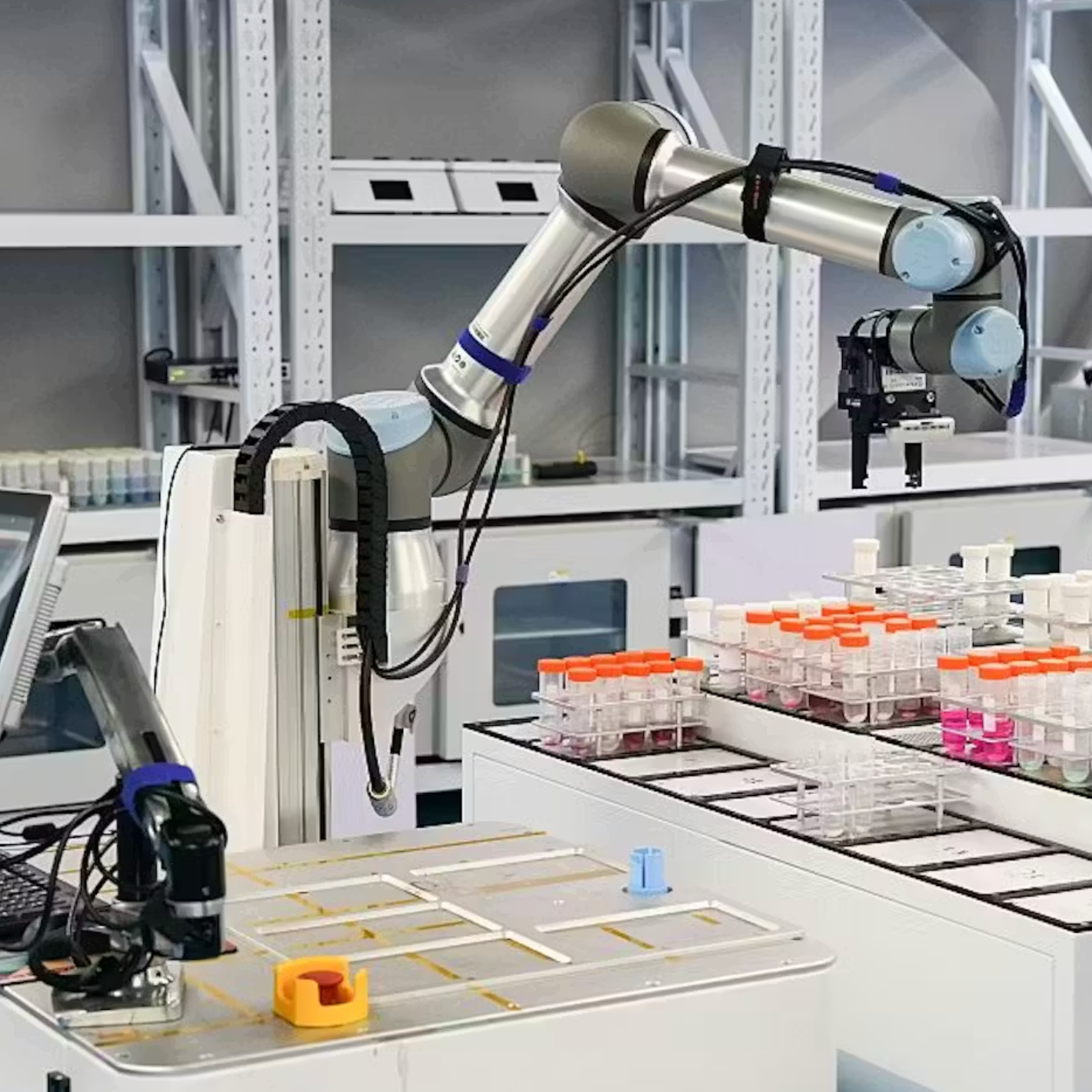
Artificial intelligence is rapidly transforming biological research by enabling systems to autonomously design, execute, and optimize experiments. A notable example emerged in February 2026, when OpenAI’s GPT-5, in collaboration with Ginkgo Bioworks, designed and executed over 36, 000 biological experiments using robotic cloud laboratories. In this setup, AI proposed experimental designs, automated systems carried them out, and results were fed back into the model for continuous refinement. This closed-loop system reduced protein production costs by 40% and marked the rise of programmable biology, where biological systems are designed digitally and realized physically.
>> From Observation to Engineering Biology
Biology has evolved through distinct phases. Initially focused on observation, scientists mapped genomes and understood genetic structures. The next phase introduced control through tools like CRISPR, enabling targeted gene editing. Today, AI is driving a third phase—design—where biological systems are engineered through iterative cycles. Unlike traditional hypothesis-driven experiments, AI-driven biology follows an engineering model: design, build, test, and refine. This allows thousands of variations to be explored simultaneously, significantly accelerating discovery timelines.
>> AI in Protein Design and Drug Development
One of the most impactful applications of AI in biology is protein design. Proteins, which perform essential cellular functions, are complex and sensitive to small changes. Traditionally, designing them required years of trial and error. AI models trained on vast protein datasets can now predict structural and functional outcomes of mutations and even generate entirely new proteins. This advancement is accelerating drug discovery and vaccine development, offering faster responses to emerging diseases and reducing development costs.
>> The Dual-Use Challenge
Despite its benefits, AI-driven biology presents significant risks due to its dual-use nature. Technologies designed for beneficial purposes can also be misused. AI systems integrated with automated labs can potentially optimize harmful biological agents, such as enhancing virus transmissibility or enabling immune evasion. Studies have shown that AI can even guide users through processes like reconstructing viruses from synthetic DNA, raising concerns about lowering the barrier to developing biological threats.
>> Accessibility and Emerging Risks
Research indicates that AI may empower individuals with limited biological expertise. One study found that novices using AI performed complex biological tasks with significantly higher accuracy and ease, often accessing sensitive information despite safeguards. Another study suggested that while full replication of advanced workflows remains challenging, AI assistance improves efficiency and success rates in key steps. Combined with the rise of cloud-based automated labs, this reduces traditional barriers, making advanced experimentation more accessible than ever before.
>> The Growing Governance Gap
Current regulatory frameworks are not equipped to handle AI-driven biological capabilities. Biological research regulations do not account for AI automation, while AI policies often overlook biological risks. DNA synthesis screening remains largely voluntary, and global agreements like the Biological Weapons Convention lack provisions for AI. Additionally, existing safety evaluations for AI models are often opaque and insufficient for assessing real-world risks, creating a widening gap between technological capability and oversight.
>> Efforts Toward Risk Mitigation
Several organizations and governments are proposing solutions to address these challenges. These include implementing risk-based access controls for AI tools, mandating DNA screening, improving model safety evaluations, and governing sensitive biological data. Some AI companies have introduced voluntary safety measures, such as stricter risk thresholds and enhanced monitoring systems. However, these efforts remain fragmented and lack global standardization.
>> Balancing Innovation and Security
The rapid advancement of AI in biology presents a critical strategic dilemma. Overregulation could hinder innovation and drive talent elsewhere, while underregulation could expose society to significant biosecurity risks. As AI continues to scale biological capabilities, achieving a balance between enabling scientific progress and ensuring safety will be essential.
>> Conclusion
AI-driven programmable biology represents a fundamental shift in how biological research is conducted, moving from observation to large-scale automated design and experimentation. While the benefits are substantial, including faster drug development and reduced costs, the associated risks are equally significant. Addressing the governance gap through coordinated global efforts will be crucial to ensuring