
>> Overview
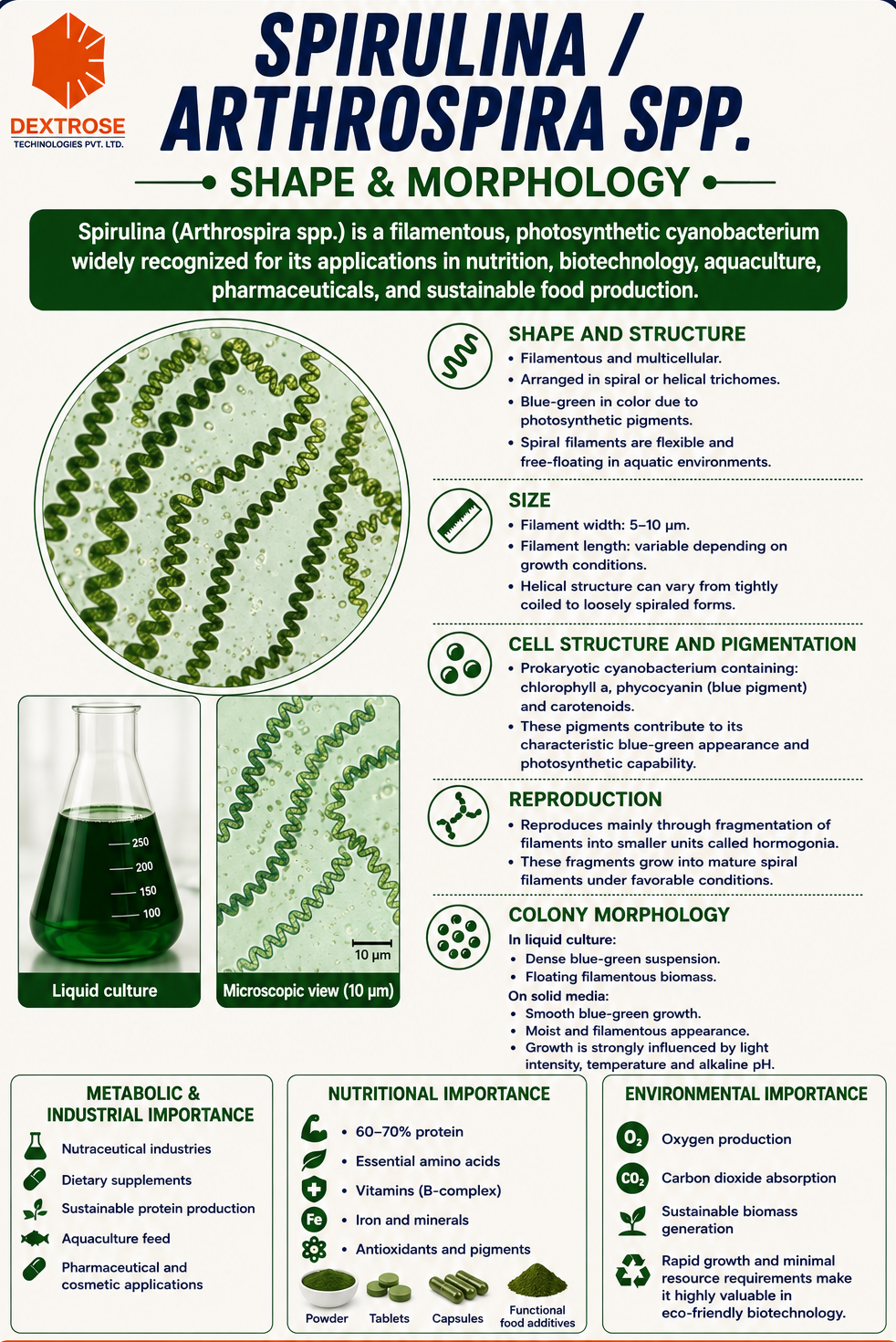
Spirulina (scientifically classified under Arthrospira spp.) is a filamentous, photosynthetic cyanobacterium widely recognized for its applications in nutrition, biotechnology, aquaculture, pharmaceuticals, and sustainable food production. Due to its exceptionally high protein content and rich nutrient profile, it is considered one of the most valuable microalgae used worldwide.
>> Shape and Structure
Spirulina cells are:
✔️ Filamentous and multicellular
✔️ Arranged in spiral or helical trichomes
✔️ Blue-green in color due to photosynthetic pigments
The spiral filaments are flexible and free-floating in aquatic environments.
>> Size
Typical dimensions include:
Filament width: 5–10 µm
Filament length: variable depending on growth conditions
The helical structure can vary from tightly coiled to loosely spiraled forms.
>> Cell Structure and Pigmentation
Spirulina is a prokaryotic cyanobacterium containing:
🌿 Chlorophyll a
🌿 Phycocyanin (blue pigment)
🌿 Carotenoids
These pigments contribute to its characteristic blue-green appearance and photosynthetic capability.
>> Reproduction
Spirulina reproduces mainly through:
✔️ Fragmentation of filaments into smaller units called hormogonia
These fragments grow into mature spiral filaments under favorable environmental conditions.
>> Colony Morphology
In liquid culture:
✔️ Dense blue-green suspension
✔️ Floating filamentous biomass
On solid media:
✔️ Smooth blue-green growth
✔️ Moist and filamentous appearance
>> Growth is strongly influenced by:
Light intensity
Temperature
Alkaline pH conditions
Metabolic and Industrial Importance
Spirulina is widely utilized in:
🧪 Nutraceutical industries
🥗 Dietary supplements
🌱 Sustainable protein production
🐟 Aquaculture feed
💊 Pharmaceutical and cosmetic applications
>> It is also studied in:
Biofuel research
Carbon fixation
Space nutrition programs
Nutritional Importance
Spirulina is considered a superfood microorganism because it contains:
✅ 60–70% protein
✅ Essential amino acids
✅ Vitamins (B-complex)
✅ Iron and minerals
✅ Antioxidants and pigments
>> It is commonly available as:
Powder
Tablets
Capsules
Functional food additives
Environmental Importance
>> Spirulina contributes to:
🌍 Oxygen production
🌍 Carbon dioxide absorption
🌍 Sustainable biomass generation
Its rapid growth and minimal resource requirements make it highly valuable in eco-friendly biotechnology.
>> Key Insight
Due to its high nutritional value, spiral morphology, and sustainable industrial applications, Spirulina remains one of the most commercially important cyanobacteria in modern biotechnology and health sciences.