

>> Overview
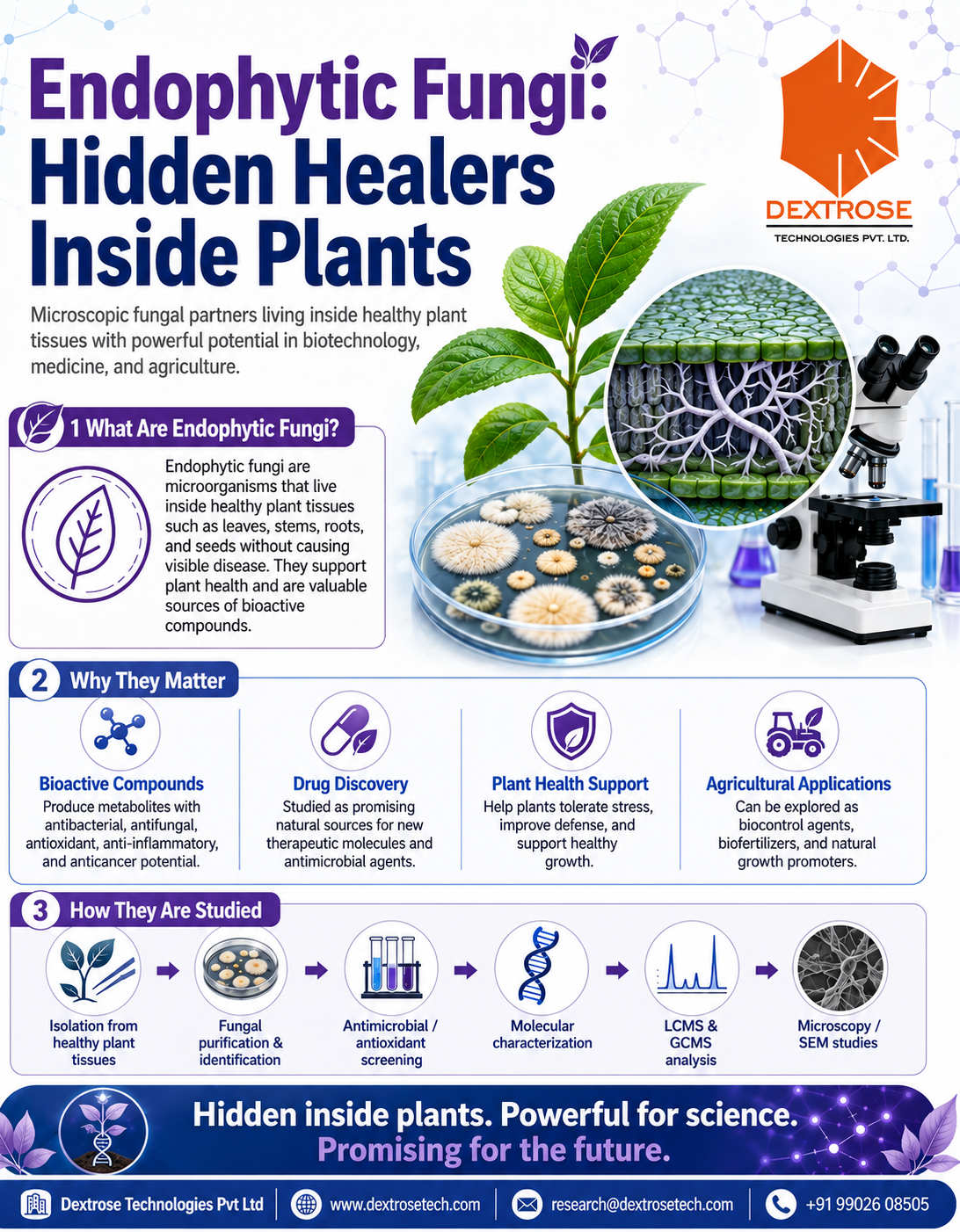
Endophytic fungi are microorganisms that live inside healthy plant tissues without causing any visible disease or damage. These fungi form a unique relationship with plants and are increasingly recognized as valuable sources of bioactive compounds with potential applications in medicine, agriculture, and biotechnology.
The concept of “Endophytic Fungi: Hidden Healers Inside Plants” highlights how these silent fungal partners can support plant health and contribute to the discovery of new antimicrobial, antioxidant, anticancer, and therapeutic molecules.
>> What Are Endophytic Fungi?
Endophytic fungi are fungi that colonize the internal tissues of plants, including leaves, stems, roots, and seeds. Unlike plant pathogens, they do not harm the host plant under normal conditions. Instead, they often support the plant by improving stress tolerance, enhancing defense mechanisms, and producing protective compounds.
These fungi are found in a wide variety of plants, including medicinal plants, forest plants, crops, and wild species. Their ability to survive inside plant tissues makes them an important area of research in microbial biotechnology.
>> Why Endophytic Fungi Are Important
Endophytic fungi are important because they can produce a wide range of secondary metabolites. These compounds may show antibacterial, antifungal, antiviral, antioxidant, anti-inflammatory, and anticancer activities.
Many researchers study endophytic fungi to discover novel natural products that may be useful in drug development, plant protection, and industrial biotechnology. Since plants and fungi interact closely, endophytes may also produce compounds similar to those found in their host plants.
>> Role in Medicine and Drug Discovery
Endophytic fungi are considered promising sources for new therapeutic compounds. Their metabolites are being studied for activity against human pathogens, wound infections, resistant bacteria, fungal infections, and other disease-causing microorganisms.
In the search for new antibiotics and alternatives to existing drugs, endophytic fungi offer a valuable natural reservoir. Their bioactive compounds may help address challenges such as antimicrobial resistance and the growing need for safer, effective therapeutic agents.
>> Role in Plant Health
Endophytic fungi can help plants survive under difficult environmental conditions. They may improve resistance against pathogens, drought, salinity, and other stress factors. Some endophytes also promote plant growth by producing enzymes, hormones, or metabolites that support nutrient uptake and defense.
Because of these benefits, endophytic fungi are also being explored in agriculture as natural biocontrol agents, biofertilizers, and plant growth promoters.
>> Isolation and Study of Endophytic Fungi
The study of endophytic fungi usually begins with the collection of healthy plant tissues. These tissues are surface sterilized to remove external microbes and then placed on suitable culture media to allow internal fungi to grow.
Once isolated, the fungi can be purified, identified, and screened for biological activity. Researchers may test their extracts for antimicrobial activity, enzyme production, antioxidant potential, and other useful properties.
>> Analytical and Molecular Techniques
Advanced techniques are used to understand the potential of endophytic fungi. Microscopy helps observe fungal morphology, while molecular methods support accurate identification. Analytical tools such as LCMS and GCMS help detect and characterize bioactive compounds produced by fungal isolates.
These methods provide important data for research publications, product development, and further pharmaceutical or agricultural applications.
>> Applications of Endophytic Fungi
Endophytic fungi have applications in several fields, including pharmaceutical research, antimicrobial discovery, agriculture, plant biotechnology, enzyme production, natural product chemistry, and environmental biotechnology.
They are especially useful in studies related to medicinal plants, wound pathogen control, plant disease management, and the discovery of novel bioactive metabolites.
>> Conclusion
Endophytic fungi are hidden partners inside plants with remarkable potential. From supporting plant health to producing medicinally important compounds, they represent an exciting area of biotechnology and natural product research.
By studying these fungi, researchers can uncover new possibilities for drug discovery, sustainable agriculture, and advanced microbial biotechnology.