Bangalore
08042753298
+919686928701

Items tagged with 'ftir analysis services for materials'

68179d65be22ee500d53ff54 Card 2

product image
Molecular Services

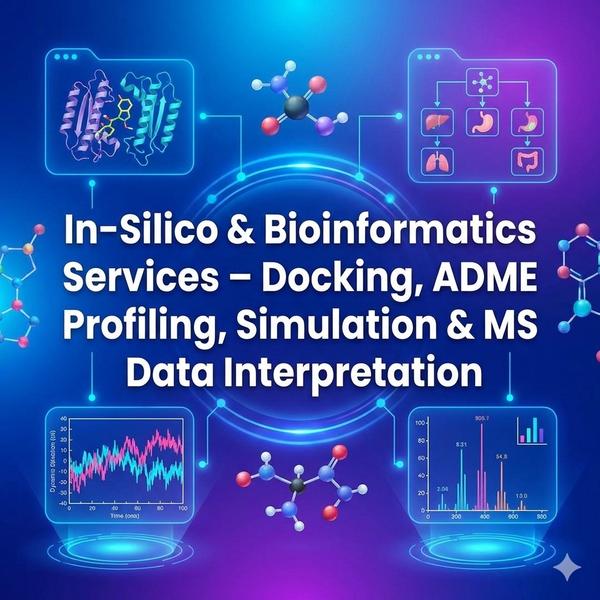
At Dextrose Technologies Pvt. Ltd., we provide in-silico and bioinformatics support to accelerate research decisions through computational analysis and structured interpretation. Our services cover molecular docking, in-silico ADME profiling, ligand–protein interaction simulations, and MS data interpretation for proteomics/metabolomics workflows—delivered with clear documentation and actionable insights. Molecular Docking Studies We perform docking studies to predict binding orientation and interaction patterns between ligands and target proteins, supporting hit prioritization and hypothesis building. ADME Profiling (In-silico) We generate in-silico ADME profiles to support early screening of drug-likeness and development risk (absorption, distribution, metabolism, excretion—scope dependent on project needs). Simulation Studies (Ligand–Protein Interaction) We support simulation-based evaluation of ligand–protein interactions (project scope dependent) to assess interaction stability and key binding drivers beyond docking snapshots. MS Data Interpretation (Proteomics / Metabolomics Support) We support interpretation of mass spectrometry datasets for proteomics/metabolomics projects by structuring outputs, summarizing key findings, and providing interpretation notes aligned to your research objective (dependent on the data format and workflow). Deliverables * Study summary and inputs used (structures, parameters, databases/tools) * Docking outputs and interaction summaries (poses, key residues) * In-silico ADME summary tables (as applicable) * Simulation summary metrics and interpretation (as applicable) * MS data interpretation summary and structured report (as applicable) Get started Share your target protein (PDB ID if available), ligand list (SMILES/SDF), and study goal (screening, lead optimization, or mechanism insight). For MS interpretation, share the data type (proteomics/metabolomics) and file formats.

68179d65be22ee500d53ff54 Card 2

product image
Molecular Characterization

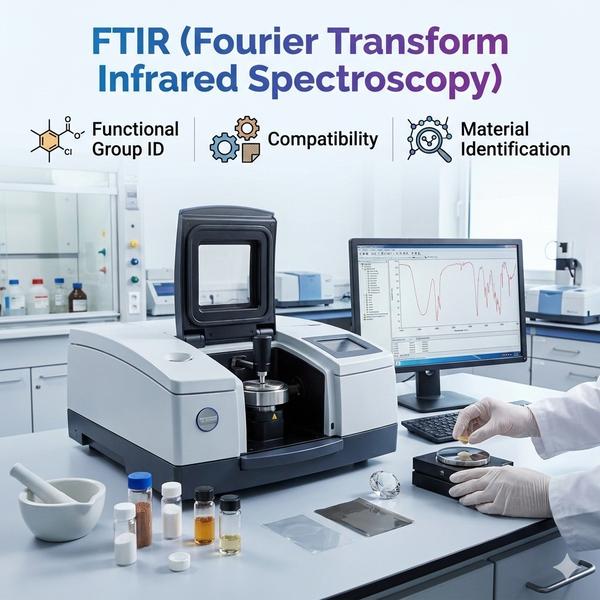
At Dextrose Technologies Pvt. Ltd., we offer FTIR (Fourier Transform Infrared Spectroscopy) for rapid functional group identification and material fingerprinting. FTIR is a reliable first-line tool for confirming raw materials, comparing formulations, and investigating unknowns by identifying characteristic IR absorption bands. It is widely used for polymers, excipients, organics, and contaminant screening, with clear interpretation and documentation. Functional Group Identification We identify key functional groups (e.g., O–H, N–H, C=O, C–O, C–H, aromatic bands) to support compound confirmation, comparison, and troubleshooting. Raw Material and Formulation Compatibility Studies We compare spectra of raw materials, excipients, APIs, and blends to detect spectral changes that may indicate interaction or incompatibility—useful during formulation development and material selection. Polymer, Excipient, and Contaminant Identification FTIR is effective for polymer and excipient fingerprinting and for initial contaminant identification (e.g., unknown residues, particles, films), supporting root-cause investigations and corrective actions. Deliverables * FTIR spectra with peak highlights * Sample-to-sample comparison summary (overlay interpretation) * Identification/interpretation notes aligned to your objective * Recommendations for confirmatory testing if required (e.g., GCMS/LCMS/SEM-EDX) Get started Share your sample type (solid/liquid/powder/film), objective (ID/compatibility/contaminant), and sample count. We’ll recommend the best FTIR approach and reporting format.

68179d65be22ee500d53ff54 Card 2

product image
Thermal Analysis & Characterization

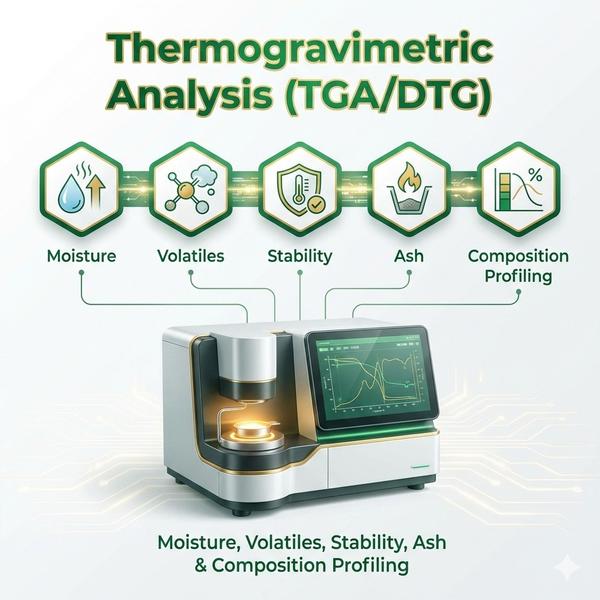
At Dextrose Technologies Pvt. Ltd., we provide Thermogravimetric Analysis (TGA) and Derivative Thermogravimetric Analysis (DTG) for thermal and physicochemical characterization of materials. TGA measures weight change vs temperature/time, while DTG highlights rate of mass loss, helping you evaluate moisture/volatile content, thermal stability, decomposition stages, ash/residue, and composition trends in multi-component systems. Thermogravimetric Analysis (TGA) We generate TGA curves to quantify mass loss steps and residual mass under defined heating programs and atmospheres (as per scope). Derivative Thermogravimetric Analysis (DTG) DTG profiles help separate overlapping events and identify key decomposition temperatures by showing the mass-loss rate peaks. Moisture and Volatile Content Determination We quantify early-stage mass loss attributed to moisture and low-boiling volatiles, useful for raw material control and process optimization. Thermal Stability and Decomposition Profiling We assess onset temperatures and decomposition stages to compare batches, evaluate stability, and understand thermal behavior under heating. Ash Content and Residue Analysis We report final residue/ash percentage to support inorganic content assessment and compositional comparison. Composition Analysis of Multi-Component Systems We interpret multi-step mass-loss behavior to provide composition insights (e.g., binder/filler/organic fraction trends), with recommendations for confirmatory techniques if required. Deliverables * TGA and DTG curves with key temperatures (onset/peaks) * % mass loss by stage + final residue/ash % * Comparative summary across samples/batches * Interpretation notes aligned to your objective Get started Share your material type, expected temperature range, sample form, and objective (moisture, stability, ash, composition). We’ll recommend the right TGA/DTG program and reporting format.

68179d65be22ee500d53ff54 Card 2

product image
Chromatography services

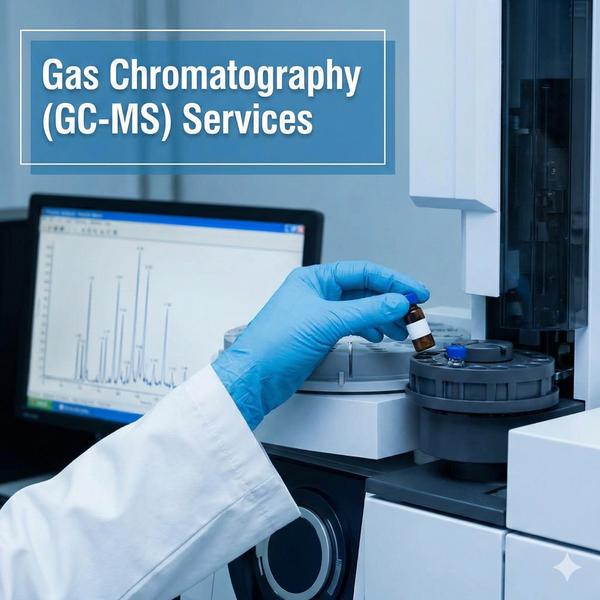
At Dextrose Technologies Pvt. Ltd., we provide Gas Chromatography–Mass Spectrometry (GCMS / GC–MS) services for identification and profiling of volatile and semi-volatile compounds in complex samples. GCMS combines strong chromatographic separation with mass spectral confirmation to support unknown peak identification, impurity profiling, and screening studies for R&D and industrial applications. Volatile and Semi-Volatile Compound Identification We identify volatile and semi-volatile compounds using GC separation and MS-based spectral interpretation, supporting troubleshooting, screening, and confirmation workflows. Impurity Profiling We detect and profile impurities and unknown peaks to support batch comparison, contamination investigations, and process optimization. Extractables and Leachables (Screening) We offer screening-level E&L studies to evaluate potential extractable/leachable compounds from packaging, plastics, tubing, or contact materials (scope-dependent, non-regulatory screening unless specified). Flavor and Fragrance Component Analysis We can support fragrance/flavor component analysis only when identification is feasible within our available spectral resources and project scope. (If a dedicated fragrance library is required, we will clarify feasibility upfront.) Environmental and Industrial Sample Analysis We analyze VOC/SVOC profiles in environmental and industrial samples (water/soil/air extracts, process samples, materials) for screening, comparison, and investigation needs. Deliverables * Chromatograms + peak tables * Mass spectra and ID summary for identified peaks (where applicable) * Impurity/profile interpretation notes * Quantification support when standards and reporting limits are defined Get started Share your sample type, target analytes (if known), expected concentration range, and whether you need identification only or identification + quantification.

68179d65be22ee500d53ff54 Card 2

product image
Formulation Development & Support

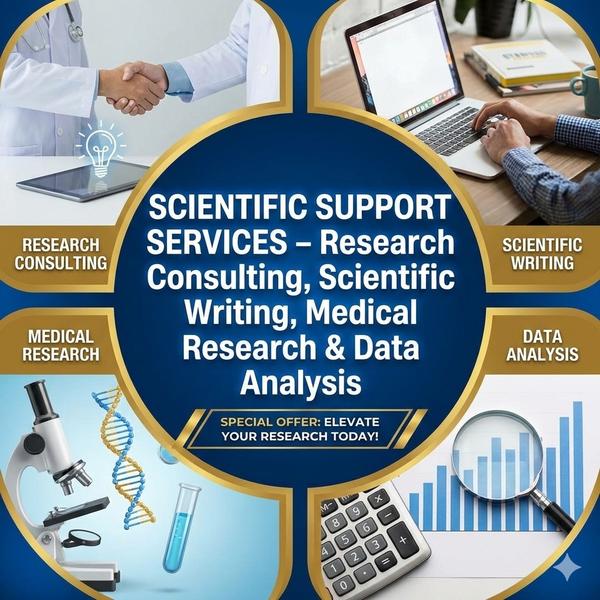
At Dextrose Technologies Pvt. Ltd., we provide Scientific Support Services that combine professional consultation, technical guidance, and documentation support for projects in life sciences, pharmaceuticals, and healthcare research. Our goal is to help teams plan better studies, choose the right methods, generate high-quality data, and present results clearly for review, publication, or internal decision-making. Technical Consultation Research planning and experimental design aligned to your objective and constraints Feasibility assessment and method selection (analytical and biological workflows) Workflow optimization to improve turnaround, reproducibility, and data quality End-to-end project guidance from planning to reporting Scientific Writing & Documentation Support Research manuscript writing and editing (structure, clarity, journal readiness) Thesis and dissertation support (technical refinement and formatting) Grant proposals and technical documentation for academic and industry needs Journal formatting and plagiarism compliance support (tools/format alignment as required) Medical & Dental Research Support Dental product testing support (scope-dependent) Medical research design and analytical assistance for research-driven projects Exploratory and preclinical study support (research scope; not clinical decision-making) Statistical & Data Analysis Statistical analysis of experimental datasets based on study design Graphs, tables, and result visualization for clear communication Interpretation support for publications, technical reports, and presentations Applications Academic research projects, pharma and biotech R&D, healthcare research studies, product testing projects, and publication-focused documentation.

68179d65be22ee500d53ff54 Card 2

product image
Formulation Development & Support

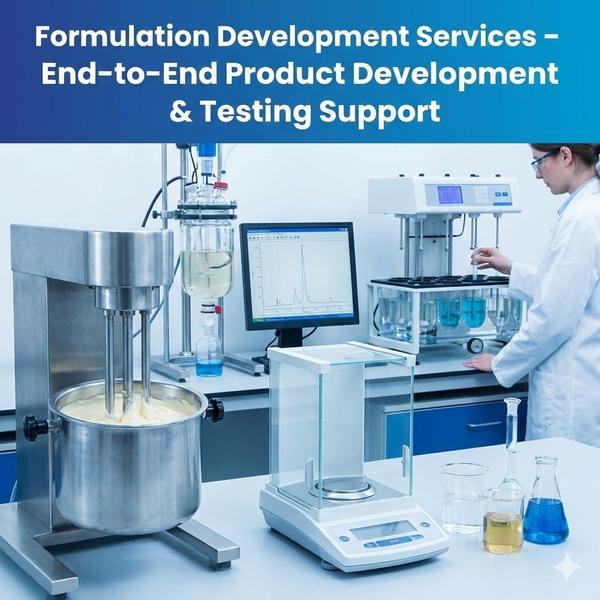
At Dextrose Technologies Pvt. Ltd., we provide end-to-end formulation and product development support for pharmaceuticals, nutraceuticals, cosmetics, and research-driven products. Our services are built for early-stage R&D, proof-of-concept development, and pilot-scale readiness, helping you move from concept to a stable, testable prototype with clear documentation. Our Formulation Capabilities Custom formulation development based on client requirements and target product profile Excipient selection and compatibility assessment to reduce instability and performance risk Lab-scale prototype development for rapid iteration and proof-of-concept Optimization of composition, stability, and performance through structured experiments Product Testing & Evaluation Physicochemical characterization of formulations (as applicable to product type) Stability and compatibility studies for shelf-life and robustness insight Performance and comparative testing across formulations/batches Analytical testing support using advanced instrumentation (HPLC/GC/LCMS, particle sizing, thermal, etc. – scope dependent) Documentation & Reporting Technical and development reports with clear conclusions Data interpretation and result summaries for faster decision-making Client-specific report formats for internal R&D and QA review Support documentation for regulatory-style and academic use (scope dependent) Applications Pharmaceutical formulations, nutraceutical products, cosmetic formulations, research prototypes, and specialty chemical products.

68179d65be22ee500d53ff54 Card 2

product image
Molecular Services

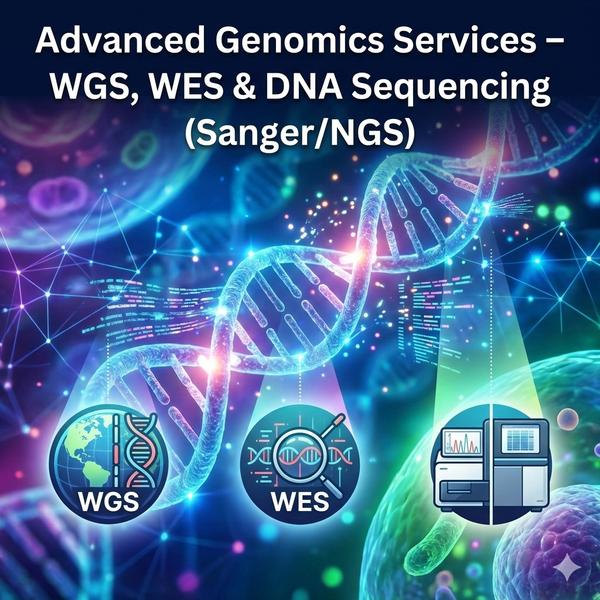
At Dextrose Technologies Pvt. Ltd., we provide advanced genomics services to support deeper genetic characterization, variant analysis, and sequencing-based insights for research and applied projects. From microbial whole genome sequencing to targeted DNA sequencing, we deliver structured outputs with interpretation-focused reporting. Whole Genome Sequencing (WGS) – Microbial genome characterization We support microbial WGS to enable genome-level characterization, strain comparison, and genetic feature discovery (project scope dependent), with deliverables designed for research workflows. Whole Exome Sequencing (WES) – Coding-region variant analysis We support WES for coding-region variant analysis with defined study goals and reporting scope (research use; clinical interpretation requires appropriate clinical oversight). DNA Sequencing (Sanger / NGS-based applications) We support Sanger sequencing for targeted confirmation and NGS-based applications for broader sequencing needs. Approach is selected based on target region size, sample count, and required resolution. Deliverables * Raw data files (as applicable) + processed outputs * QC summary (read quality/coverage metrics as applicable) * Variant/annotation outputs (as per scope) * Clear interpretation notes and limitations aligned to intended use Get started Share organism/sample type, number of samples, study objective (strain typing/variant analysis/target confirmation), and whether you need Sanger, targeted NGS, WGS, or WES. We’ll recommend the right workflow and reporting format.

68179d65be22ee500d53ff54 Card 2

product image
Molecular Services

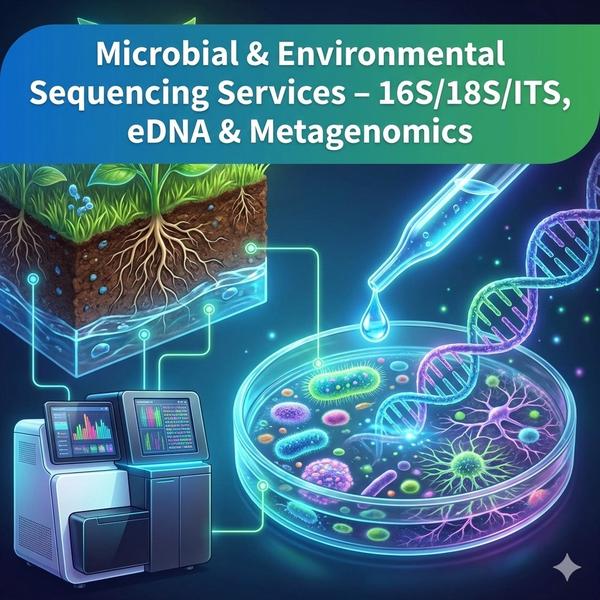
At Dextrose Technologies Pvt. Ltd., we provide microbial and environmental sequencing services to support accurate organism identification, taxonomy, and community profiling for research, ecology, and industrial monitoring. From single-isolate identification to complex mixed-community analysis, we deliver clear, interpretation-focused outputs that help you move from sequence data to actionable insight. 16S rRNA Sequencing (Bacterial identification & phylogeny) We use 16S rRNA sequencing to identify bacteria and support phylogenetic analysis for isolates or sample-derived bacterial DNA. 18S rRNA Sequencing (Eukaryotes & protozoa) 18S rRNA sequencing supports identification of eukaryotic organisms including protozoa and broader eukaryotic diversity assessments. Fungal Sequencing (ITS/18S) – Fungal taxonomy We support accurate fungal identification using ITS and/or 18S targets depending on your sample type and taxonomic resolution needs. Algae Sequencing – Species ID and diversity We support algae identification and diversity studies using suitable marker targets based on your project objective. Environmental DNA (eDNA) Analysis We analyze eDNA from environmental samples to support biodiversity assessment and environmental monitoring without requiring organism isolation. Metagenomic Sequencing (Bacteria & Fungi) We support community profiling of bacteria and fungi from mixed samples using metagenomic/amplicon-based approaches (scope-dependent), enabling insights without culturing. Deliverables * Raw sequencing files + processed outputs (as per scope) * Taxonomic identification/profile summary * Basic diversity outputs (where applicable) * Clear interpretation notes and limitations (so results are used correctly) Get started Share sample type (isolate/swab/soil/water), number of samples, expected organisms, and whether you need ID (single organism) or community profiling (metagenomics). We’ll recommend the right marker and workflow.

68179d65be22ee500d53ff54 Card 2

product image
Material Characterization

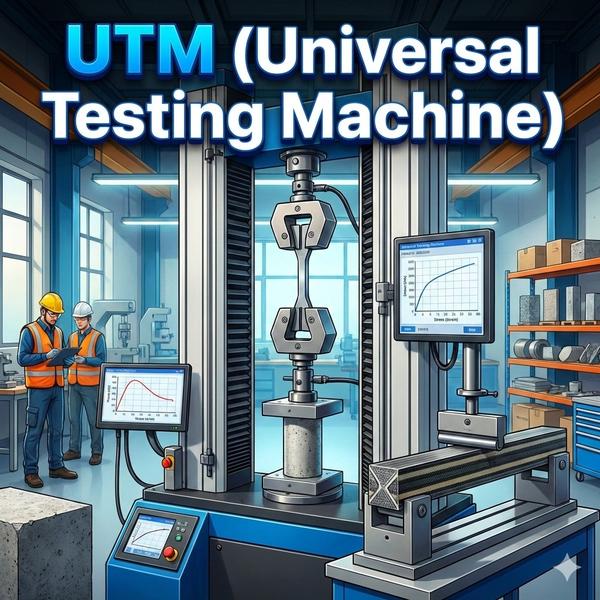
At Dextrose Technologies Pvt. Ltd., we provide UTM (Universal Testing Machine) services for mechanical characterization of materials through tensile, compression, and flexural testing. UTM testing helps quantify strength, stiffness, ductility, and durability, enabling material selection, batch comparison, product validation, and failure investigations across polymers, composites, metals, and engineered materials (test feasibility depends on specimen geometry and standard followed). Tensile Testing We measure tensile properties such as ultimate tensile strength, yield behavior, elongation, and modulus, supporting performance benchmarking and quality checks. Compression Testing We evaluate compressive strength and deformation behavior for materials used in structural, packaging, and functional applications. Flexural (Bending) Testing We assess flexural strength and flexural modulus to understand resistance to bending loads, especially relevant for plastics, composites, and brittle materials. Mechanical strength and durability assessment We support comparative testing across batches and conditions to evaluate durability trends and performance consistency. Deliverables * Force–displacement and/or stress–strain data (as applicable) * Key mechanical parameters (strength, modulus, elongation, etc.) * Test conditions and specimen details (as provided/standardized) * Summary interpretation for material performance evaluation Get started Share your material type, specimen dimensions/standard (if any), number of samples, and required test (tensile/compression/flexural). We’ll recommend the right setup and reporting format.

Still searching for
ftir analysis services for materials?