Bangalore
08042753298
+919686928701

Items tagged with 'material'

68179d65be22ee500d53ff54 Card 2

product image
Scientific Assistance Services

At Dextrose Technologies Pvt. Ltd., we provide end-to-end publication support to help researchers convert study outputs into a submission-ready manuscript with clear structure, strong scientific language, and journal-compliant formatting. We support the full workflow—from planning the manuscript to final checks—so you can reduce delays, improve presentation quality, and submit with confidence. What we support Manuscript writing support (IMRaD structure: Introduction, Methods, Results, Discussion) based on your data and study notes Scientific editing and language refinement for clarity, flow, and technical accuracy Journal selection support (scope-based recommendations aligned to your domain and indexing preferences) Formatting as per journal guidelines (references, figures, tables, word limits, style) Plagiarism compliance support (best-practice checks and rewriting guidance) Figures, tables, and graphical abstract support (as required) Cover letter and response-to-reviewers drafting support (when needed) Submission-readiness checklist to reduce avoidable rejections What you receive * A structured, submission-ready manuscript draft * Edited figures/tables with consistent formatting * Reference manager-ready bibliography formatting (as applicable) * Final review notes and next-step guidance for submission Who it’s for Academic researchers, PhD scholars, clinicians, and R&D teams working in life sciences, biotech, pharma, materials, and healthcare research. Get started Share your manuscript stage (data only / draft / near-final), target journal (if any), and your study type. We’ll recommend the most efficient publication support plan
68179d65be22ee500d53ff54 Card 2

product image
Sample Preparations

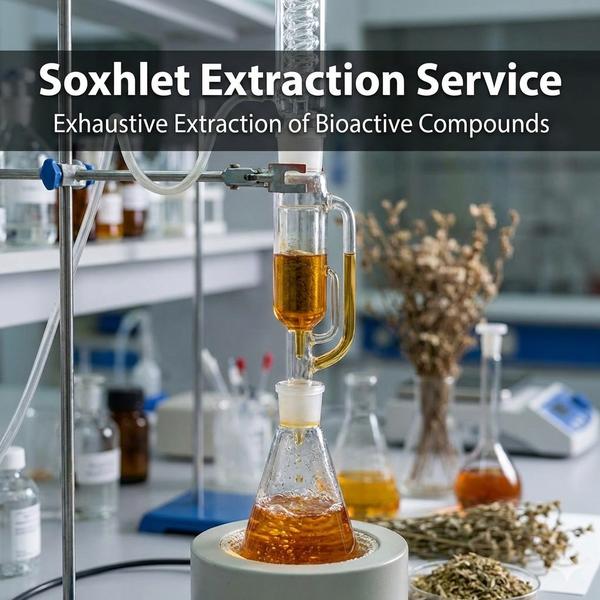
At Dextrose Technologies Pvt. Ltd., we offer Soxhlet Extraction for exhaustive extraction of bioactive compounds from solid matrices such as plant materials, powders, biomass, and formulated solids. Soxhlet enables continuous solvent reflux and repeated washing of the sample, delivering efficient recovery of solvent-soluble constituents for natural product research, fraction preparation, and downstream analytical testing. What Soxhlet extraction is used for Recovery of bioactive fractions from herbs, botanicals, and biomass Extraction of lipids, oils, and non-polar to mid-polar compounds (solvent-dependent) Preparation of concentrated extracts for GCMS, LCMS, HPLC, or bioactivity screening Comparative extraction studies across batches or raw materials How we execute Solvent selection and extraction conditions are set based on your target (non-polar/polar fraction) Controlled extraction time to ensure exhaustive recovery Filtration and solvent removal/concentration support (scope-dependent) Clear labeling and sample traceability Deliverables Extract (concentrated or crude, as agreed) Process notes (solvent used, duration, sample weight, yield %) Optional: guidance for storage and next-step analysis (GCMS/LCMS/HPLC) Get started Share your sample type, target compound class (oil/alkaloids/phenolics etc.), preferred solvent (if any), and the intended downstream analysis.

68179d65be22ee500d53ff54 Card 2

product image
Material Characterization

At Dextrose Technologies Pvt. Ltd., we provide UTM (Universal Testing Machine) services for mechanical characterization of materials through tensile, compression, and flexural testing. UTM testing helps quantify strength, stiffness, ductility, and durability, enabling material selection, batch comparison, product validation, and failure investigations across polymers, composites, metals, and engineered materials (test feasibility depends on specimen geometry and standard followed). Tensile Testing We measure tensile properties such as ultimate tensile strength, yield behavior, elongation, and modulus, supporting performance benchmarking and quality checks. Compression Testing We evaluate compressive strength and deformation behavior for materials used in structural, packaging, and functional applications. Flexural (Bending) Testing We assess flexural strength and flexural modulus to understand resistance to bending loads, especially relevant for plastics, composites, and brittle materials. Mechanical strength and durability assessment We support comparative testing across batches and conditions to evaluate durability trends and performance consistency. Deliverables * Force–displacement and/or stress–strain data (as applicable) * Key mechanical parameters (strength, modulus, elongation, etc.) * Test conditions and specimen details (as provided/standardized) * Summary interpretation for material performance evaluation Get started Share your material type, specimen dimensions/standard (if any), number of samples, and required test (tensile/compression/flexural). We’ll recommend the right setup and reporting format.

68179d65be22ee500d53ff54 Card 2

product image
Imaging & Characterization

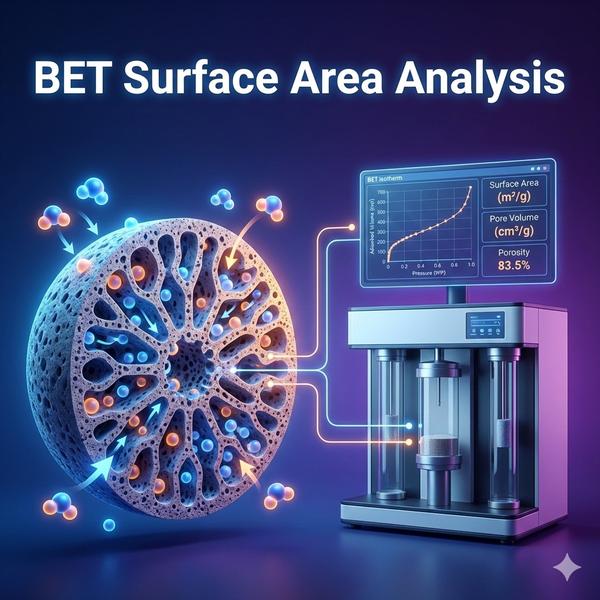
At Dextrose Technologies Pvt. Ltd., we provide BET (Brunauer–Emmett–Teller) surface area analysis to quantify specific surface area and evaluate porosity-related properties of powders and porous materials. BET testing is widely used for catalysts, adsorbents, carbon materials, metal oxides, ceramics, and porous solids, helping you correlate surface area and pore structure with performance and batch consistency. Surface area determination We determine specific surface area (m²/g) using gas adsorption methods and provide comparative summaries across batches or processing conditions. Pore size and volume analysis We support pore characterization by reporting pore volume and pore size distribution (as per method scope), useful for adsorption performance, filtration behavior, and material selection. Catalyst, adsorbent, and material evaluation BET helps evaluate catalysts and adsorbents for surface activity, and supports material QC by tracking porosity changes due to synthesis, activation, milling, or heat treatment. Deliverables * BET surface area (m²/g) * Pore volume and pore size distribution (as applicable) * Isotherm plots/data summary and key parameters * Interpretation notes for batch comparison and performance relevance Get started Share your material type, expected surface area range, degassing conditions (if known), and objective (QC, R&D, catalyst/adsorbent evaluation). We’ll recommend the right BET scope and reporting format.

68179d65be22ee500d53ff54 Card 2

product image
Imaging & Characterization

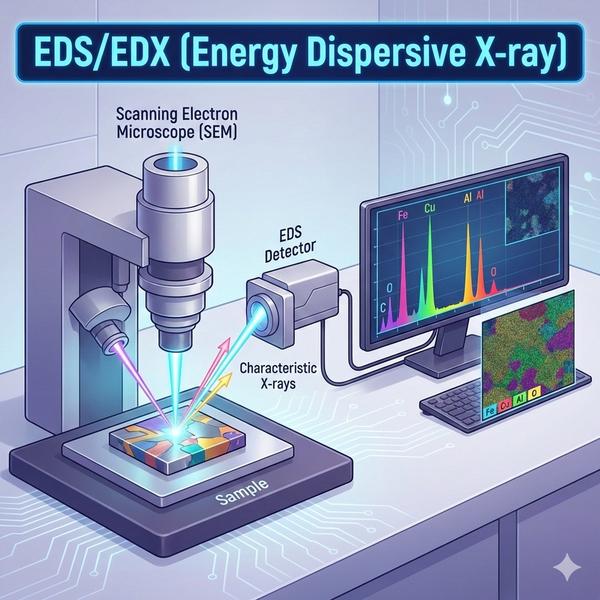
At Dextrose Technologies Pvt. Ltd., we provide EDS/EDX (Energy Dispersive X-ray Analysis)—typically integrated with SEM—to deliver elemental composition and spatial mapping of materials. EDX helps identify what elements are present, where they are located, and how they are distributed, making it highly effective for contamination investigations, impurity localization, and surface/cross-sectional studies. Elemental composition and mapping We perform spot/area analysis and elemental mapping to understand composition and distribution trends across regions of interest. Contaminant and impurity localization EDX is ideal for identifying foreign particles, inclusions, deposits, corrosion products, and process contaminants by pinpointing elemental signatures at the defect site. Surface and cross-sectional analysis We support surface and cross-sectional evaluation (sample-prep dependent) to assess coatings, layers, diffusion regions, and interface contamination. Deliverables * Elemental spectra with identified peaks * Quant summary (wt%/at% as applicable) * Elemental maps and/or line scans (as required) * Clear observations and interpretation notes linked to images Get started Share your sample type, suspected contaminant (if any), and whether you need spot analysis, mapping, or cross-section review. We’ll recommend the best SEM-EDX workflow.

68179d65be22ee500d53ff54 Card 2

product image
Imaging & Characterization

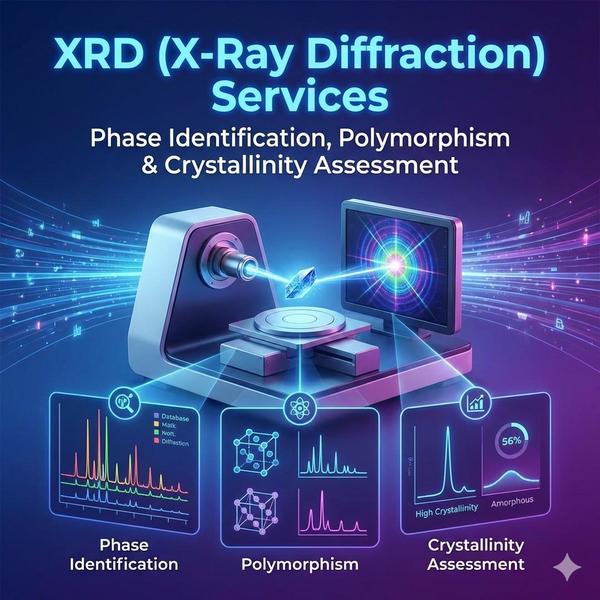
At Dextrose Technologies Pvt. Ltd., we provide XRD (X-Ray Diffraction) for reliable crystalline phase identification and solid-state characterization. XRD is the gold-standard technique to identify crystalline materials, differentiate polymorphs, and assess crystallinity trends—supporting materials science, pharmaceuticals, chemicals, and R&D/QC investigations. Crystalline phase identification We match diffraction patterns to identify crystalline phases and support material verification, contamination checks, and batch comparison. Polymorphism and solid-state characterization We evaluate polymorphic differences and solid-state changes that can impact stability and performance, supporting formulation development and material selection. Crystallinity assessment We assess overall crystallinity trends (semi-quantitative/quantitative as per scope and data quality), useful for comparing processing conditions, heat treatment, or formulation effects. Deliverables * XRD diffractograms with peak list (2θ/intensity) * Phase identification summary (where applicable) * Crystallinity/trend assessment (as applicable) * Interpretation notes and recommendations for follow-up confirmation if required Get started Share your sample type (powder/film/solid), expected phases (if any), and objective (phase ID, polymorph, crystallinity). We’ll recommend the right scan parameters and reporting format.

68179d65be22ee500d53ff54 Card 2

product image
Imaging & Characterization

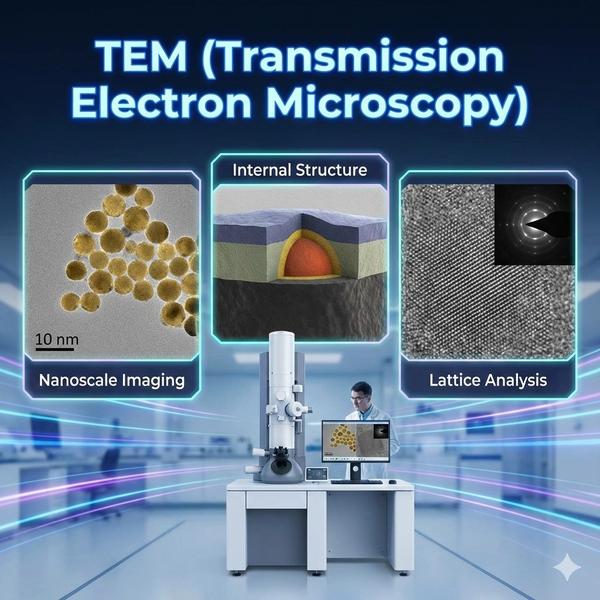
At Dextrose Technologies Pvt. Ltd., we provide TEM (Transmission Electron Microscopy) to visualize internal structure at the nanoscale, enabling detailed analysis of nanoparticles, fine particulates, thin films, and advanced materials. TEM is ideal when SEM is not sufficient and you need high-resolution insight into particle dispersion, internal morphology, and lattice-level features (scope dependent on sample and preparation feasibility). Internal structure and nanoscale imaging TEM allows direct imaging of internal morphology, particle boundaries, and nanoscale features that drive material performance. We support comparative analysis across batches and processing conditions. Particle dispersion and lattice structure analysis We assess particle dispersion and aggregation trends, and support lattice-level analysis where applicable (e.g., lattice fringes / crystallographic features), helping you understand crystallinity and structural uniformity. Deliverables * TEM images at multiple magnifications * Dispersion/aggregation observations (image-based) * Lattice/structural notes where applicable * Report-ready documentation for R&D and characterization Get started Share your sample type (nanoparticles/thin film/powder), expected size range, and objective (dispersion, internal structure, lattice). We’ll recommend feasibility, sample prep approach, and deliverables.

68179d65be22ee500d53ff54 Card 2

product image
Imaging & Characterization

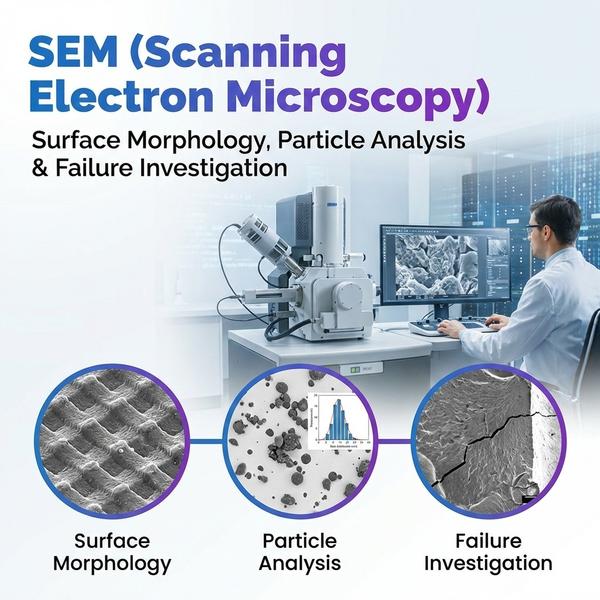
At Dextrose Technologies Pvt. Ltd., we provide SEM (Scanning Electron Microscopy) for high-resolution imaging and detailed surface characterization of materials and biological samples (as applicable). SEM helps you visualize surface morphology, topography, particles, and defects with clarity—supporting R&D, quality investigations, and failure analysis. Surface morphology and topographical analysis We capture high-magnification images to evaluate surface texture, porosity, cracks, coatings, and microstructural features. SEM is ideal for comparing batches, processing conditions, and material finishes. Particle shape and size evaluation We image particles to assess shape, agglomeration, and size distribution trends (image-based), supporting powders, pigments, fillers, nanomaterials (where applicable), and formulation studies. Failure and defect analysis We support root-cause investigations for defects such as fractures, delamination, inclusions, corrosion features, and surface contamination—providing image evidence and interpretation notes to guide corrective actions. Deliverables * High-resolution SEM images (multiple magnifications) * Observation summary highlighting key morphological features * Optional: EDX elemental mapping/spot analysis (if required) * Report-ready documentation for R&D or QC investigations Get started Share your sample type, objective (morphology/particles/failure), and preferred magnification range. We’ll recommend the best SEM imaging plan and deliverables.

68179d65be22ee500d53ff54 Card 2

product image
Elemental Analysis

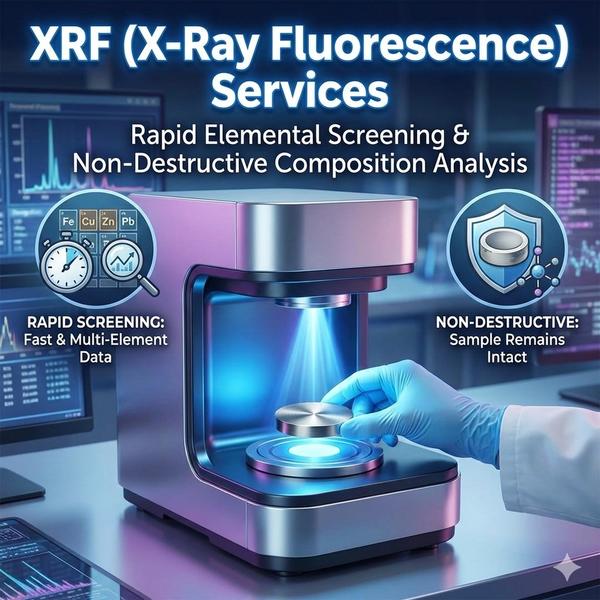
At Dextrose Technologies Pvt. Ltd., we offer XRF (X-Ray Fluorescence Spectroscopy) for fast, non-destructive elemental screening and material composition evaluation. XRF is ideal for solid and powder samples where you need quick elemental insight without complex wet chemistry. It supports raw material verification, contamination checks, and batch comparison through clear, report-ready elemental profiles. Rapid elemental screening We screen for major and minor elements and provide an elemental overview to support quick decisions and follow-up testing plans. Non-destructive material composition analysis XRF analyzes samples without dissolving or destroying them, making it useful for routine checks and investigations where sample preservation matters. Solid and powder sample evaluation We evaluate powders, pellets, solids, and other compatible materials (scope-dependent) and report results in a structured format. Deliverables * Elemental composition summary (as applicable to method and matrix) * Spectra/measurement notes and sample identifiers * Comparative summary across samples/batches * Recommendations for confirmatory testing when required (e.g., ICP-OES/ICP-MS) Get started Share your sample type (powder/solid), expected elements of interest, and whether you need screening or quantitative reporting. We’ll recommend the right XRF workflow.

Still searching for
material?