Bangalore
08042753298
+919686928701

Items tagged with 'microbial technique'

68179d65be22ee500d53ff54 Card 2

product image
Microbiology Services

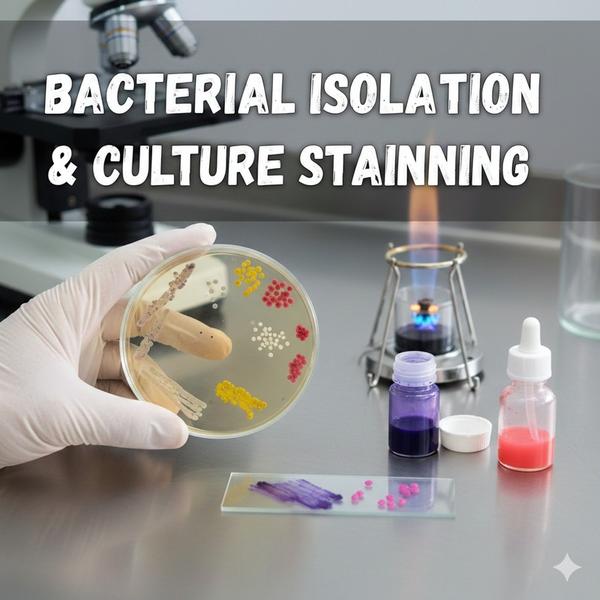
At Dextrose Technologies Pvt. Ltd., we offer Microbial Isolation & Identification services to support research, quality testing, and industrial microbiology. Using sterile, standardized workflows, we isolate microbes from diverse samples, establish pure cultures, apply differential staining, and perform morphology/biochemical-based characterization to generate reliable identification support and clear documentation. Bacterial Isolation and Pure Culture Establishment We perform culture enrichment, streaking, and colony purification to obtain pure bacterial cultures with contamination control and growth documentation. Fungal Isolation and Identification We isolate fungi using appropriate media and incubation conditions, followed by macroscopic and microscopic assessment for identification support. Microbial Staining Techniques We provide staining-based visualization for differentiation and purity checks, including: * Gram staining – Gram reaction and bacterial morphology * Spore staining – endospore detection and differentiation * Acid-fast staining – detection of acid-fast organisms (where applicable) Morphological and Biochemical Characterization We document colony characteristics and microscopic features and perform basic biochemical characterization as per scope, enabling practical classification support for R&D and QC needs. Deliverables * Culture observations (growth pattern, colony morphology) * Staining results with interpretation notes * Microscopy images (where applicable) * Summary report with clear conclusions and next-step recommendations if needed Get started Share your sample type, objective (screening/QC/troubleshooting), and number of samples—we’ll propose the right isolation and identification workflow.

68179d65be22ee500d53ff54 Card 2

product image
Molecular Services

At Dextrose Technologies Pvt. Ltd., we provide microbial and environmental sequencing services to support accurate organism identification, taxonomy, and community profiling for research, ecology, and industrial monitoring. From single-isolate identification to complex mixed-community analysis, we deliver clear, interpretation-focused outputs that help you move from sequence data to actionable insight. 16S rRNA Sequencing (Bacterial identification & phylogeny) We use 16S rRNA sequencing to identify bacteria and support phylogenetic analysis for isolates or sample-derived bacterial DNA. 18S rRNA Sequencing (Eukaryotes & protozoa) 18S rRNA sequencing supports identification of eukaryotic organisms including protozoa and broader eukaryotic diversity assessments. Fungal Sequencing (ITS/18S) – Fungal taxonomy We support accurate fungal identification using ITS and/or 18S targets depending on your sample type and taxonomic resolution needs. Algae Sequencing – Species ID and diversity We support algae identification and diversity studies using suitable marker targets based on your project objective. Environmental DNA (eDNA) Analysis We analyze eDNA from environmental samples to support biodiversity assessment and environmental monitoring without requiring organism isolation. Metagenomic Sequencing (Bacteria & Fungi) We support community profiling of bacteria and fungi from mixed samples using metagenomic/amplicon-based approaches (scope-dependent), enabling insights without culturing. Deliverables * Raw sequencing files + processed outputs (as per scope) * Taxonomic identification/profile summary * Basic diversity outputs (where applicable) * Clear interpretation notes and limitations (so results are used correctly) Get started Share sample type (isolate/swab/soil/water), number of samples, expected organisms, and whether you need ID (single organism) or community profiling (metagenomics). We’ll recommend the right marker and workflow.

68179d65be22ee500d53ff54 Card 2

product image
Microbiology Services

At Dextrose Technologies Pvt. Ltd., we provide microbial load and quality control (QC) testing to help you monitor hygiene, process control, and product quality across research and industrial environments. Our services include Total Aerobic Microbial Count (TAMC), Total Yeast and Mold Count (TYMC), and environmental monitoring for water, surfaces, and air—delivered with clear reporting and documented test conditions. Total Aerobic Microbial Count (TAMC) We quantify overall aerobic bacterial load using validated plate-count approaches, providing CFU-based results to support QC and trending. Total Yeast and Mold Count (TYMC) We quantify yeast and mold load for hygiene monitoring and product/process quality assessment, reported as CFU with observation notes. Environmental and Water Microbial Testing We assess microbial contamination in water and environmental samples (swabs, rinse samples, site samples) to support routine monitoring and troubleshooting. Surface and Air Microbial Monitoring We support microbial monitoring of work areas using surface sampling (swabs/contact plates where applicable) and air monitoring approaches (as per scope), enabling facility hygiene assessment and trend tracking. Deliverables * Results report with CFU counts and sample-wise summary * Method notes (media, incubation conditions, and dilution approach) * Observation notes and trend-ready format for repeated monitoring * Optional: follow-up isolation/identification support if abnormal counts are detected Get started Share your sample type (product/water/swab/air), number of samples, and monitoring frequency. We’ll propose a practical QC testing plan and reporting format.

68179d65be22ee500d53ff54 Card 2

product image
Microbiology Services

At Dextrose Technologies Pvt. Ltd., we provide antimicrobial susceptibility and efficacy testing to help researchers and product teams evaluate how bacteria and fungi respond to antimicrobial agents. Our testing supports R&D, comparative screening, formulation development, and quality investigations with controlled study conditions, clear documentation, and decision-ready reporting. Antimicrobial Susceptibility Testing (AST) Disc Diffusion Method: Zone-of-inhibition based screening for comparative susceptibility assessment. MIC Determination: Minimum Inhibitory Concentration to identify the lowest concentration that inhibits visible growth. MBC Determination: Minimum Bactericidal Concentration to assess killing endpoints where required. Time-Kill Assays (Kill Curve Studies) We evaluate antimicrobial effect over time by measuring viability at defined timepoints, enabling comparison of efficacy kinetics across agents or concentrations. Antifungal Susceptibility Testing Susceptibility assessment for fungal isolates against antifungal agents, supporting research and screening objectives. Synergistic and Combination Studies We assess combination effects (additive/synergistic/antagonistic trends) to support optimization of multi-agent strategies and formulations. Deliverables Results summary (AST/MIC/MBC/time-kill outputs as applicable) Data tables and interpretation notes aligned to your objective Clear documentation of test conditions and sample identifiers Note: Testing is intended for laboratory, research, and quality purposes. Clinical decisions should be made only by qualified healthcare professionals.

68179d65be22ee500d53ff54 Card 2

product image
Microbiology Services

At Dextrose Technologies Pvt. Ltd., we perform Microbial Growth & Kinetics Studies to generate quantitative, decision-ready data for R&D, process optimization, and microbiology investigations. We run controlled growth experiments and measure key parameters such as growth curves, doubling time, biomass, and viability, with clear documentation and interpretable outputs. Growth Curve Analysis We track growth over time under defined conditions to generate standard growth curves (lag, log, stationary phases) and compare performance across media or process conditions. Doubling Time Determination We calculate doubling time during exponential growth to support strain selection, media optimization, and process scale-up decisions. Biomass Estimation (Optical Density / CFU) We estimate biomass using optical density (OD) measurements and/or CFU-based counts, depending on the organism and project requirement. Viability Assessment (Colony Count Methods) We assess viability using plate-based colony count methods to quantify live cells and confirm culture health across timepoints. Time-Kill Kinetics (Kill Curve Studies) We perform time-kill studies to evaluate microbial reduction over time under defined test conditions (e.g., exposure to a treatment or stress condition), generating kill curves for comparative performance assessment. Deliverables * Raw and summarized timepoint data (OD/CFU) * Growth curve plots/tables and calculated parameters (doubling time, growth rate) * Viability results with method notes * Time-kill kinetics results (log reduction vs time) * Summary interpretation aligned to your objective Get started Share the organism type, media/conditions, timepoints required, and study goal (growth comparison, viability, or time-kill). We’ll propose the right experimental plan and reporting format.

68179d65be22ee500d53ff54 Card 2

product image
Microbiology Services

At Dextrose Technologies Pvt. Ltd., we provide Microbial Culture & Maintenance services to help research and industry teams sustain healthy, consistent cultures for ongoing experiments, QC work, and process development. We follow sterile, SOP-driven workflows for pure culture maintenance, routine subculturing, media preparation, and culture condition optimization—with clear documentation at every stage. Pure Culture Maintenance and Subculturing We maintain bacterial and fungal cultures through planned subculture schedules to preserve viability, purity, and consistent growth performance. Media Preparation and Optimization We prepare standard and project-specific media under controlled conditions and can optimize media composition to support improved recovery, growth rate, or morphology as needed. Culture Condition Optimization (pH, Temperature, Aeration) We optimize key growth parameters such as pH, incubation temperature, and aeration/agitation to achieve stable growth, reproducible outcomes, and application-ready biomass (scope-dependent). Contamination Assessment and Confirmation We assess cultures for contamination using morphology review and staining-based checks (as applicable), and confirm culture status with documented observations to support reliable downstream work. Deliverables * Media and culture preparation notes (batch details as applicable) * Growth observations and condition logs (pH/temperature/aeration) * Contamination check results with interpretation * Summary report for each culture batch or project cycle Get started Share the organism type (bacterial/fungal), culture volume, media preference, and goal (maintenance vs optimization). We’ll recommend a suitable maintenance and QC plan.

68179d65be22ee500d53ff54 Card 2

product image
Sample Preparations

At Dextrose Technologies Pvt. Ltd., we provide Rotary Evaporator (Rotavap) concentration to efficiently remove solvents and concentrate extracts under controlled conditions. Rotary evaporation is ideal for natural product research, bioactive fraction preparation, and pre-analytical workflows where you need gentle, efficient solvent removal before downstream testing (GCMS, LCMS, HPLC) or formulation steps. What we support Solvent removal from extracts and reaction mixtures Concentration of plant/microbial extracts and bioactive fractions Reduction of volume to improve handling, storage, and analytical readiness Support for solvent exchange (scope-dependent) Why rotary evaporation Concentration under reduced pressure helps lower effective boiling temperature Suitable for heat-sensitive samples when parameters are controlled Produces cleaner, manageable concentrates for repeat analysis Deliverables Concentrated extract (volume/format as agreed) Process notes (solvent, temperature range, vacuum conditions as applicable) Optional: guidance for storage and next-step analysis Get started Share your solvent type, starting volume, sample sensitivity, and target final volume/consistency. We’ll recommend the best rotavap settings and handover format.

68179d65be22ee500d53ff54 Card 2

product image
Molecular Services

At Dextrose Technologies Pvt. Ltd., we provide advanced genomics services to support deeper genetic characterization, variant analysis, and sequencing-based insights for research and applied projects. From microbial whole genome sequencing to targeted DNA sequencing, we deliver structured outputs with interpretation-focused reporting. Whole Genome Sequencing (WGS) – Microbial genome characterization We support microbial WGS to enable genome-level characterization, strain comparison, and genetic feature discovery (project scope dependent), with deliverables designed for research workflows. Whole Exome Sequencing (WES) – Coding-region variant analysis We support WES for coding-region variant analysis with defined study goals and reporting scope (research use; clinical interpretation requires appropriate clinical oversight). DNA Sequencing (Sanger / NGS-based applications) We support Sanger sequencing for targeted confirmation and NGS-based applications for broader sequencing needs. Approach is selected based on target region size, sample count, and required resolution. Deliverables * Raw data files (as applicable) + processed outputs * QC summary (read quality/coverage metrics as applicable) * Variant/annotation outputs (as per scope) * Clear interpretation notes and limitations aligned to intended use Get started Share organism/sample type, number of samples, study objective (strain typing/variant analysis/target confirmation), and whether you need Sanger, targeted NGS, WGS, or WES. We’ll recommend the right workflow and reporting format.

68179d65be22ee500d53ff54 Card 2

product image
Imaging & Characterization

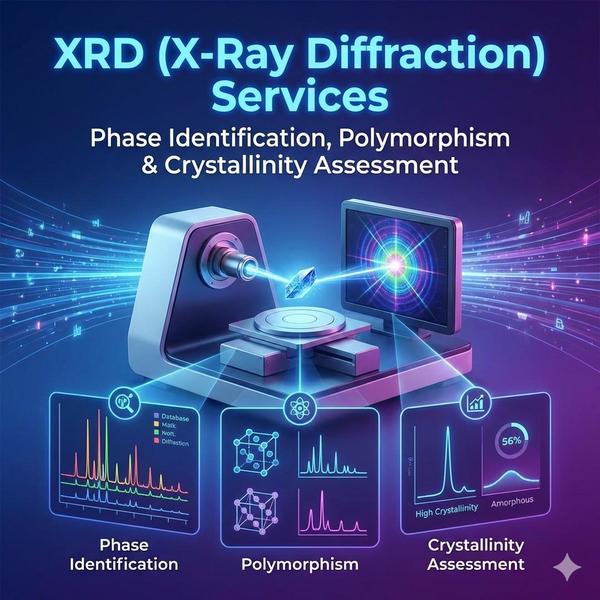
At Dextrose Technologies Pvt. Ltd., we provide XRD (X-Ray Diffraction) for reliable crystalline phase identification and solid-state characterization. XRD is the gold-standard technique to identify crystalline materials, differentiate polymorphs, and assess crystallinity trends—supporting materials science, pharmaceuticals, chemicals, and R&D/QC investigations. Crystalline phase identification We match diffraction patterns to identify crystalline phases and support material verification, contamination checks, and batch comparison. Polymorphism and solid-state characterization We evaluate polymorphic differences and solid-state changes that can impact stability and performance, supporting formulation development and material selection. Crystallinity assessment We assess overall crystallinity trends (semi-quantitative/quantitative as per scope and data quality), useful for comparing processing conditions, heat treatment, or formulation effects. Deliverables * XRD diffractograms with peak list (2θ/intensity) * Phase identification summary (where applicable) * Crystallinity/trend assessment (as applicable) * Interpretation notes and recommendations for follow-up confirmation if required Get started Share your sample type (powder/film/solid), expected phases (if any), and objective (phase ID, polymorph, crystallinity). We’ll recommend the right scan parameters and reporting format.

Still searching for
microbial technique?