Bangalore
08042753298
+919686928701

Items tagged with 'non volatile mixtures'

68179d65be22ee500d53ff54 Card 2

product image
Chromatography services

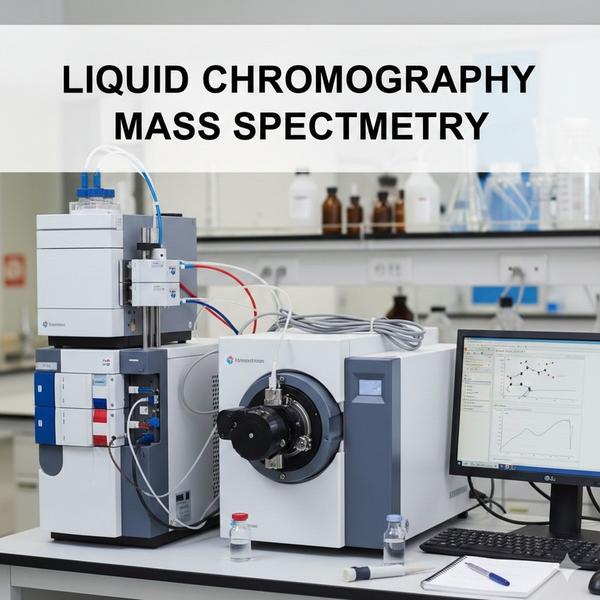
At Dextrose Technologies Pvt. Ltd., we provide Liquid Chromatography–Mass Spectrometry (LCMS / LC–MS/MS) services for high-confidence molecular weight confirmation, compound identification, and impurity/degradation profiling. LCMS is ideal for non-volatile and thermally sensitive compounds where mass-based confirmation is required. We support R&D and exploratory projects with clear reporting and practical interpretation. Molecular Weight Confirmation We confirm molecular mass and assess molecular ions/adducts (as applicable) to support identity verification and batch comparison. Compound Identification and Characterization We support compound identification using LC separation plus MS/MS-based fragmentation (scope-dependent), enabling stronger confidence than chromatography alone. Impurity Identification and Profiling We detect and profile impurities in complex mixtures and help prioritize unknown peaks for follow-up characterization. Degradation Product Identification We support stability investigations by detecting and identifying degradation products formed under storage or stress conditions (as applicable to your study plan). Metabolite Identification For exploratory studies, we can support metabolite detection/identification workflows based on the sample type and objective (project-dependent). Bioanalytical Sample Analysis (non-GLP exploratory) We handle exploratory bioanalytical analysis for R&D (non-GLP), with method approach finalized based on matrix complexity and target sensitivity. Peptide and Small Molecule Analysis We support peptide and small molecule analysis (project scope dependent), including mass confirmation and profiling. MS Data Interpretation and Reporting We provide structured reports with chromatograms, key ions, observed masses, and interpretation notes—so teams can act quickly. Deliverables * Chromatograms + peak tables * Observed m/z values and spectra/MSMS details (where applicable) * Impurity/degradation profiling summary * Quantitative results (if calibration standards are provided/defined) * Clear conclusions and next-step recommendations Get started Share your sample type, expected mass range, target analytes (if known), and objective (ID/impurities/degradation). We’ll recommend the most reliable LCMS approach.

68179d65be22ee500d53ff54 Card 2

product image
Chromatography services

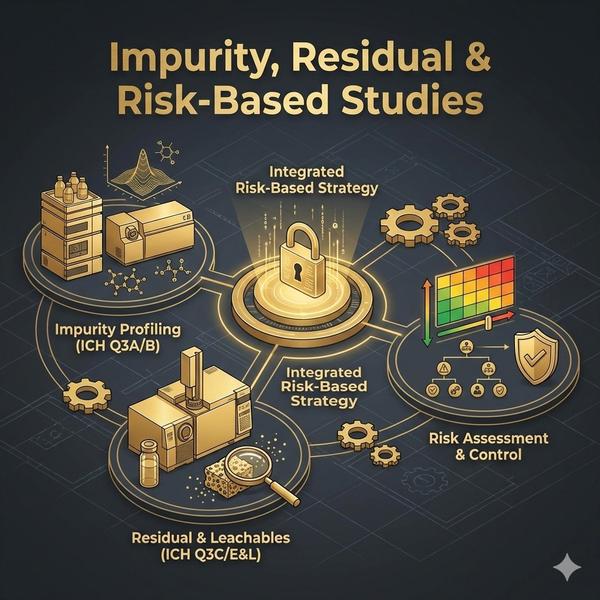
At Dextrose Technologies Pvt. Ltd., we provide impurity, residual, and risk-based analytical studies to help teams mitigate regulatory risk and build a clear control strategy. Our work supports ICH-oriented impurity profiling and residual solvent analysis, unknown impurity identification using MS tools, and screening studies that strengthen development decisions and documentation. ICH Q3A/Q3B-Oriented Impurity Profiling We support impurity and related substances profiling aligned to ICH Q3A/Q3B intent, using HPLC/RP-HPLC (and LCMS where required) to generate clear impurity visibility and trend-ready outputs. ICH Q3C-Oriented Residual Solvent Analysis We perform residual solvent testing using GC-FID or Headspace GCMS with an ICH Q3C-oriented approach, reporting results in clear units and against the target solvent list/limits you define. Unknown Impurity Identification (LCMS / GCMS) We investigate unknown peaks using LCMS (non-volatile/polar) and GCMS (volatile/semi-volatile) to support impurity identification, root-cause analysis, and next-step planning. Extractables & Leachables Screening (GCMS) We offer screening-level extractables/leachables (E&L) studies by GCMS to evaluate potential risks from packaging or contact materials (scope-dependent, intended for early risk assessment unless a specific standard is agreed). Cross-contamination Risk Assessment Support We provide analytical inputs that support cross-contamination risk assessments—such as targeted carryover checks, comparative profiling, and data packaging for internal QA review (scope-dependent). Outcome you can expect * Reduced regulatory risk through early impurity/residual visibility * Clear impurity control strategy supported by structured analytical data Get started Share your product type, target analytes/solvents, reporting limits, and whether you need profiling only or profiling + unknown ID. We’ll recommend the most efficient plan.

68179d65be22ee500d53ff54 Card 2

product image
Chromatography services

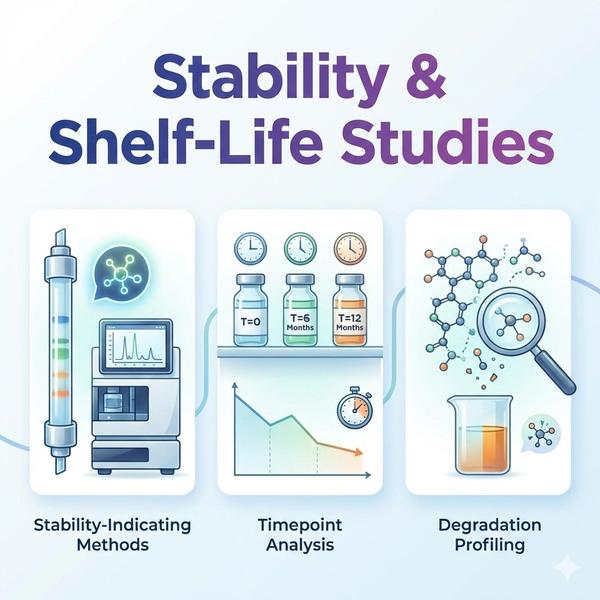
At Dextrose Technologies Pvt. Ltd., we support Stability & Shelf-Life Studies to help you justify shelf-life, understand degradation pathways, and generate clear, trend-ready data for internal QA and development decisions. Our services cover stability-indicating method development, long-term and accelerated timepoint analysis, degradation profiling, and packaging interaction screening using chromatography and mass spectrometry. Stability-Indicating Method Development We develop methods that can clearly separate the main compound from degradation products, enabling accurate stability assessment and cleaner decision-making. Long-Term & Accelerated Stability Sample Analysis We analyze stability samples across planned timepoints for long-term and accelerated studies, reporting assay/impurity trends in structured formats. Degradation Product Profiling (HPLC / LCMS) We profile degradation products using HPLC and support identification/confirmation with LCMS where required (scope-dependent), helping you understand what is forming and when. Volatile Degradation Monitoring (HS-GCMS) For volatile components or residual solvents, we monitor changes over time using Headspace GCMS, enabling sensitive tracking with reduced matrix interference. Packaging Interaction Screening Screening studies to evaluate potential packaging-contact interactions that may impact product quality, supporting packaging selection and early risk assessment. Trend Analysis Across Stability Time Points We provide trend-ready tables and summaries across timepoints to support faster reviews and clearer shelf-life justification. Outcome you can expect * Strong stability-indicating methods and timepoint-ready workflows * Clear degradation visibility (non-volatile and volatile) * Structured trend data to support shelf-life justification Get started Share your product type, analyte(s), planned timepoints, storage conditions, and reporting expectations. We’ll recommend the most efficient stability workflow.

68179d65be22ee500d53ff54 Card 2

product image
Chromatography services

At Dextrose Technologies Pvt. Ltd., our R&D Analytical Support helps teams move faster from idea to data with the right analytical strategy and clear, decision-ready reporting. We support method development, compound understanding, reaction tracking, and early impurity/degradation visibility—so you can shorten development cycles and reduce trial-and-error. HPLC / RP-HPLC Method Development & Optimization We develop and optimize chromatography methods (column, mobile phase, gradient, flow, detection) to achieve strong resolution, repeatability, and robustness for your sample type. Assay Method Development for APIs & Formulations Calibration-based assay methods for APIs, intermediates, and formulations with clear reporting units and suitability checks as applicable. LCMS-Based Molecular Weight Confirmation Mass confirmation for non-volatile compounds to support identity verification, batch comparison, and early-stage characterization. Structural Elucidation (Small Molecules) Support for small-molecule structural understanding using MS-based interpretation (scope-dependent), with clear notes and next-step recommendations when needed. Impurity and Degradation Product Identification We profile impurities and degradation products to provide early visibility into risks and to guide method refinement and process decisions. Reaction Monitoring (HPLC / TLC) Fast reaction tracking to support endpoint decisions and process optimization, reported in a structured and easy-to-interpret format. Peptide & Small Molecule LCMS Analysis LCMS analysis for peptides and small molecules (scope-dependent), supporting mass confirmation and profiling. Exploratory Bioanalytical LCMS (Non-GLP) Exploratory analysis for R&D (non-GLP) with workflows tailored to matrix complexity and required sensitivity. Outcome you can expect * Robust analytical methods suitable for R&D progression * Early impurity and degradation visibility * Faster development cycles with clearer decisions Get started Share your compound class, sample matrix, development stage, and goal (method development, impurity ID, reaction monitoring). We’ll propose the fastest, most reliable plan.

68179d65be22ee500d53ff54 Card 2

product image
Chromatography services

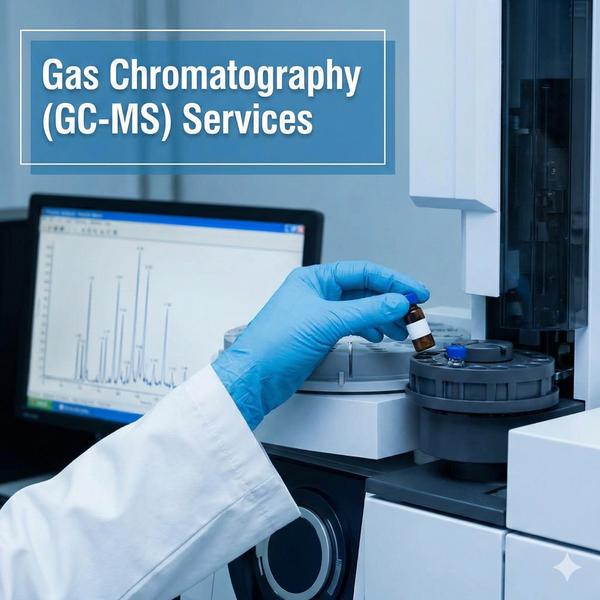
At Dextrose Technologies Pvt. Ltd., we provide Gas Chromatography–Mass Spectrometry (GCMS / GC–MS) services for identification and profiling of volatile and semi-volatile compounds in complex samples. GCMS combines strong chromatographic separation with mass spectral confirmation to support unknown peak identification, impurity profiling, and screening studies for R&D and industrial applications. Volatile and Semi-Volatile Compound Identification We identify volatile and semi-volatile compounds using GC separation and MS-based spectral interpretation, supporting troubleshooting, screening, and confirmation workflows. Impurity Profiling We detect and profile impurities and unknown peaks to support batch comparison, contamination investigations, and process optimization. Extractables and Leachables (Screening) We offer screening-level E&L studies to evaluate potential extractable/leachable compounds from packaging, plastics, tubing, or contact materials (scope-dependent, non-regulatory screening unless specified). Flavor and Fragrance Component Analysis We can support fragrance/flavor component analysis only when identification is feasible within our available spectral resources and project scope. (If a dedicated fragrance library is required, we will clarify feasibility upfront.) Environmental and Industrial Sample Analysis We analyze VOC/SVOC profiles in environmental and industrial samples (water/soil/air extracts, process samples, materials) for screening, comparison, and investigation needs. Deliverables * Chromatograms + peak tables * Mass spectra and ID summary for identified peaks (where applicable) * Impurity/profile interpretation notes * Quantification support when standards and reporting limits are defined Get started Share your sample type, target analytes (if known), expected concentration range, and whether you need identification only or identification + quantification.

68179d65be22ee500d53ff54 Card 2

product image
Microbiology Services

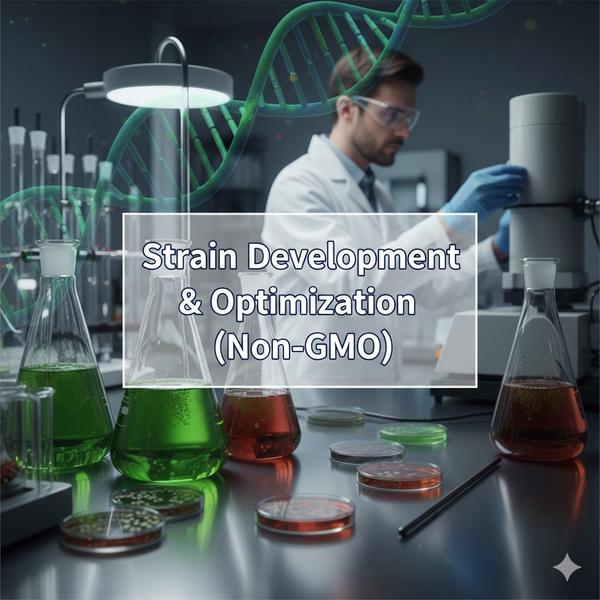
At Dextrose Technologies Pvt. Ltd., we offer Non-GMO microbial strain development and optimization to help improve culture performance for research and industrial applications. Our work focuses on selection-based improvement—including adaptation under controlled conditions, stress tolerance studies, and phenotypic screening—without genetic engineering. We follow sterile, standardized workflows and document performance metrics so you can make confident, data-backed decisions. Microbial Strain Development (Non-GMO) We support non-GMO strain improvement through iterative selection, controlled adaptation, and performance evaluation based on your target outcome (growth, yield proxy, robustness, or stability—scope dependent). Strain Adaptation and Stress Tolerance Studies We run controlled studies to assess tolerance to relevant stresses such as pH variation, temperature shifts, osmotic stress, oxidative stress, and selective culture conditions, based on your process environment. Phenotypic Screening and Selection We screen and compare isolates/variants using measurable phenotypic parameters such as growth rate, colony morphology consistency, survival under stress, and reproducibility, enabling practical selection of the best-performing strain candidates. Culture Performance Optimization We optimize culture parameters including media composition, inoculum strategy, pH, temperature, aeration/agitation, and incubation timing to improve consistency and overall performance. Deliverables * Study plan and test conditions (documented) * Comparative results tables (growth/performance metrics as applicable) * Selected strain shortlist with justification * Culture optimization notes and recommended operating window * Contamination/purity checks where required Get started Share the organism type, intended application, target performance goal, and operating conditions. We’ll propose a non-GMO development and screening workflow.

68179d65be22ee500d53ff54 Card 2

product image
Bio-analytical services

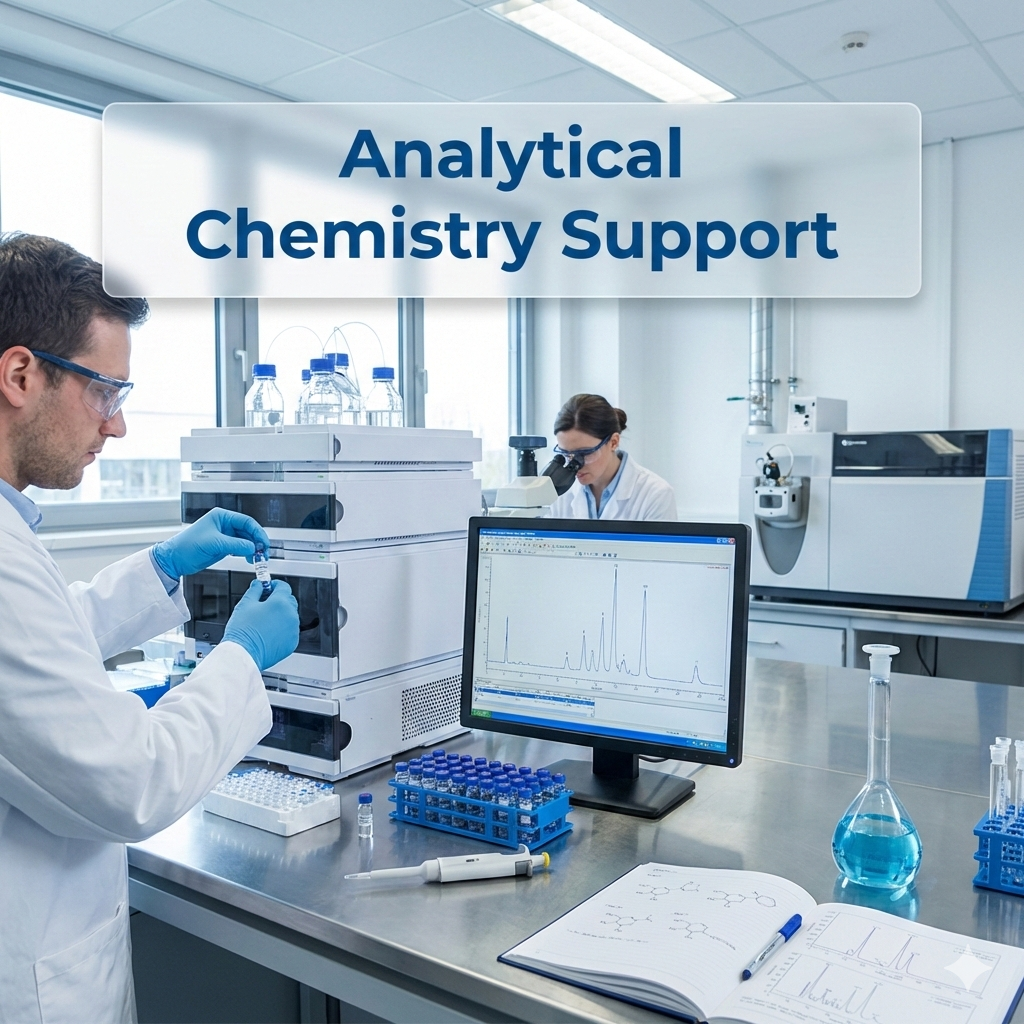
At Dextrose Technologies Pvt. Ltd., we provide Analytical Chemistry Support for R&D teams, academic labs, and industrial clients who need clear, reliable answers from complex samples. Our services cover compound identification, impurity profiling, and quantitative estimation using validated workflows and decision-ready reporting. GCMS Analysis – Compound identification and profiling GCMS is used for volatile and semi-volatile compound profiling, screening unknown peaks, and supporting contamination/impurity investigations. We deliver chromatograms, mass spectral confirmation (where applicable), and clear interpretation aligned to your objective. LCMS Analysis – Molecular mass and impurity analysis LCMS is ideal for non-volatile, polar, and thermally sensitive compounds. We support molecular mass confirmation, impurity/degradation profiling, and targeted quantification (project scope dependent), with strong selectivity and sensitivity. HPLC / GC-FID Analysis – Quantitative estimation and purity assessment For routine QC and batch comparisons, HPLC and GC-FID provide reliable calibration-based quantification, assay/purity testing, and impurity monitoring. We report chromatograms, peak tables, and concentration results in clear units based on your requirement. Deliverables * Chromatograms + peak tables (RT/area/area%) * Quantitative results (ppm, %, mg/mL—based on requirement) * Method notes and observation summary * Optional: recommendations for confirmatory testing where needed Get started Share your sample type, target analytes (if known), concentration range, and reporting format. We’ll recommend the most efficient technique and workflow.

68179d65be22ee500d53ff54 Card 2

product image
Bio-analytical services

At Dextrose Technologies Pvt. Ltd., we provide LCMS (LC-MS/MS) bioanalytical testing for accurate identification and quantification of non-volatile, polar, and thermally sensitive compounds across complex sample matrices. LCMS is the preferred technique when GC methods are not suitable, and when you need high sensitivity with strong selectivity for trace-level analytes. What LCMS is ideal for * Targeted quantification of small molecules (ppm/ppb level as required) * Impurity and degradation profiling * Unknown peak investigation (mass-based confirmation) * Metabolite/biomolecule screening (project-dependent scope) * R&D support, troubleshooting, and routine QC testing Our LCMS workflow Sample understanding and method selection (targeted / screening) Sample preparation and cleanup (matrix-appropriate) LC separation with optimized run conditions for resolution and repeatability MS/MS detection for confident confirmation and robust quantification Reporting with clean documentation and clear conclusions Deliverables * Chromatograms and peak table (RT/area/response) * Mass spectra / MS/MS confirmation details (where applicable) * Quantitative results with calibration approach and method notes * Summary interpretation + recommendations for next-step confirmation if needed Get started Share your sample type, target analytes (if known), expected concentration range, and required reporting format—we’ll recommend the most reliable LCMS approach.

68179d65be22ee500d53ff54 Card 2

product image
Sample Preparations

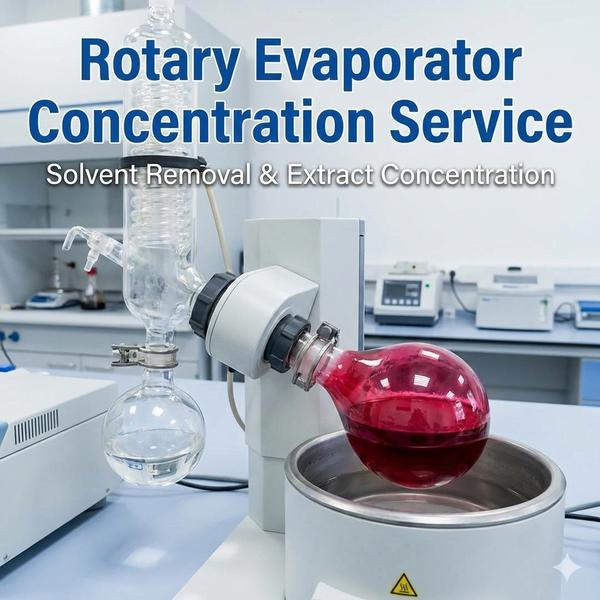
At Dextrose Technologies Pvt. Ltd., we provide Rotary Evaporator (Rotavap) concentration to efficiently remove solvents and concentrate extracts under controlled conditions. Rotary evaporation is ideal for natural product research, bioactive fraction preparation, and pre-analytical workflows where you need gentle, efficient solvent removal before downstream testing (GCMS, LCMS, HPLC) or formulation steps. What we support Solvent removal from extracts and reaction mixtures Concentration of plant/microbial extracts and bioactive fractions Reduction of volume to improve handling, storage, and analytical readiness Support for solvent exchange (scope-dependent) Why rotary evaporation Concentration under reduced pressure helps lower effective boiling temperature Suitable for heat-sensitive samples when parameters are controlled Produces cleaner, manageable concentrates for repeat analysis Deliverables Concentrated extract (volume/format as agreed) Process notes (solvent, temperature range, vacuum conditions as applicable) Optional: guidance for storage and next-step analysis Get started Share your solvent type, starting volume, sample sensitivity, and target final volume/consistency. We’ll recommend the best rotavap settings and handover format.

Still searching for
non volatile mixtures?