
>> Overview
Biotechnology is one of the fastest-growing fields connecting biology, technology, healthcare, agriculture, pharmaceuticals, environment, and industrial innovation. It offers strong career opportunities for students and professionals who want to work in research, diagnostics, product development, quality control, clinical research, and advanced laboratory technologies.
Building a career in biotechnology requires both strong theoretical knowledge and practical laboratory skills. Hands-on exposure helps students understand real scientific workflows and prepares them for academic research, industry roles, and higher studies.
>> Why Choose Biotechnology as a Career?
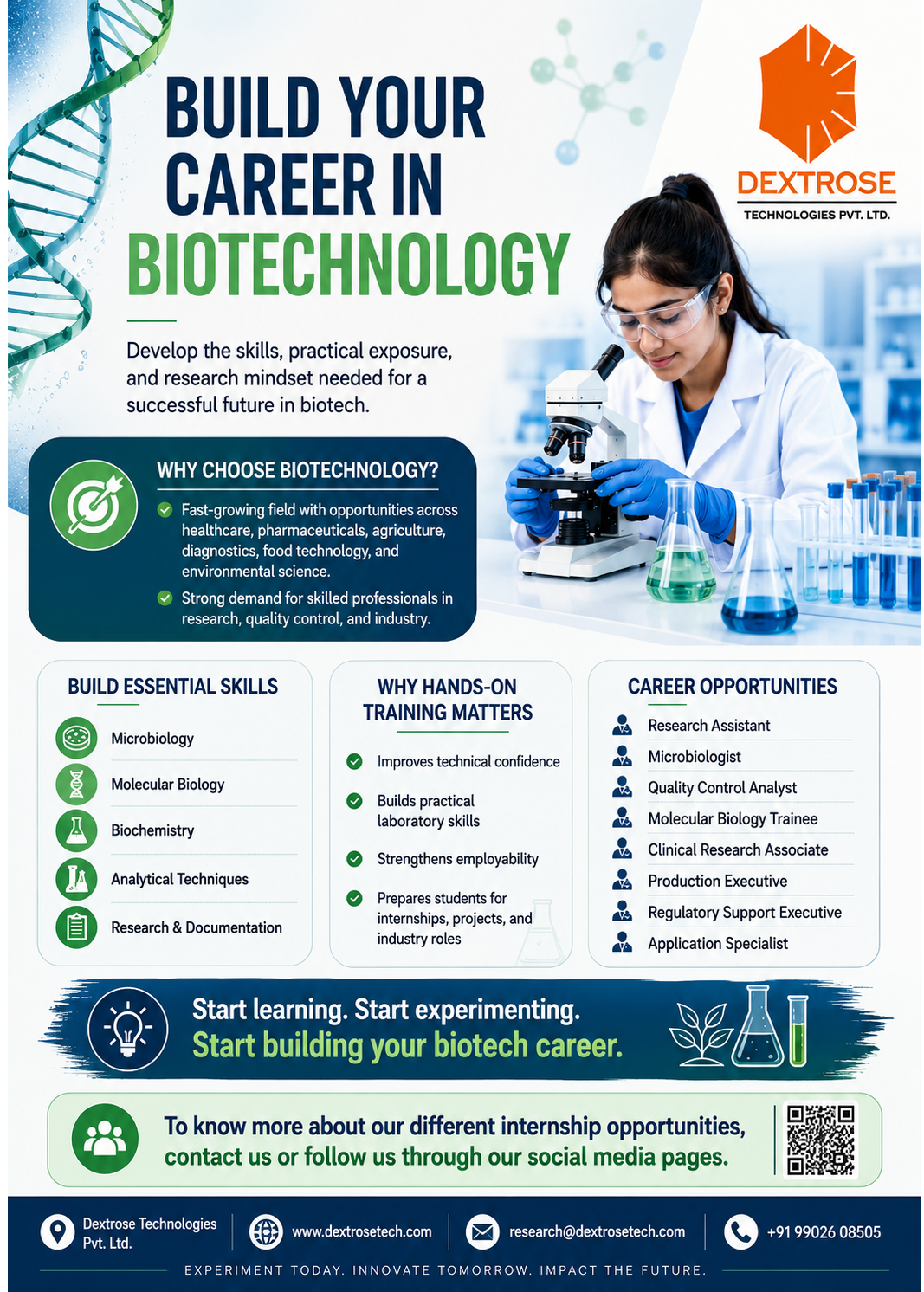
Biotechnology plays a major role in solving real-world problems in healthcare, food production, disease diagnosis, drug discovery, environmental protection, and sustainable agriculture. As industries continue to depend on advanced biological solutions, the demand for skilled biotech professionals is increasing.
A career in biotechnology allows students to work across multiple sectors such as pharmaceuticals, life sciences, microbiology, molecular biology, bioinformatics, agriculture biotechnology, medical biotechnology, and industrial biotechnology.
>> Skills Needed for a Successful Biotech Career
To grow in biotechnology, students need a combination of technical knowledge, laboratory discipline, analytical thinking, and problem-solving ability. Important skills include aseptic handling, microbial culture techniques, molecular biology methods, analytical instrumentation, documentation, data interpretation, and research planning.
Practical training in core techniques helps students gain confidence and improves their readiness for internships, research projects, industry jobs, and postgraduate opportunities.
>> Key Areas to Learn
Students interested in biotechnology should focus on developing skills in:
Microbiology: microbial isolation, staining, culture techniques, antimicrobial testing, and contamination control.
Molecular Biology: DNA extraction, PCR, gel electrophoresis, gene analysis, and basic molecular diagnostics.
Biochemistry: protein estimation, enzyme assays, metabolite analysis, and biochemical testing.
Analytical Techniques: SEM, LCMS, GCMS, chromatography, spectroscopy, and sample preparation.
Research Methods: literature review, experimental design, result interpretation, report writing, and presentation skills.
>> Career Opportunities in Biotechnology
Biotechnology graduates can explore career paths in research laboratories, pharmaceutical companies, diagnostic centers, food industries, agricultural biotech companies, environmental labs, hospitals, clinical research organizations, and academic institutions.
Common roles include research assistant, laboratory technician, quality control analyst, quality assurance executive, microbiologist, molecular biology trainee, clinical research associate, production executive, regulatory support executive, and application specialist.
>> Importance of Hands-on Training
Classroom learning gives the foundation, but laboratory training builds professional capability. Hands-on training helps students understand how experiments are planned, performed, documented, and interpreted.
Practical exposure also improves laboratory confidence, technical accuracy, scientific thinking, and employability. Students who gain real lab experience are better prepared for research projects, internships, interviews, and industry expectations.
>> How to Start Your Biotech Career
Start by strengthening your basics in microbiology, molecular biology, biochemistry, genetics, and analytical techniques. Participate in internships, workshops, research projects, and certification programs that provide practical laboratory exposure.
Build a strong profile by learning relevant techniques, maintaining proper documentation, presenting your work, and staying updated with current developments in biotechnology and life sciences.
>> Conclusion
Biotechnology offers a dynamic and future-focused career path for students who are passionate about science and innovation. With the right technical skills, practical training, and research mindset, students can build meaningful careers in healthcare, pharmaceuticals, agriculture, environment, and industrial biotechnology.