
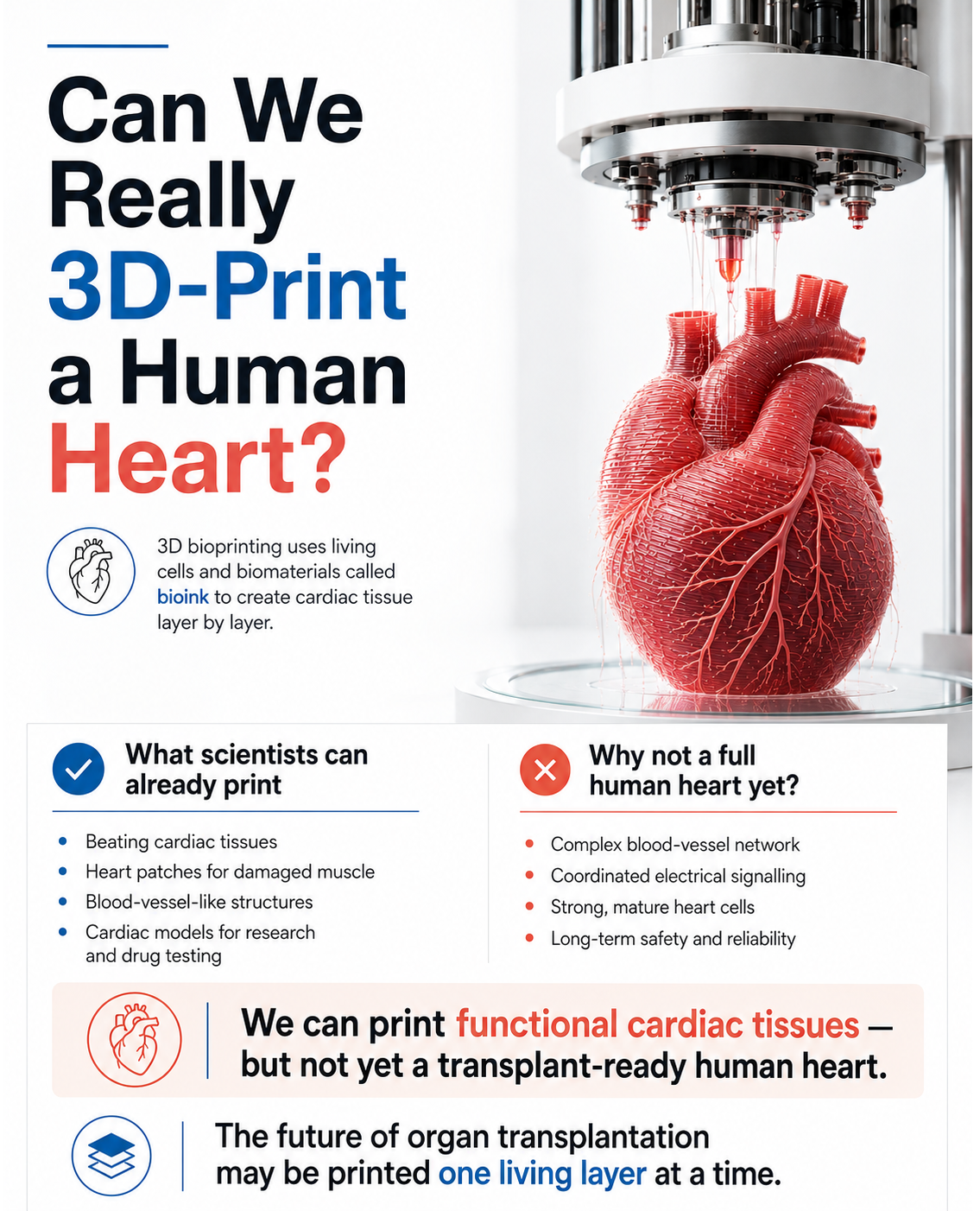
>> 3D bioprinting uses living cells and biomaterials called bioink to create tissue layer by layer.
>> Scientists have already developed:
Beating cardiac tissue
Heart patches for damaged muscle
Blood-vessel-like structures
Human heart models for drug testing
However, a complete transplant-ready human heart has not yet been printed.
>> The main challenges include creating a full blood supply, coordinating electrical signals, producing mature heart cells and ensuring long-term safety.
In the future, patient-specific cells could be used to create personalised tissues with a lower risk of rejection.
>> Why Is It Important?
Heart bioprinting could support:
Safer drug testing
Personalised treatments
Better disease research
Repair of damaged heart tissue
Reduced dependence on donor organs
>> Can We Print a Human Heart Today?
Not yet.
We can print functional cardiac tissues, but producing a complete, safe and fully functioning human heart remains a major scientific goal.
The future of organ transplantation may be printed one layer at a time.