
Biological research is entering a new era where data is becoming as important as laboratory experiments. With the rapid growth of genome sequencing, protein analysis, drug discovery, and disease research, scientists now generate massive amounts of biological data every day. Bioinformatics helps organize, analyze, and interpret this data, while artificial intelligence adds speed, accuracy, and predictive power. Together, bioinformatics and AI are transforming the way researchers understand life at the molecular level.
>> What Is Bioinformatics?
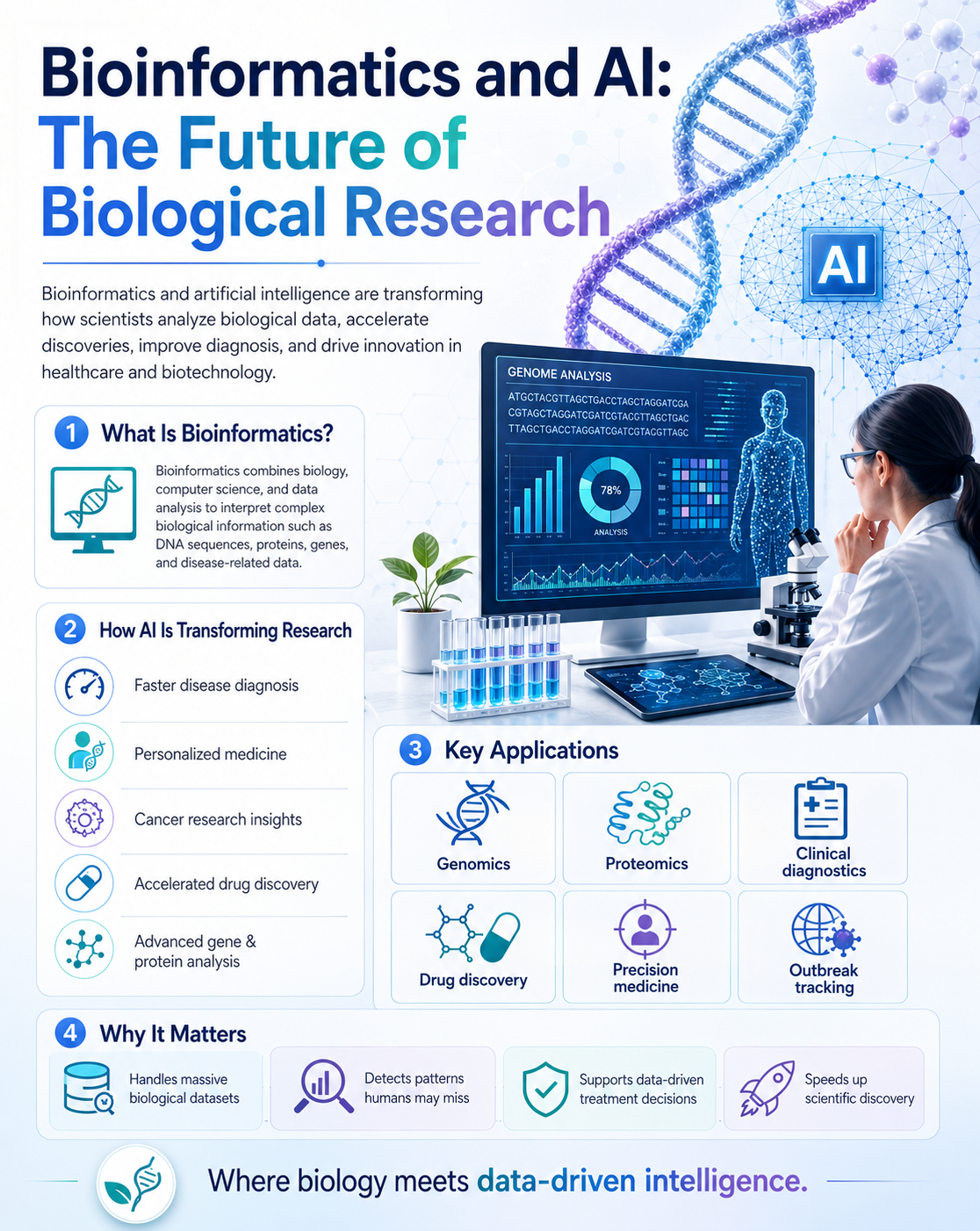
Bioinformatics is the use of computer science, statistics, and biology to study complex biological information. It helps researchers analyze DNA sequences, protein structures, gene expression patterns, mutations, and disease-related data. Instead of studying biological samples only through traditional laboratory methods, scientists can now use computational tools to identify patterns, compare genetic information, and generate meaningful insights from large datasets.
>> How AI Is Changing Bioinformatics
Artificial intelligence is making bioinformatics faster and more powerful. AI-based tools can process huge biological datasets within a short time and identify patterns that may be difficult for humans to detect manually. Machine learning algorithms can help predict gene functions, understand disease mechanisms, identify potential drug targets, and study how proteins interact inside the body. This improves the speed and quality of biological research.
>> Role in Disease Diagnosis and Treatment
One of the most important applications of bioinformatics and AI is in healthcare. By analyzing genetic data, researchers can identify disease-causing mutations and understand why certain individuals are more vulnerable to specific conditions. In cancer research, bioinformatics helps detect genetic changes in tumors, while AI can support the selection of targeted treatment strategies. This is a major step toward personalized medicine, where treatment decisions are based on a patient’s unique genetic profile.
>> Impact on Drug Discovery
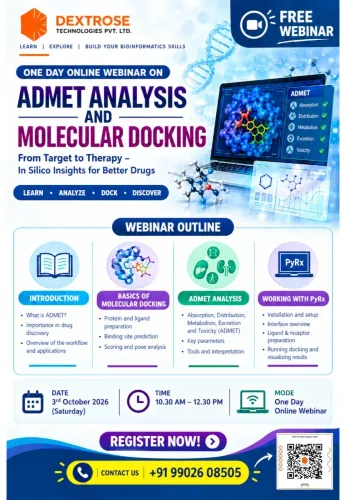
Developing a new drug is usually a long and expensive process. Bioinformatics and AI can make this process more efficient by identifying promising drug targets, predicting how molecules may interact with proteins, and screening large numbers of compounds digitally before laboratory testing. This reduces time, cost, and early-stage trial errors. As a result, pharmaceutical and biotechnology companies are increasingly using AI-driven bioinformatics in drug discovery pipelines.
>> Future of Biological Research
The future of biological research will depend heavily on the integration of laboratory science, computational biology, and artificial intelligence. From understanding genetic disorders to developing new medicines and improving agricultural biotechnology, bioinformatics and AI will play a central role in solving complex biological problems. Researchers with knowledge of both biology and data science will be highly valuable in the coming years.
>> Conclusion
Bioinformatics and AI are no longer optional tools in modern biology; they are becoming essential parts of research and innovation. By combining biological knowledge with advanced computational power, scientists can discover new insights faster and make better decisions in healthcare, biotechnology, and drug development. As biological data continues to grow, bioinformatics and AI will remain at the heart of future scientific progress.