

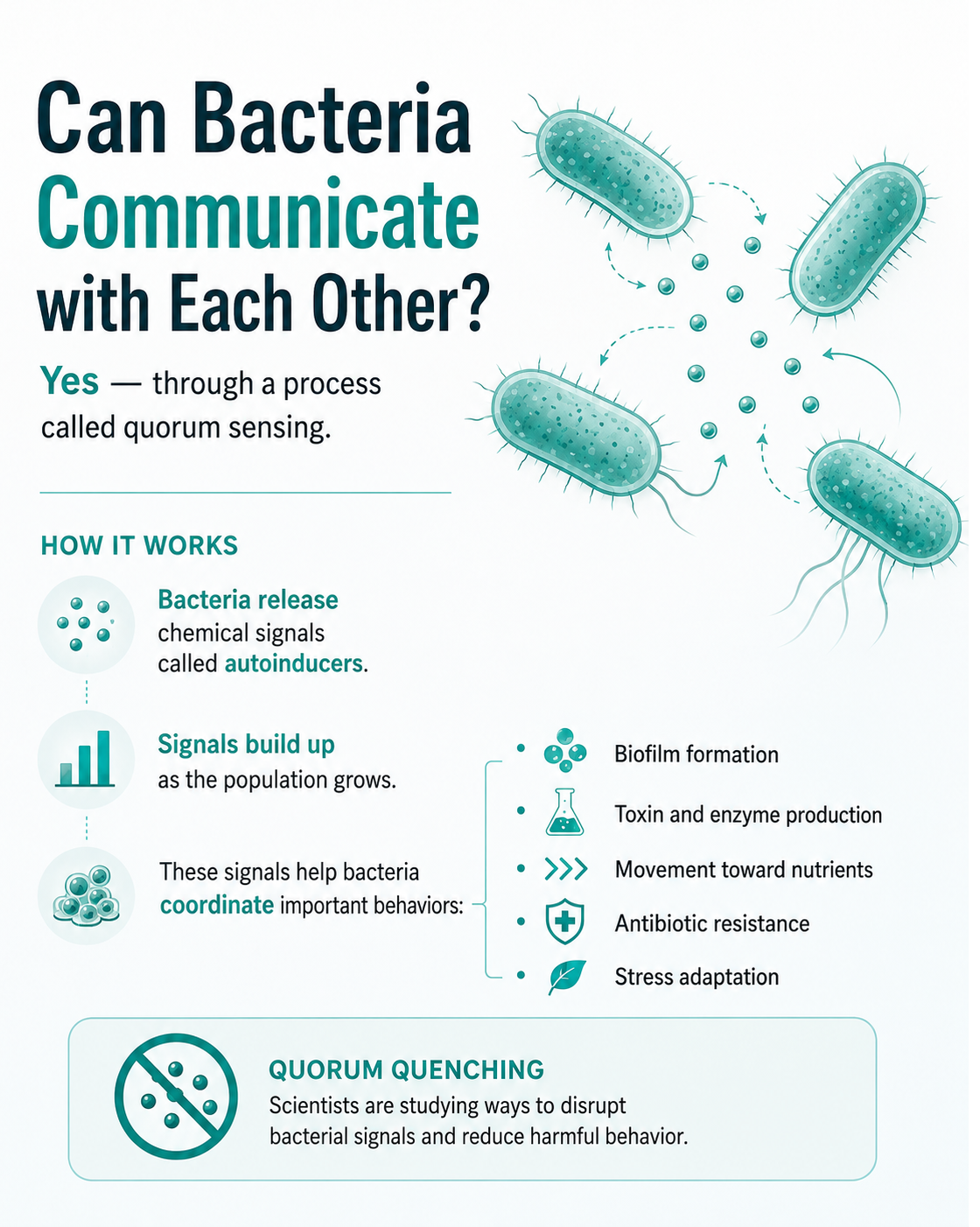
Bacteria may be microscopic, but they are not isolated organisms working independently. They can communicate with one another using chemical signals, allowing entire bacterial communities to coordinate their activities. This communication system is known as quorum sensing.
>> What Is Quorum Sensing?
Quorum sensing is a process in which bacteria produce and release small signalling molecules called autoinducers. As the bacterial population increases, these molecules accumulate in the surrounding environment.
When the concentration of signalling molecules reaches a specific level, bacteria detect them and respond by activating or suppressing certain genes. This enables the bacterial population to behave like a coordinated community rather than as individual cells.
>> What Do Bacteria Communicate About?
Bacterial communication helps microorganisms coordinate several important activities, including:
Biofilm formation
Production of enzymes and toxins
Movement towards nutrients
Exchange of genetic material
Bioluminescence
Antibiotic resistance
Survival under stressful conditions
By communicating, bacteria can perform actions that would be ineffective if carried out by only a few individual cells.
>> How Do Bacteria Form Biofilms?
One of the most common outcomes of bacterial communication is the formation of biofilms. A biofilm is a structured community of bacteria attached to a surface and surrounded by a protective layer.
Biofilms can develop on natural and artificial surfaces, including teeth, medical devices, pipelines, food-processing equipment and water systems. Dental plaque is a familiar example of a bacterial biofilm.
The protective structure of a biofilm can make bacteria more resistant to disinfectants, antibiotics and environmental stress.
>> Do All Bacteria Use the Same Language?
Different bacterial species produce different types of signalling molecules. Some signals are used mainly for communication between bacteria of the same species, while others allow communication between different bacterial species.
Certain bacteria can also detect chemical signals produced by plants, animals and other microorganisms. This creates complex communication networks within the gut, soil, oceans and other ecosystems.
>> Why Is Bacterial Communication Important in Human Health?
Quorum sensing plays an important role in bacterial infections. Some disease-causing bacteria wait until their population reaches a sufficient level before producing toxins or other virulence factors.
This coordinated behaviour helps bacteria avoid early detection by the immune system. It can also contribute to persistent infections, particularly when biofilms form on tissues, wounds or medical implants.
>> Can Scientists Interrupt Bacterial Communication?
Researchers are developing methods to block bacterial communication through a process known as quorum quenching. Instead of directly killing bacteria, this approach interferes with the production, detection or transmission of bacterial signals.
Quorum-quenching strategies may help reduce biofilm formation, toxin production and bacterial virulence. They are being studied as potential alternatives or supportive treatments to conventional antibiotics.
>> Communication in the Microbial World
Bacterial communication demonstrates that microorganisms can display highly coordinated social behaviour. Through chemical signalling, bacteria can sense their population, respond to environmental changes and work collectively.
Understanding how bacteria communicate can support the development of improved infection-control methods, medical treatments, industrial processes and environmental technologies.