

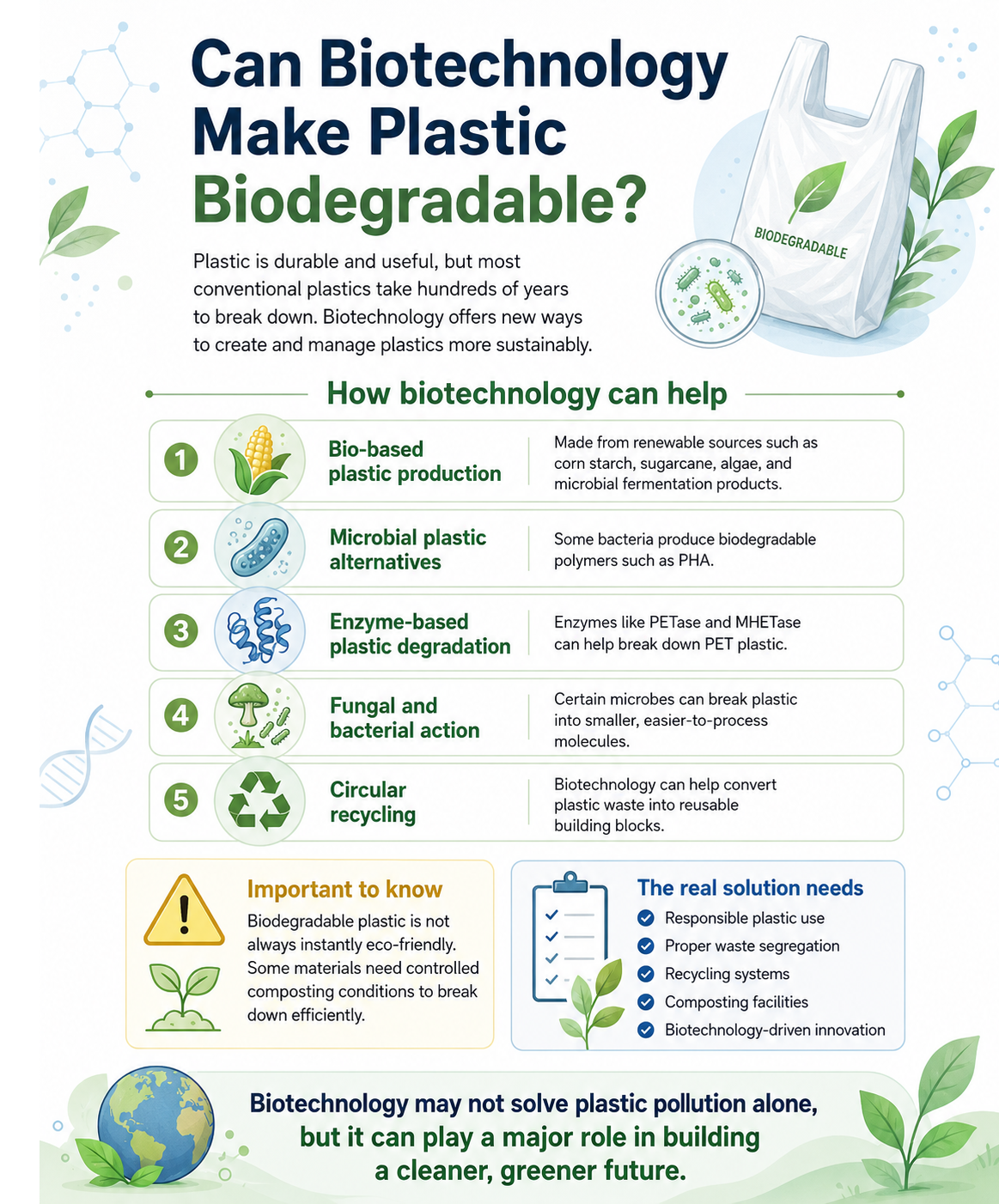
Plastic is useful, lightweight, and durable, but these same properties make it difficult to break down. Conventional plastics can remain in the environment for hundreds of years, slowly turning into microplastics that pollute soil, water, and food chains.
Biotechnology offers a promising solution by using microorganisms, enzymes, and bio-based materials to create plastics that are easier to degrade. Instead of depending only on petroleum-based plastics, scientists are developing materials from renewable sources such as corn starch, sugarcane, algae, vegetable oils, and microbial fermentation products.
>> Bio-Based Plastics from Nature
Some microorganisms can produce natural plastic-like polymers such as PHA, which can biodegrade under suitable conditions. Another example is PLA, made from fermented plant sugars and used in packaging, disposable products, medical materials, and 3D printing. These bio-based plastics reduce dependence on fossil fuels and support more sustainable material production.
>> Microbes and Enzymes That Break Plastic
Certain bacteria and fungi can produce enzymes that break plastic polymers into smaller molecules. Enzymes such as PETase and MHETase have shown potential in degrading PET plastic, commonly used in bottles and packaging. Through biotechnology, these enzymes can be improved to work faster and more efficiently.
>> Is Biodegradable Plastic Always Eco-Friendly?
Not always. Some biodegradable plastics need specific composting conditions such as controlled temperature, moisture, and microbial activity. If they are thrown into regular soil, oceans, or landfills, they may still degrade slowly. Proper waste segregation, composting systems, and public awareness are essential.
>> Conclusion
Yes, biotechnology can help make plastic biodegradable by creating bio-based plastics and developing microbial or enzyme-based plastic degradation systems. However, it must be supported by responsible plastic use, proper disposal, recycling, and strong waste management practices. With the right approach, biotechnology can play a major role in reducing plastic pollution and building a more sustainable future.