
>> Introduction
Your DNA is like a biological instruction manual. It carries information that influences how your body grows, functions, repairs itself, and responds to disease. Today, with advances in genetic testing and biotechnology, scientists can study DNA to identify certain changes that may increase the risk of developing specific health conditions. This has opened the door to a more personalized approach to healthcare, where prevention, screening, and treatment can be guided by an individual’s genetic profile.
>> What DNA Can Reveal About Health
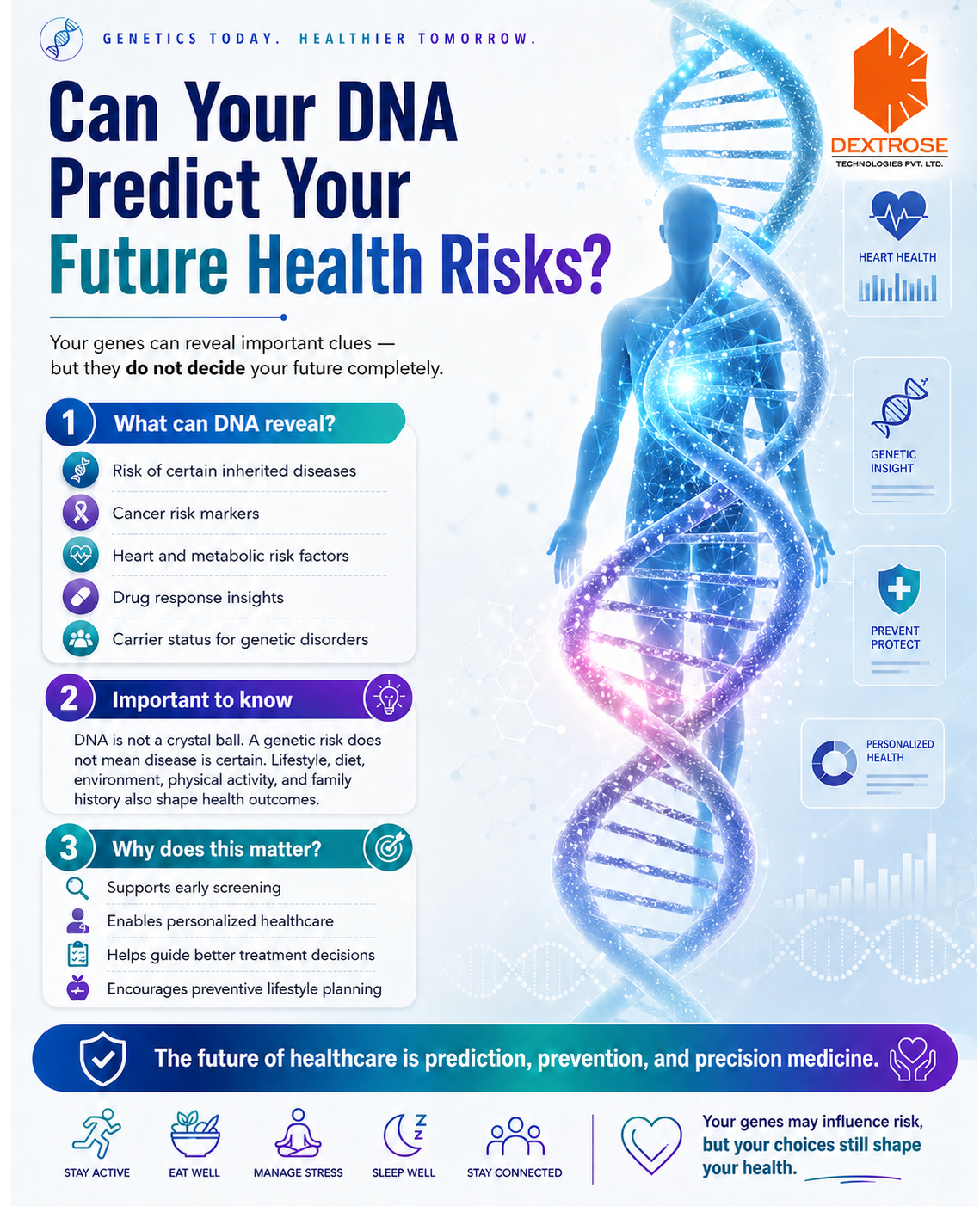
DNA testing can identify genetic variations that are linked to inherited conditions, disease susceptibility, drug response, and carrier status for certain genetic disorders. For example, some genetic changes may be associated with a higher risk of cancers, heart-related conditions, metabolic disorders, or rare inherited diseases. Genetic testing is already used in healthcare to support diagnosis, guide treatment decisions, and assess risk in individuals and families.
>> Can DNA Predict the Future?
DNA can provide valuable clues, but it cannot predict the future with complete certainty. Having a genetic risk does not always mean a person will develop a disease, and not having a known risk variant does not guarantee lifelong protection. Most health conditions are influenced by a combination of genes, lifestyle, environment, age, diet, physical activity, and exposure to external factors. This means DNA is only one part of the health-risk puzzle.
>> The Role of Genetic Testing
Genetic testing works by analyzing a sample such as blood, saliva, or cheek cells to look for changes in genes, chromosomes, or proteins. These results can help healthcare professionals understand whether a person has an increased risk for certain conditions or may need earlier screening and preventive care. In some cases, genetic information can also help doctors choose medicines or treatment strategies that are better suited to an individual’s biology.
>> Why This Matters in Modern Healthcare
The biggest value of DNA-based risk prediction is early awareness. When people understand their genetic risks, they can make informed decisions about regular screening, lifestyle changes, family planning, and preventive healthcare. This is especially important when there is a strong family history of conditions such as cancer, heart disease, or inherited disorders. With proper medical guidance, genetic information can become a powerful tool for proactive health management.
>> Limitations You Should Know
Genetic testing has strong potential, but it also has limits. Test results may sometimes be uncertain, incomplete, or difficult to interpret without professional support. Some genetic variants are well understood, while others may not have clear clinical meaning. Genetic test results can also have emotional, social, and financial implications, which is why genetic counseling is recommended before and after testing, especially for medical decisions.
>> The Future of Personalized Medicine
As biotechnology, genomics, and artificial intelligence continue to advance, DNA-based health prediction is expected to become more accurate and accessible. Future healthcare may focus less on treating disease after it appears and more on identifying risks early, preventing complications, and personalizing care for each individual. DNA will not act as a crystal ball, but it can serve as a powerful guide toward smarter and more preventive healthcare.
>> Conclusion
Your DNA can reveal important information about your future health risks, but it does not write your destiny. Genes may influence risk, while lifestyle, environment, and medical care also play major roles. The real power of DNA testing lies in awareness, prevention, and personalized healthcare decisions. In the future, understanding your genetic blueprint may become one of the most important steps toward living a healthier life.