

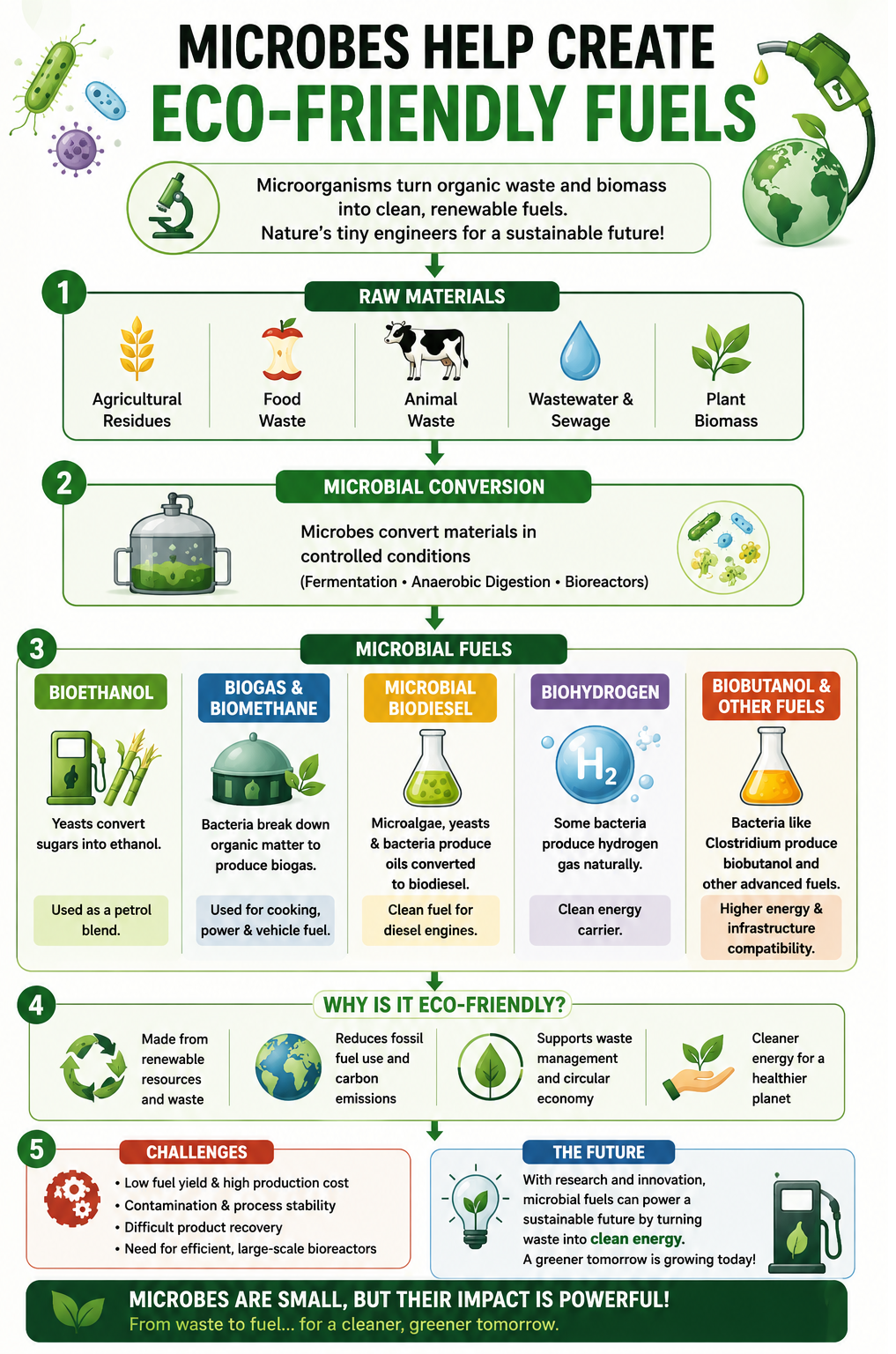
Microorganisms are not only important for food production, medicine and agriculture—they can also help generate cleaner and more sustainable fuels. Certain bacteria, fungi, yeasts and microalgae can convert organic materials such as agricultural waste, food residues, wastewater and plant biomass into useful forms of energy.
>> Microbes as Natural Fuel Producers
Microbes obtain energy by breaking down sugars, fats and other organic compounds. During this process, some microorganisms produce substances that can be used as fuels. Scientists use these natural microbial activities in controlled systems such as fermenters, anaerobic digesters and bioreactors.
By selecting suitable microorganisms and optimizing factors such as temperature, pH, nutrients and oxygen supply, fuel production can be made more efficient.
>> Bioethanol Production
Yeasts such as Saccharomyces cerevisiae convert sugars into ethanol through fermentation. Bioethanol can be produced from sugarcane, corn, molasses and plant-based waste materials.
It is commonly blended with petrol to reduce dependence on fossil fuels. Researchers are also developing microorganisms that can break down cellulose from crop residues and convert it into ethanol.
>> Biogas and Biomethane
Anaerobic bacteria and archaea help produce biogas by decomposing organic matter in the absence of oxygen. Materials such as animal manure, sewage sludge, food waste and agricultural residues can be used as raw materials.
Biogas mainly contains methane and carbon dioxide. After purification, methane-rich biogas can be used for cooking, electricity generation, heating and vehicle fuel.
>> Microbial Biodiesel
Certain microalgae, yeasts and bacteria can accumulate large quantities of oils inside their cells. These microbial oils can be extracted and converted into biodiesel.
Microalgae are particularly promising because they grow rapidly, require less agricultural land and can sometimes be cultivated using wastewater or carbon dioxide from industrial emissions.
>> Biohydrogen Production
Some photosynthetic and fermentative bacteria can produce hydrogen gas as part of their metabolism. Hydrogen is considered a clean energy carrier because its use can produce water instead of carbon dioxide.
However, microbial hydrogen production is still being studied to improve yield, stability and cost-effectiveness.
>> Biobutanol and Other Advanced Biofuels
Bacteria such as Clostridium species can produce biobutanol through fermentation. Biobutanol has a higher energy content than ethanol and can be more compatible with existing fuel infrastructure.
Microbial biotechnology is also being explored for the production of bio-oils, sustainable aviation fuels and other advanced fuel molecules.
>> Why Are Microbial Fuels Eco-Friendly?
Microbial fuels can be produced from renewable materials and organic waste. They may reduce waste accumulation, lower fossil-fuel consumption and support a circular economy.
Some microbial fuel systems can also assist in wastewater treatment while producing energy. However, their environmental benefit depends on the raw materials, production methods, energy requirements and overall life-cycle emissions.
>> Challenges in Microbial Fuel Production
Although microbial fuels offer significant potential, large-scale production can be expensive. Challenges include low fuel yield, contamination, difficult product recovery and the cost of maintaining industrial bioreactors.
Genetic engineering, metabolic engineering and improved fermentation technologies are being used to develop microorganisms that produce fuels more efficiently.
>> The Future of Microbial Energy
Microbes could play an important role in developing cleaner energy systems by converting waste and renewable biomass into valuable fuels. With continued research and industrial innovation, microbial fuel production may help reduce environmental pollution and create more sustainable alternatives to conventional fossil fuels.