

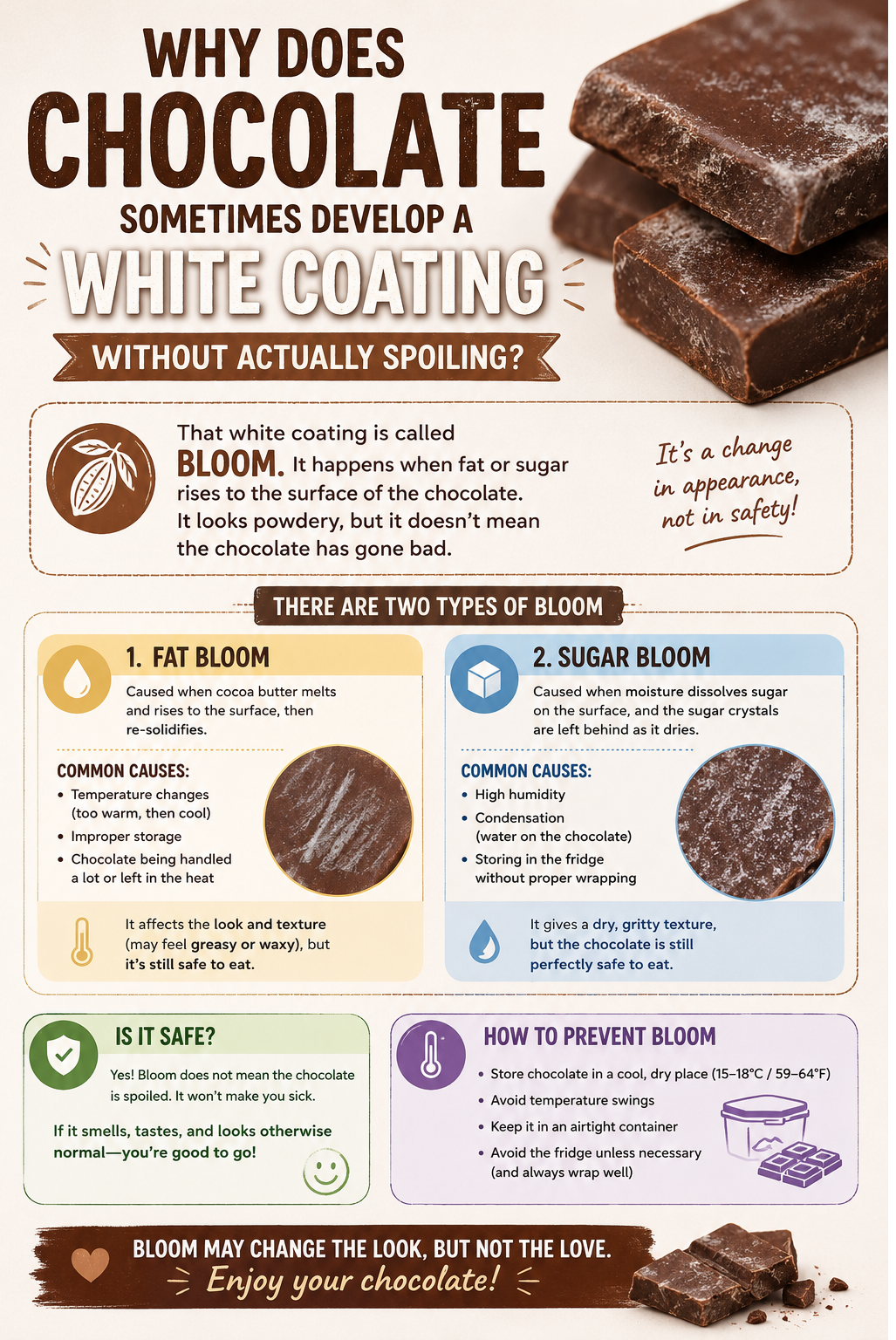
>> Have you ever opened a chocolate bar and noticed a white or greyish coating on its surface? Although it may look like mould or spoilage, this harmless change is usually known as chocolate bloom.
Chocolate bloom affects the appearance and texture of chocolate, but it does not necessarily mean the product is unsafe to eat.
>> What Is Chocolate Bloom?
Chocolate bloom occurs when fat or sugar moves to the surface of the chocolate and forms visible crystals. This can make the chocolate appear dusty, streaky, pale or patchy.
>> There are two main types of chocolate bloom: fat bloom and sugar bloom.
> Fat Bloom
Fat bloom occurs when cocoa butter separates from the chocolate and rises to the surface. It may happen when chocolate melts slightly and then cools again, allowing the fat to recrystallise unevenly.
Common causes include:
Sudden temperature changes
Improper tempering during production
Storage in warm conditions
Frequent handling or partial melting
Fat bloom may make the chocolate feel soft, greasy or waxy, but it is generally still safe to consume.
> Sugar Bloom
Sugar bloom occurs when moisture comes into contact with the chocolate. The moisture dissolves some of the sugar on the surface. When the water evaporates, sugar crystals remain behind, creating a rough or powdery white coating.
>> Common causes include:
High humidity
Condensation
Refrigerating unwrapped chocolate
Moving chocolate quickly from a cold place to a warm environment
Sugar-bloomed chocolate may have a dry or gritty texture, but it is usually not spoiled.
>> Is Bloomed Chocolate Safe to Eat?
In most cases, bloomed chocolate is safe to eat as long as it smells and tastes normal and shows no signs of mould, unusual odour or contamination.
Bloom mainly affects the chocolate’s texture, appearance and eating quality rather than its safety.
>> How to Prevent Chocolate Bloom
Chocolate should be stored in a cool, dry place at a stable temperature, ideally between 15°C and 18°C.
To reduce the risk of bloom:
Avoid sudden temperature fluctuations
Keep chocolate in an airtight container
Protect it from moisture and humidity
Avoid refrigeration unless necessary
Allow refrigerated chocolate to reach room temperature before opening the package
Conclusion
The white coating on chocolate is usually caused by fat or sugar crystallisation rather than spoilage. Although blooming can make chocolate look less appealing and change its texture, it is generally harmless.
Proper storage helps maintain the chocolate’s smooth texture, glossy appearance and rich flavour for longer.