

🔬 Why did your material fail? The clues may lie in its crystal structure.
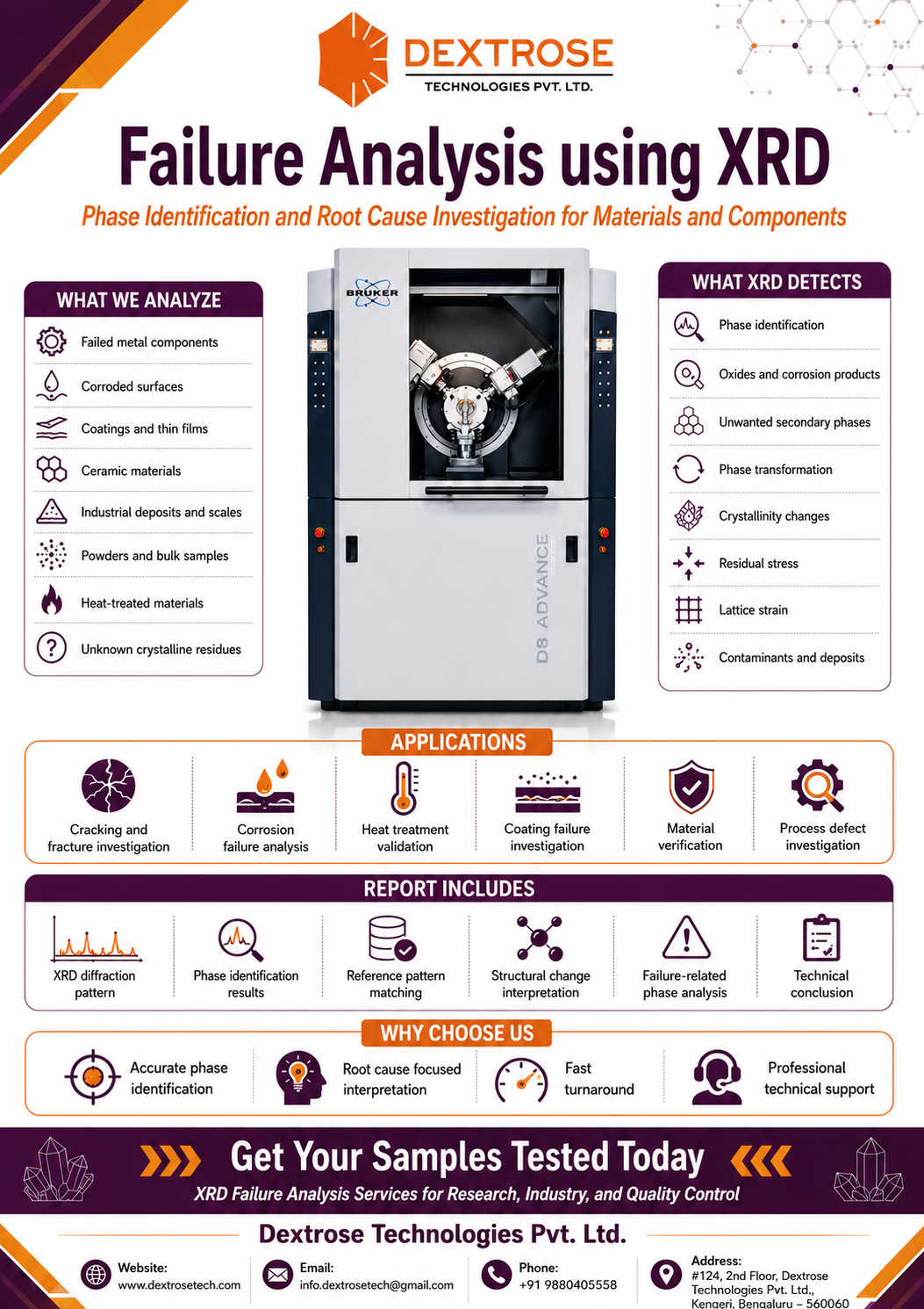
Corrosion, unexpected deposits, coating deterioration, and heat treatment defects can affect material performance. X-ray Diffraction (XRD) helps identify crystalline phases and structural changes, providing evidence to support root cause investigations.
At Dextrose Technologies Pvt. Ltd., we offer XRD-based failure analysis for research, industrial troubleshooting, and quality control.
🔎 What can XRD help investigate?
✅ Phase identification: Identify crystalline compounds in materials and unknown residues.
✅ Corrosion products: Identify crystalline oxides and other products associated with material degradation.
✅ Unwanted secondary phases: Investigate phases that may affect product quality and performance.
✅ Heat treatment effects: Examine phase transformations by comparing treated and reference samples.
✅ Crystallinity changes: Assess differences in crystalline structure associated with processing or exposure.
✅ Deposits and scales: Characterize crystalline deposits formed during industrial operations.
🧪 Suitable samples include:
• Failed metal components and corroded surfaces
• Coatings, thin films, and ceramic materials
• Industrial deposits, scales, and powders
• Heat-treated materials and unknown crystalline residues
📊 Our report includes:
• XRD diffraction pattern
• Phase identification and reference pattern matching
• Interpretation of relevant structural changes
• Technical findings supporting the failure investigation
XRD findings are most useful when considered alongside the sample’s processing history, operating conditions, and complementary testing where required.
📩 Discuss your material issue with our team for suitable testing and pricing.
📞 +91 9880405558
✉️ info.dextrosetech@gmail.com
🌐 www.dextrosetech.com