Bengaluru
08042753298
+919686928701
Thermal Analysis & Characterization by DEXTROSE TECHNOLOGIES

Thermal Decomposition & Stability Studies

In stock•cod not available
Phone Number

08042753298

Please keep 0 before dialling the number.

Mon-Thu: 10 AM - 2 PM • Fri: 3 PM - 7AM

Address #1250/15/6B, 1st Cross Road, Behind Kengeri Post Office, Kengeri Satellite Town, Bengaluru

Bengaluru, Karnataka, India, 560060
Description

At Dextrose Technologies Pvt. Ltd., we provide thermal decomposition and stability studies to help you understand how materials behave under heat, evaluate degradation pathways, and compare stability across storage or processing conditions. Using thermal analysis approaches (typically TGA/DTG and DSC, as applicable), we generate structured data on decomposition stages, onset temperatures, and thermal stability trends under different atmospheres. Thermal Degradation Profiling We profile degradation behavior across a defined temperature program to identify mass-loss stages, key transition points, and comparative stability across batches or formulations. Oxidative and Inert Atmosphere Studies We perform studies under oxidative (air/oxygen) and inert (nitrogen/argon) atmospheres to understand oxidation-driven changes versus intrinsic thermal decomposition—useful for materials selection and process risk assessment. Shelf-Life and Storage Condition Assessment (Thermal Stress) We support thermal-stress studies to compare stability under heat exposure and generate insights relevant to storage, packaging, and process conditions. Outputs are designed to support R&D decision-making and risk mitigation. Deliverables Degradation/stability curves (TGA/DTG and/or DSC as applicable) Key temperatures (onset/peaks) and % mass-loss stages (where applicable) Comparative summary across samples/conditions Interpretation notes and practical recommendations for next-step confirmation if needed Get started Share your material type, target temperature range, atmosphere requirement (oxidative/inert), and the decision you’re trying to make. We’ll propose the most suitable thermal study plan.

Keywords

Other Services

view all

68179d65be22ee500d53ff54 Card 2

product image
Bioanalytical services

At Dextrose Technologies Pvt. Ltd., our GCMS (GC-MS) bioanalytical services deliver accurate compound identification and quantification for volatile and semi-volatile analytes across complex sample matrices. GC-MS is a powerful solution for profiling unknowns, confirming impurities, monitoring residual solvents, and screening contaminants with high confidence. What GCMS is ideal for * Residual solvents & volatile impurities (pharma, chemicals) * VOC/SVOC profiling (environmental, industrial, materials) * Pesticides, fragrance/essential oil profiling, contaminants & unknown peaks Our workflow Sample assessment & prep (extraction/cleanup; derivatization when required) GC separation with optimized injection conditions for sensitivity and reproducibility MS detection for spectral confirmation and library-based identification Data review & reporting with clear conclusions and decision-ready outputs Deliverables * Chromatograms and mass spectra * Compound ID with match details (where applicable) * Quant results (ppm/ppb or as required) with method notes * Summary interpretation and recommendations for next-step confirmation if needed Why choose Dextrose Technologies * SOP-driven execution, clean documentation, and responsive scientific support * Designed for R&D and industry teams that need fast, reliable answers—not just raw data * Based in Bengaluru, supporting local and pan-India clients Get started Share your sample type, target analytes (if known), and required reporting format—we’ll recommend the best GCMS approach and turnaround plan.

68179d65be22ee500d53ff54 Card 2

product image
Bio-analytical services

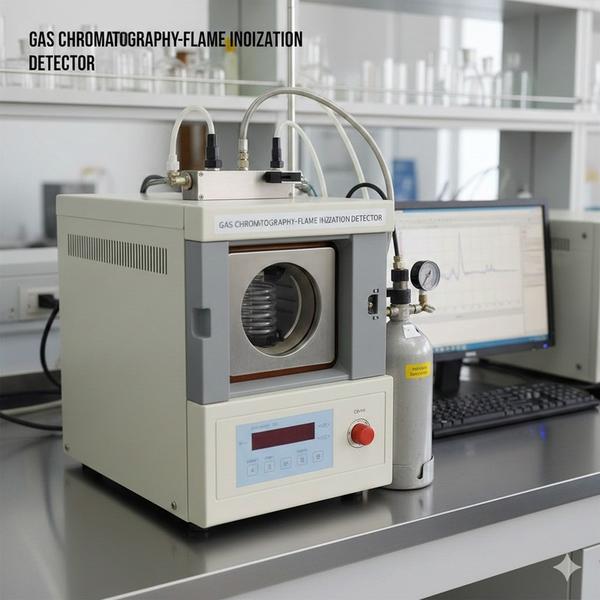
At Dextrose Technologies Pvt. Ltd., we provide GC-FID (Gas Chromatography–Flame Ionization Detector) testing for accurate, repeatable quantification of volatile organic compounds (VOCs) and residual solvents. GC-FID is ideal for routine solvent profiling and batch release support because it delivers stable responses for many organic compounds and supports precise calibration-based reporting. What we use GC-FID for * Residual solvent testing for raw materials, intermediates, and finished products (as per project requirements) * VOC/volatile compounds quantification in industrial, research, and QC samples * Method setup and optimization based on analyte list, matrix, and required limits How the workflow runs Sample review + recommended injection approach (liquid injection / headspace where applicable) Method selection and run conditions optimized for resolution and repeatability Quantification using standards (single/multi-level calibration as needed) Clear reporting with chromatograms, retention times, and concentration results Deliverables * Chromatograms with peak table (RT/area/area%) * Quantitative results (e.g., ppm / % / mg/L as applicable) * Method notes, calibration details, and observation summary * Optional: recommendations for confirmatory GC-MS when identity confirmation is required Why Dextrose Technologies * SOP-driven testing, clean documentation, and decision-ready reports * Practical support for R&D and industrial QC workflows * Pan-India support with service coverage across major cities

68179d65be22ee500d53ff54 Card 2

product image
Bio-analytical services

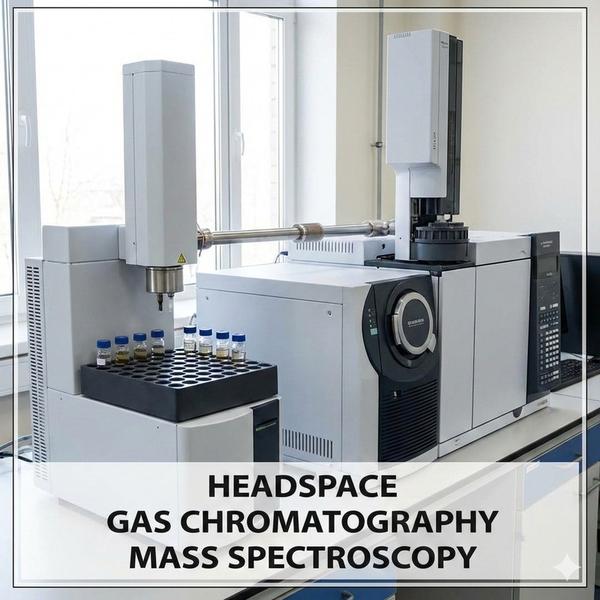
At Dextrose Technologies Pvt. Ltd., we offer Headspace GCMS (HS-GCMS) testing for reliable analysis of volatile organic compounds (VOCs) and residual solvents from complex samples. Headspace sampling focuses on the vapor phase above the sample, reducing matrix interference and improving repeatability for volatile testing. HS-GCMS is ideal when you need sensitive detection and confident identification using mass spectral confirmation. What we test using HS-GCMS * Residual solvents in raw materials, intermediates, and finished products (project-specific scope) * VOC profiling and volatile impurity screening * Unknown volatile peak identification using mass spectra * Support for R&D, troubleshooting, and routine QC requirements How the workflow runs Sample review and headspace condition selection (temperature/time/transfer line) GC separation with optimized method conditions for clean resolution MS detection for confident identification and confirmation Reporting with chromatograms, spectra, and clear conclusions Deliverables * Headspace GCMS chromatograms and peak table (RT/area) * Mass spectra for identified peaks (where applicable) * Quant results with calibration details (ppm/ppb or as required) * Summary interpretation and next-step recommendations if needed Why Dextrose Technologies * SOP-driven execution and clean documentation * Suitable for challenging matrices where direct injection is difficult * Service coverage across major Indian cities through streamlined logistics