
>> Microorganisms as Natural Oil Cleaners
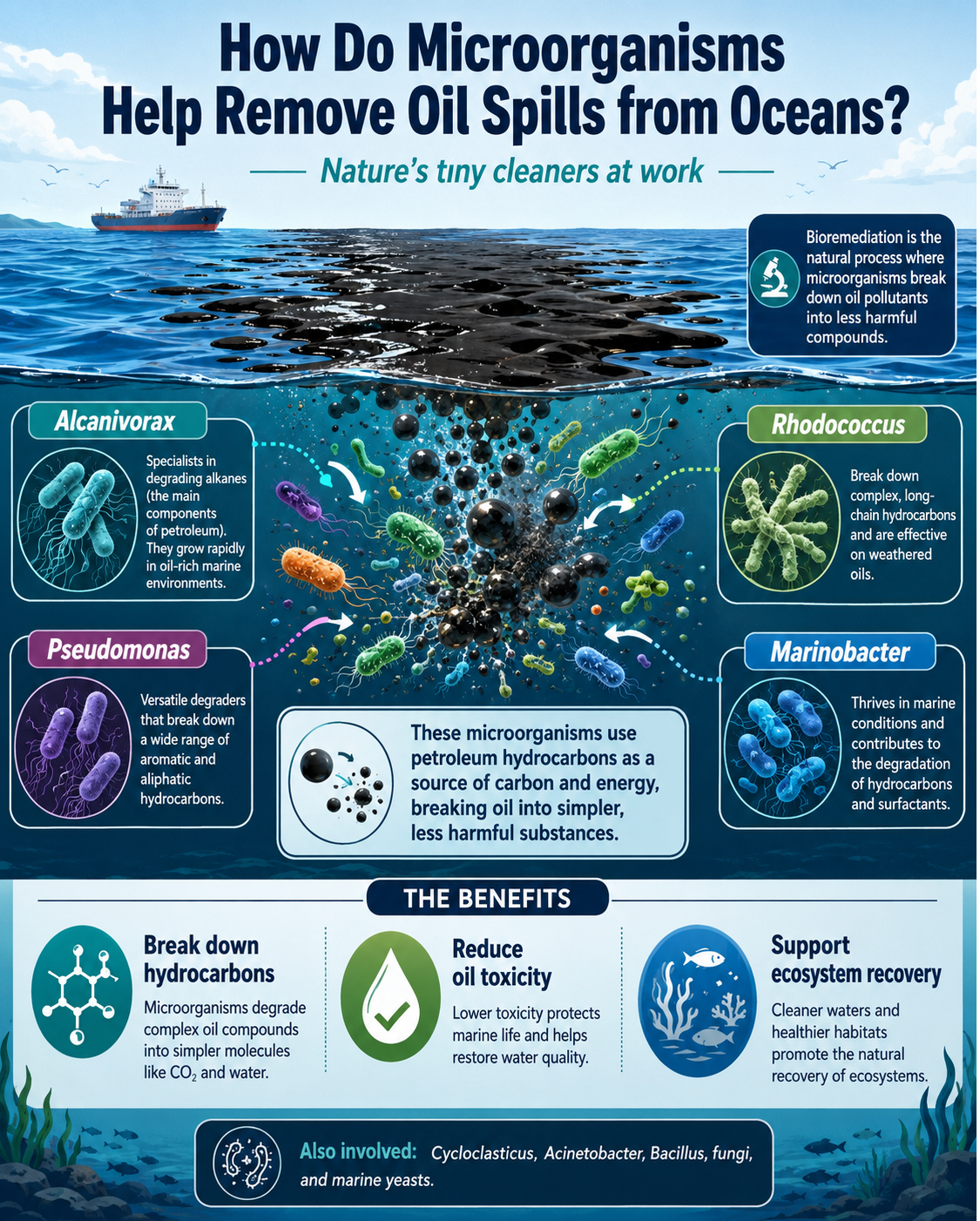
Certain bacteria, fungi, and yeasts can naturally break down petroleum hydrocarbons in crude oil and fuel through a process called bioremediation. These microorganisms use hydrocarbons as a source of carbon and energy, converting harmful pollutants into simpler substances such as carbon dioxide, water, and microbial biomass.
>> How Microorganisms Break Down Oil
Oil contains alkanes, aromatic compounds, and other complex petroleum molecules. Oil-degrading microorganisms produce specialised enzymes that break these compounds into smaller molecules, which are then absorbed and used for growth and energy. Over time, this activity reduces the concentration and toxicity of oil in seawater, sediments, and coastal areas.
>> Common Oil-Degrading Microorganisms
Several marine microorganisms become more active when oil enters the environment:
Alcanivorax efficiently degrades straight-chain hydrocarbons called alkanes and can multiply rapidly after an oil spill when nutrients are available.
Pseudomonas degrades a wide range of petroleum compounds and may produce biosurfactants that disperse oil into smaller droplets.
Rhodococcus breaks down complex, poorly soluble hydrocarbons, including heavy petroleum residues and aromatic compounds.
Marinobacter is adapted to saline marine environments and can degrade different hydrocarbons present in crude oil and fuel.
Other important microorganisms include Cycloclasticus, Acinetobacter, Bacillus, marine fungi, and yeasts.
>> Role of Biosurfactants
Some microorganisms produce natural surface-active compounds called biosurfactants. These reduce surface tension between oil and water and break large oil layers into smaller droplets. The increased surface area improves microbial attachment and enzyme activity, making oil degradation faster and more efficient. Biosurfactants are also generally more biodegradable and environmentally friendly than many synthetic dispersants.
>> Biostimulation
Biostimulation involves adding nutrients such as nitrogen and phosphorus to contaminated areas. Oil provides abundant carbon but may lack the nutrients needed for rapid microbial growth. Carefully controlled nutrient addition can improve the activity of native oil-degrading microorganisms. However, excessive nutrients may cause algal growth or disturb the marine ecosystem.
>> Bioaugmentation
Bioaugmentation involves introducing selected oil-degrading microorganisms into contaminated environments. These cultures may be chosen to target specific petroleum compounds and can be useful when native microorganisms are insufficient or when the oil contains difficult-to-degrade components. Introduced microorganisms must be compatible with local conditions and should not disrupt the natural microbial community.
>> Factors Affecting Microbial Oil Degradation
The effectiveness of bioremediation depends on oxygen availability, temperature, salinity, pH, nutrients, oil composition, droplet size, and hydrocarbon toxicity. Many oil-degrading microorganisms require oxygen for aerobic metabolism. Low temperatures slow microbial growth and enzyme activity, while light oils are generally degraded more easily than heavy crude oils containing complex and persistent compounds.
>> Benefits of Microbial Bioremediation
Microbial bioremediation supports the natural recovery of polluted marine ecosystems and reduces petroleum residues without generating large amounts of secondary waste. It is especially useful for treating oil remaining after mechanical recovery in seawater, sand, rocks, sediments, and coastal soil. It may also be less disruptive than aggressive physical or chemical cleanup methods.
>> Limitations of Microbial Cleanup
Microorganisms cannot remove oil spills immediately. Bioremediation may take several weeks or months depending on the oil type and environmental conditions. Some heavy and complex petroleum compounds are resistant to degradation. Therefore, microbial treatment is usually combined with oil booms, skimmers, absorbent materials, and shoreline cleanup rather than used alone.
>> Conclusion
Microorganisms act as nature’s cleanup system by converting petroleum hydrocarbons into less harmful substances. Oil-degrading bacteria, fungi, and yeasts support the long-term restoration of polluted oceans and coastlines. Although bioremediation is not an instant solution, it is a valuable and eco-friendly method for reducing the environmental impact of marine oil spills.