

>> Introduction
Lab-grown meat, also known as cultured meat or cell-based meat, is one of the most exciting innovations in food biotechnology. Instead of raising and slaughtering animals, this meat is produced by growing animal cells under controlled laboratory conditions. The goal is to create real meat with similar taste, texture, and nutritional value while reducing the environmental, ethical, and health concerns linked with conventional meat production.
>> What Is Lab-Grown Meat?
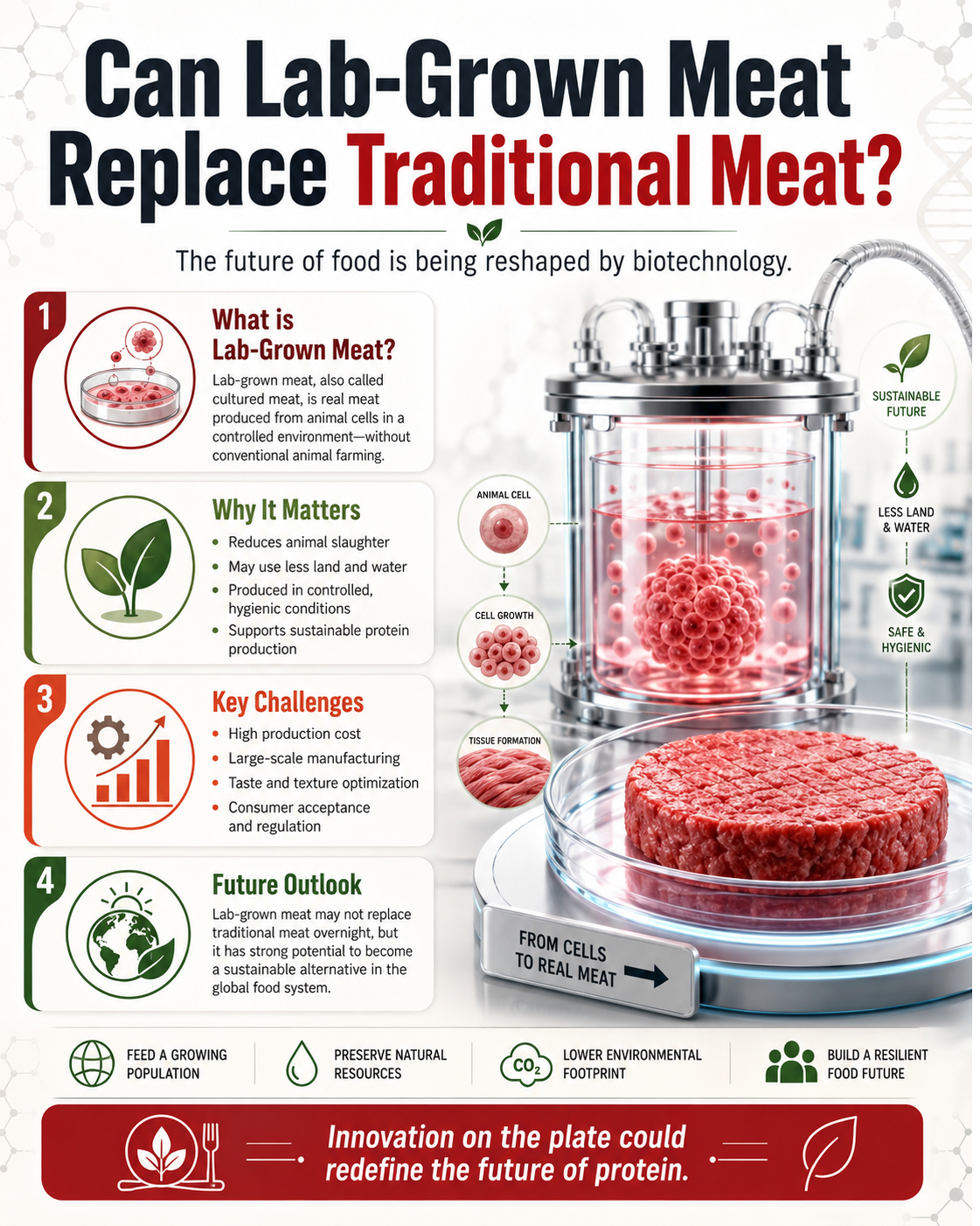
Lab-grown meat is produced by taking a small sample of animal cells, usually muscle stem cells, and placing them in a nutrient-rich growth medium. These cells multiply and develop into muscle tissue, which can then be processed into meat products such as burgers, nuggets, sausages, or minced meat. Since the final product comes from animal cells, it is not plant-based meat; it is biologically real meat produced without traditional animal farming.
>> Why Is Lab-Grown Meat Important?
The global demand for meat is increasing rapidly due to population growth, urbanization, and changing food habits. Traditional livestock farming requires large amounts of land, water, feed, and energy. It also contributes to greenhouse gas emissions and raises concerns about animal welfare. Lab-grown meat offers a possible alternative by producing meat in a more controlled and resource-efficient way.
>> Potential Benefits of Lab-Grown Meat
One of the major advantages of lab-grown meat is its ability to reduce animal slaughter. It may also help lower the pressure on agricultural land and water resources. Since production happens in controlled environments, there is potential to reduce contamination risks from pathogens such as Salmonella and E. coli. Lab-grown meat can also be designed with improved nutritional profiles, such as lower saturated fat or enhanced protein quality.
>> Challenges in Replacing Traditional Meat
Although lab-grown meat has great potential, it still faces several challenges before it can replace traditional meat on a large scale. The production cost is currently high, and scaling up manufacturing remains complex. Taste, texture, appearance, and consumer acceptance are also important factors. Many people may hesitate to eat meat grown in a lab unless it is affordable, safe, and clearly explained.
>> Is Lab-Grown Meat Safe?
Lab-grown meat is produced under sterile and controlled conditions, which may reduce certain food safety risks associated with livestock farming and slaughterhouses. However, like any new food technology, it requires strict testing, quality control, and regulatory approval before reaching consumers. Safety evaluation includes checking the growth medium, cell stability, nutritional composition, and possible contaminants.
>> Can It Fully Replace Traditional Meat?
Lab-grown meat may not completely replace traditional meat immediately, but it can become a strong alternative in the future. Traditional meat has deep cultural, culinary, and economic importance in many societies. However, as technology improves and production becomes more affordable, lab-grown meat could play a major role in reducing dependence on conventional livestock farming.
>> Future of Lab-Grown Meat
The future of lab-grown meat depends on scientific advancement, cost reduction, public acceptance, and clear regulations. With continued research in biotechnology, tissue engineering, bioprocessing, and food science, cultured meat could become a sustainable protein source for future generations. It may not replace traditional meat overnight, but it has the potential to transform the way we produce and consume meat.
>> Conclusion
Lab-grown meat represents a major step toward sustainable and ethical food production. While it still faces technical, economic, and social challenges, it offers a promising solution to meet the growing demand for protein without relying entirely on traditional animal farming. In the coming years, lab-grown meat may become an important part of the global food system, working alongside traditional and plant-based protein sources.