

>> Introduction
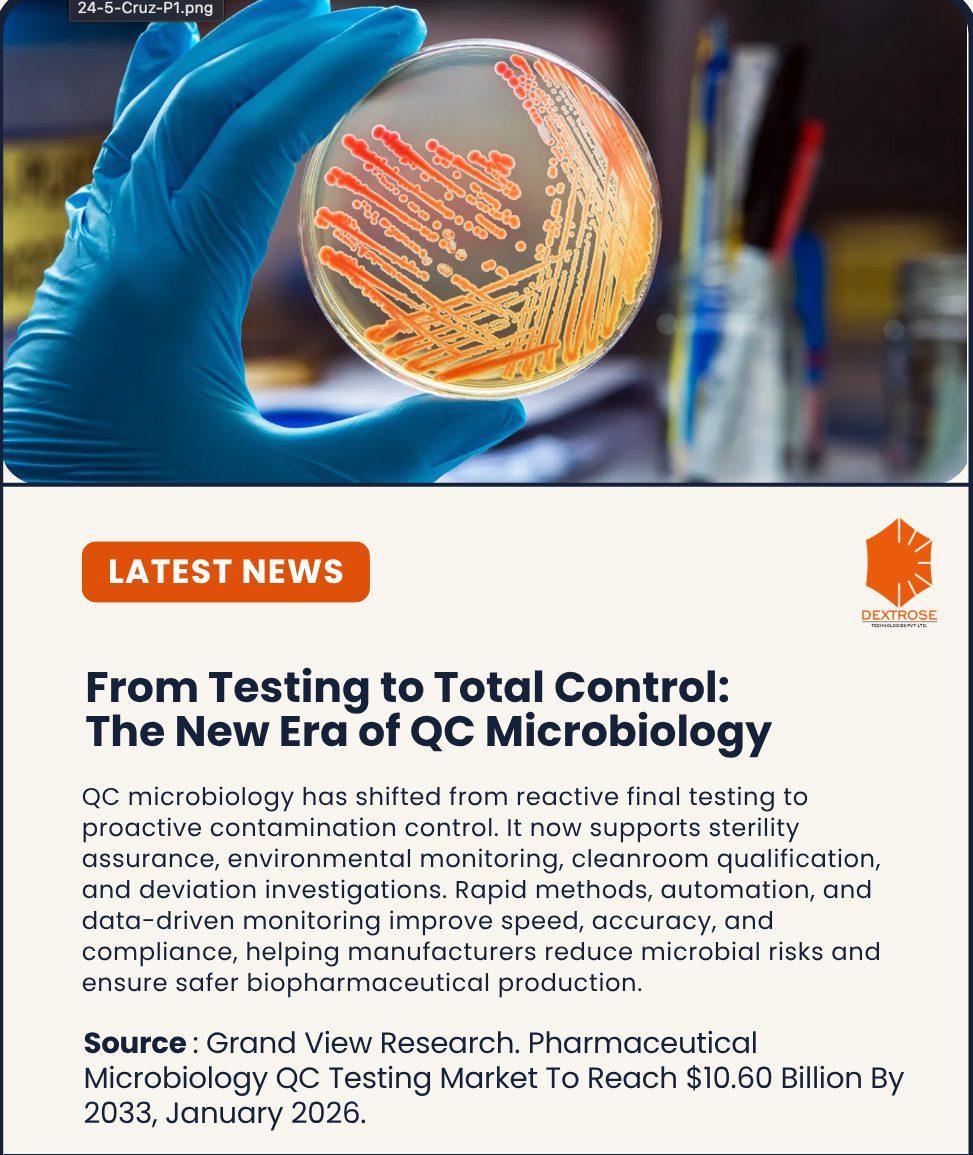
Quality control microbiology has evolved from a reactive testing function into a strategic part of contamination control. Earlier, microbiology testing was mainly limited to sterility, bioburden, endotoxin testing, and final product release. Today, it plays a proactive role in protecting product quality, patient safety, and regulatory compliance across the entire biopharmaceutical manufacturing life cycle.
>> Changing Role of QC Microbiology
With the growth of complex biologics, biosimilars, antibody–drug conjugates, radiopharmaceuticals, and advanced therapies, microbial control must begin much earlier in the process. Modern QC microbiology supports environmental monitoring, cleanroom qualification, facility design, process control, and deviation investigations. This helps manufacturers identify contamination risks before they affect product quality.
>> Importance of Rapid Microbiological Methods
Rapid microbiological methods are becoming increasingly important because traditional culture-based methods can delay batch release. These methods help reduce time to results, improve sensitivity, strengthen data integrity, and support faster decision-making. When properly validated and aligned with regulatory expectations, they can improve manufacturing efficiency without compromising quality.
>> Real-Time Environmental Monitoring
Real-time environmental monitoring and data-driven risk assessment are central to modern contamination-control strategies. By tracking cleanroom, water-system, and process-related data, QC teams can identify early signs of environmental drift, microbial trends, and potential contamination events. This enables timely corrective actions and reduces the risk of batch failure.
>> Key Challenges in QC Microbiology
Despite these advances, QC microbiology faces challenges such as shortage of skilled personnel, limited infrastructure, validation complexity, and increasing regulatory expectations. These challenges can slow the adoption of advanced microbiology platforms and make it difficult for companies to maintain efficient, compliant testing systems.
>> Role of Collaboration and External Expertise
Collaboration with experienced testing laboratories, CROs, and manufacturing partners can help companies access advanced technologies, trained microbiologists, validated platforms, and compliant laboratory systems. Such partnerships support method development, validation, troubleshooting, and faster implementation of modern contamination-control strategies.
>> Future of QC Microbiology
The future of QC microbiology will be shaped by automation, robotics, digital systems, and smart laboratories. Automated sample handling, data capture, microbial detection, and reporting will improve throughput, traceability, and reliability while reducing human error and contamination risk.
>> Conclusion
Microbiology testing is no longer just an end-stage quality check. It is now an integrated, proactive, and data-driven function that strengthens contamination control, improves regulatory readiness, accelerates product release, and supports safer biopharmaceutical manufacturing.