

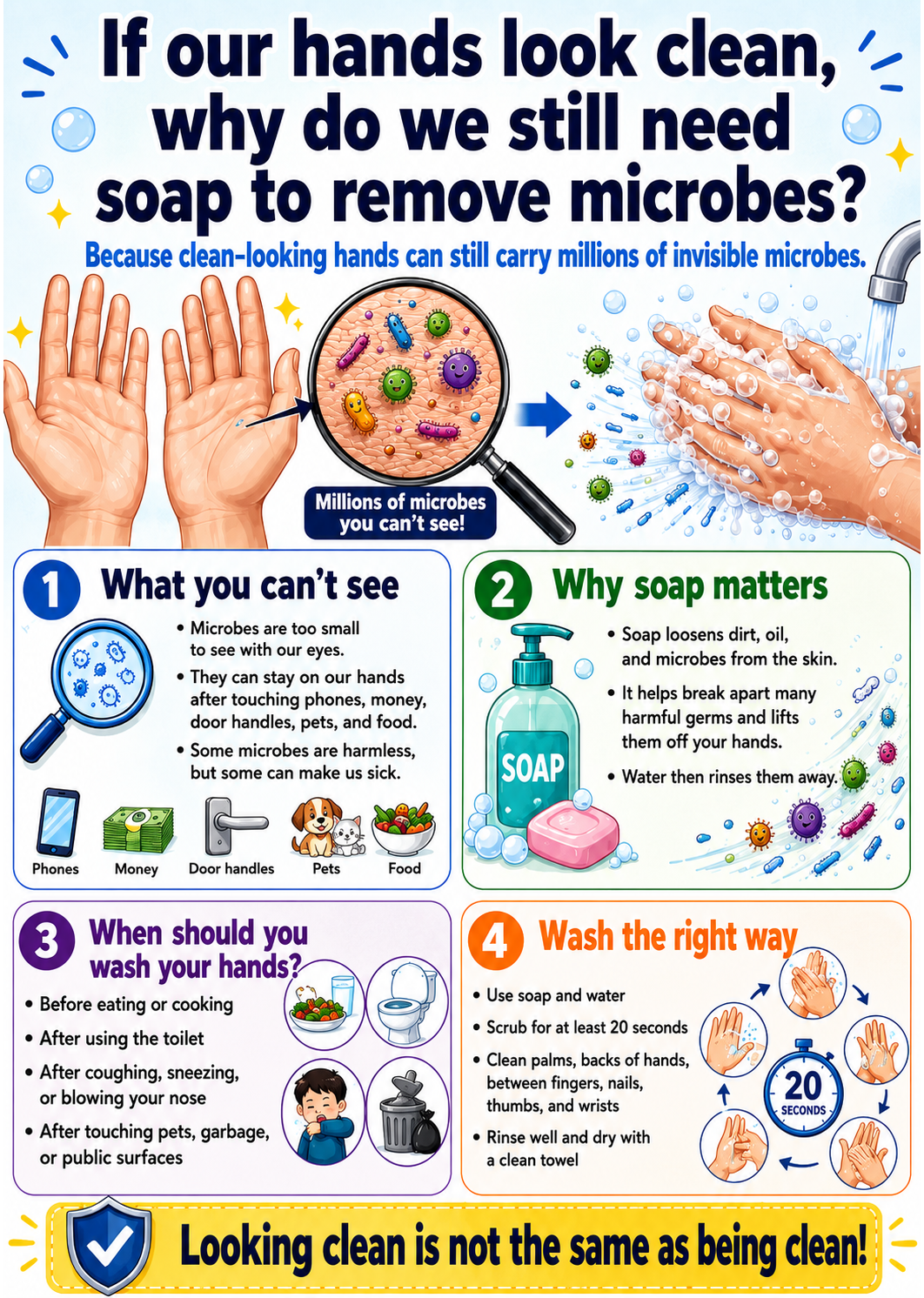
Our hands may look clean, but they can still carry millions of invisible microbes. These tiny organisms are too small to be seen with our eyes, yet they can remain on our skin after touching everyday objects such as phones, money, door handles, food, pets, and public surfaces. Some microbes are harmless, but others can cause illness if they enter our body through the mouth, nose, eyes, or open wounds.
>> Microbes Are Invisible, Not Absent
Clean-looking hands do not always mean germ-free hands. Microbes can stick to the skin along with dirt, sweat, oil, and tiny particles from the environment. Because they are microscopic, we cannot judge hand hygiene by appearance alone. This is why washing hands regularly is one of the simplest and most effective ways to reduce the spread of infections.
>> Why Soap Is Important
Soap helps remove microbes more effectively than water alone. It loosens dirt, oil, and germs from the surface of the skin. Many harmful germs are surrounded by oily layers, and soap helps break these layers apart. Once the microbes are lifted from the skin, running water rinses them away.
Using soap does not just make hands feel fresh; it helps make them safer.
>> Everyday Places Where Microbes Can Spread
Microbes are present almost everywhere in daily life. They can transfer to our hands when we use mobile phones, handle currency, touch door handles, play with pets, prepare food, or use shared surfaces. Since we touch our face many times a day, these microbes can easily reach areas where they may enter the body.
This is why handwashing is especially important before eating or cooking and after using the toilet, coughing, sneezing, touching garbage, handling pets, or returning from public places.
>> When Should You Wash Your Hands?
Handwashing should be done at key moments during the day. Wash your hands before eating, preparing food, or touching your face. It is also important after using the toilet, coughing, sneezing, blowing your nose, touching pets, handling waste, or coming into contact with public surfaces.
These small habits can make a big difference in preventing the spread of infections.
>> The Right Way to Wash Your Hands
Proper handwashing is more than a quick rinse. Wet your hands with clean water, apply soap, and scrub thoroughly for at least 20 seconds. Clean the palms, backs of the hands, between the fingers, under the nails, thumbs, and wrists. Rinse well under running water and dry with a clean towel.
A complete wash helps remove microbes from areas that are often missed.
>> Looking Clean Is Not the Same as Being Clean
Hands can appear spotless while still carrying invisible microbes. Soap and water help remove what we cannot see. Regular handwashing protects not only you, but also the people around you.
>> Key Message
Clean hands are safer hands. Use soap, wash properly, and make hand hygiene a daily habit.