

>> Introduction
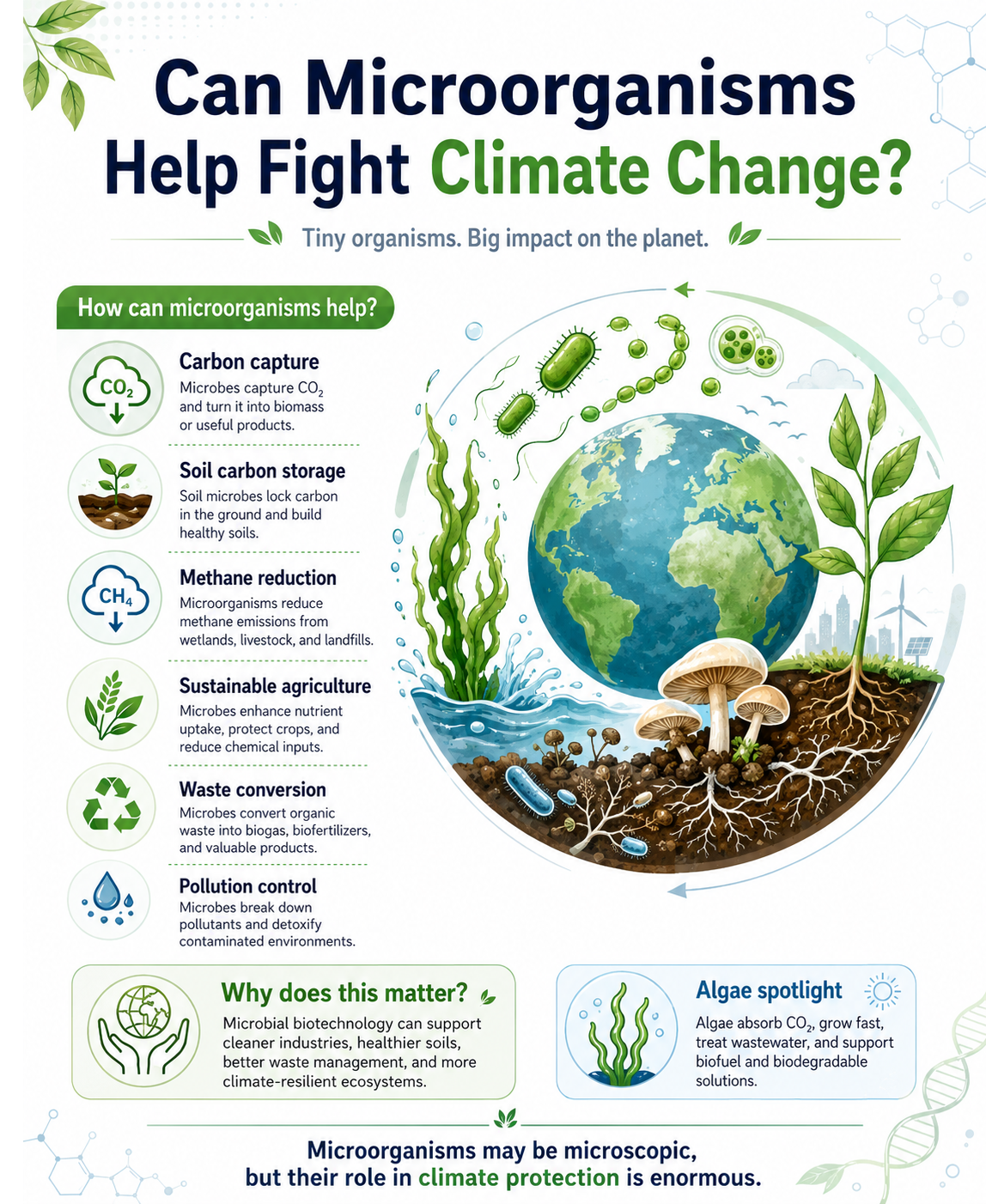
Climate change is driven by rising greenhouse gas emissions, pollution, waste accumulation, and loss of healthy ecosystems. While large technologies are often seen as the solution, microorganisms such as bacteria, fungi, algae, and archaea also play a powerful role in climate protection.
>> Tiny Organisms with Big Impact
Microorganisms control many natural cycles on Earth. They help recycle nutrients, decompose organic matter, improve soil fertility, and regulate carbon and nitrogen movement. Because climate change is closely linked to carbon dioxide, methane, soil health, and waste, microbes can directly support climate action.
>> Carbon Capture and Storage
Some microorganisms, especially algae and cyanobacteria, absorb carbon dioxide during photosynthesis and convert it into biomass. Soil microbes also help store carbon in the ground by stabilizing organic matter. Healthy microbial communities in soil, forests, wetlands, and oceans can reduce carbon release and improve natural carbon storage.
>> Reducing Methane Emissions
Methane is a strong greenhouse gas. Certain microbes produce methane, but others, called methane-oxidizing bacteria, can consume methane and convert it into less harmful compounds. These microbes can help reduce emissions from landfills, wastewater systems, agriculture, and industrial waste.
>> Sustainable Agriculture
Beneficial bacteria and fungi improve soil health, support plant growth, and reduce the need for chemical fertilizers. Nitrogen-fixing bacteria naturally provide nutrients to plants, while mycorrhizal fungi improve water and nutrient absorption. This makes farming more sustainable and climate-friendly.
>> Waste to Energy and Useful Products
Microorganisms can convert food waste, agricultural residues, and sewage sludge into biogas, compost, biofuels, and other useful products. This reduces landfill waste, lowers emissions, and supports a circular economy.
>> Algae as a Climate Solution
Algae are one of the most promising microbial tools for climate action. They grow quickly, absorb carbon dioxide, treat wastewater, and can be used to produce biofuels, animal feed, fertilizers, and biodegradable materials.
>> Conclusion
Microorganisms may be invisible to the naked eye, but their role in fighting climate change is powerful. From carbon capture and methane reduction to sustainable agriculture and waste conversion, microbes can become valuable partners in building a cleaner and more climate-resilient future.