
Sorbic acid is a widely used food preservative known for controlling molds, yeasts, and selected bacteria in food, cosmetics, and pharmaceutical products. Traditionally, it is produced using fossil-derived chemicals, which creates a need for cleaner and more sustainable alternatives.
>> Bio-Based Production Approach
The study shows that sorbic acid can be produced through microbial fermentation using engineered Saccharomyces cerevisiae. This creates a renewable production route that can reduce dependence on petrochemical raw materials and support clean-label ingredient development.
>> Natural Pathway Discovery
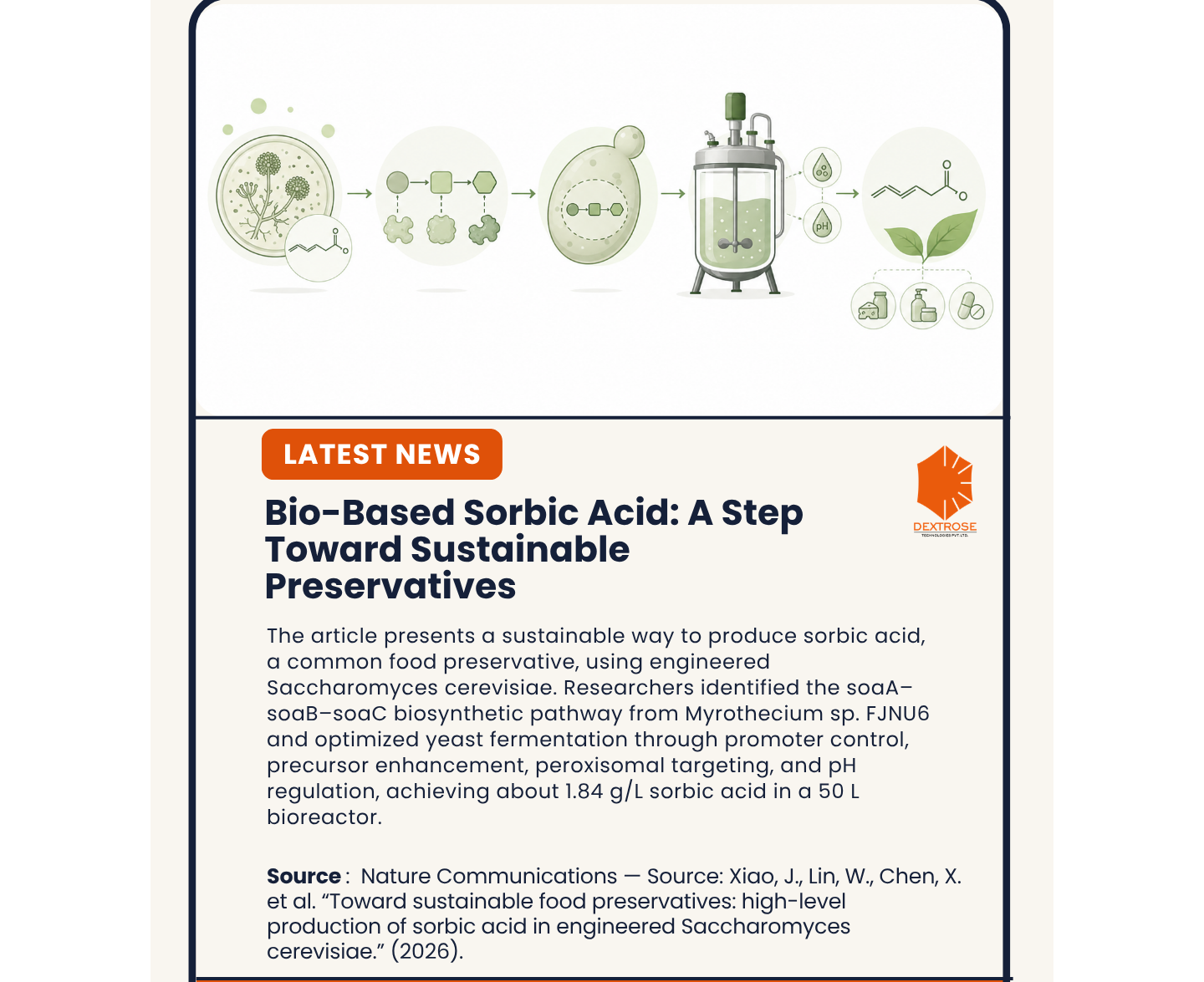
Researchers identified sorbic acid and sorbamide from Myrothecium sp. FJNU6. Genome analysis revealed a biosynthetic gene cluster containing soaA, soaB, and soaC, which are responsible for sorbic acid and sorbamide formation.
>> Yeast Engineering Platform
The sorbic acid pathway was introduced into S. cerevisiae, a food-safe and industrially reliable yeast. Since sorbic acid can inhibit yeast growth, the process was optimized through pH control, promoter selection, and metabolic engineering.
>> Production Optimization
The researchers improved sorbic acid yield by enhancing acetyl-CoA and malonyl-CoA supply, using ethanol-inducible gene expression, and targeting key enzymes to the peroxisome. These strategies improved pathway efficiency and reduced production stress.
>> Fermentation Performance
A two-stage fed-batch fermentation process was used. The first stage supported yeast growth at pH 6.0 using glucose, while the second stage promoted sorbic acid production at pH 7.0 using ethanol. This achieved a sorbic acid titer of about 1.84 g/L.
>> Industrial Importance
Fermentation-based sorbic acid production offers a sustainable alternative to fossil-based chemical synthesis. It has potential applications in food preservation, cosmetics, pharmaceuticals, and future bio-based chemical manufacturing.
>> Conclusion
This study establishes a microbial route for producing sorbic acid using engineered yeast. It provides a strong foundation for sustainable preservative manufacturing and demonstrates the potential of synthetic biology in replacing petrochemical production methods.