

>> Overview
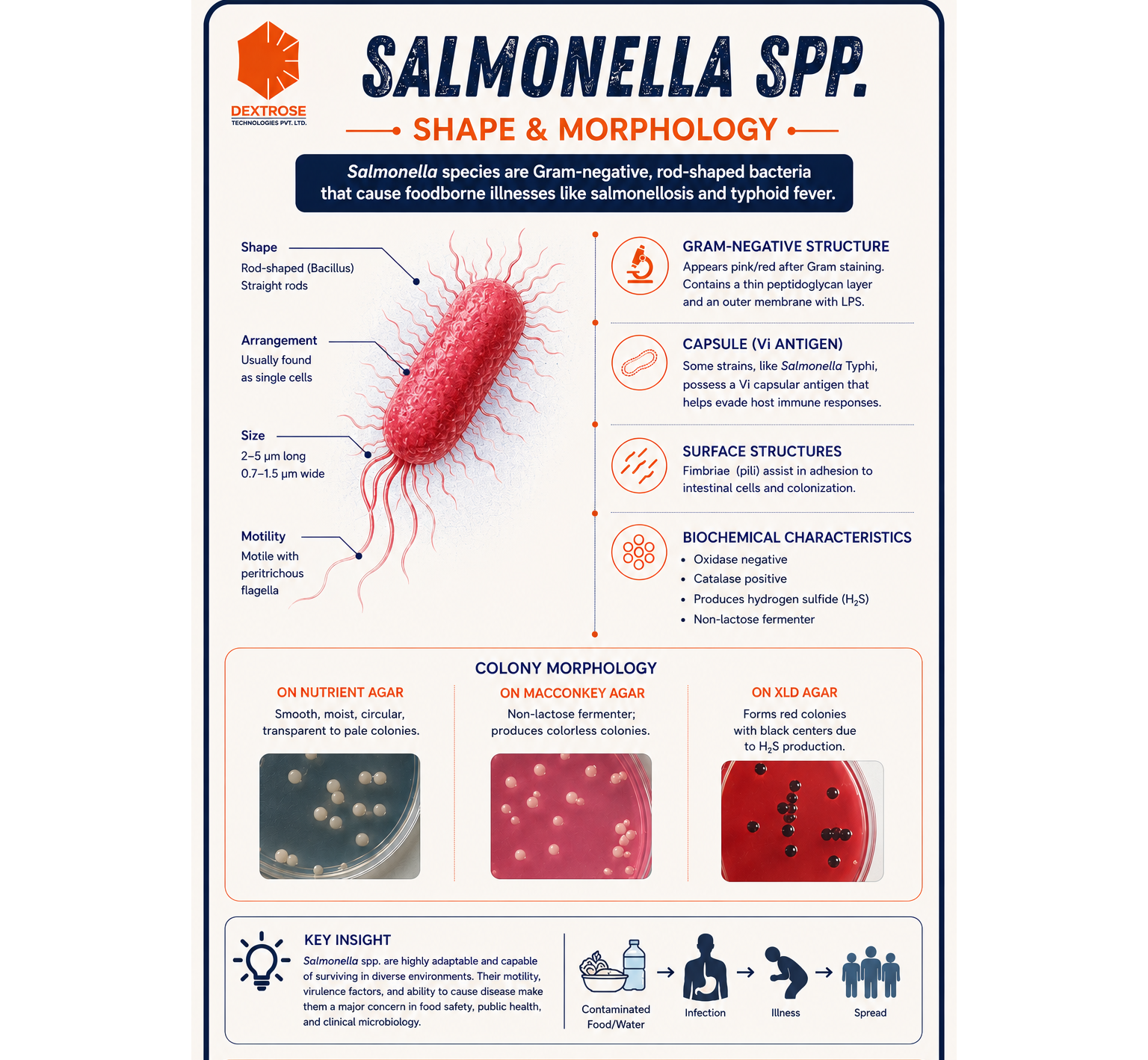
Salmonella species are Gram-negative, rod-shaped bacteria belonging to the family Enterobacteriaceae. They are well known for causing foodborne illnesses such as salmonellosis and typhoid fever. These bacteria are commonly associated with contaminated food, water, and animal products, making them important pathogens in public health and clinical microbiology.
>> Shape and Arrangement
Salmonella spp. exhibit a bacillus (rod-shaped) morphology. The cells are typically straight rods and are usually found as single cells, though they may occasionally appear in pairs. Their streamlined shape supports efficient movement and nutrient absorption.
>> Size
The bacterial cells generally measure around 2–5 µm in length and 0.7–1.5 µm in width. Their size allows rapid growth and adaptability in both environmental and host-associated conditions.
>> Cell Structure and Staining Characteristics
Salmonella species are Gram-negative bacteria, appearing pink/red after Gram staining. Their cell envelope consists of:
* A thin peptidoglycan layer
* An outer membrane containing lipopolysaccharides (LPS)
The LPS layer contributes to pathogenicity and can trigger strong immune responses in infected individuals.
>> Motility
Most Salmonella species are motile, possessing peritrichous flagella distributed around the cell surface. These flagella help the bacterium move actively in liquid environments and aid in colonization within the host.
>> Capsule and Surface Structures
Certain species, especially Salmonella Typhi, possess a capsular polysaccharide known as the Vi antigen, which enhances virulence by helping the bacteria evade host immune defenses.
Additionally, Salmonella contains:
* Fimbriae (pili): assist in adhesion to intestinal cells
* Flagella: responsible for motility and invasion
>> Colony Morphology
On nutrient agar, Salmonella typically forms:
✔️ Smooth, moist, circular colonies
✔️ Transparent to pale colonies
On selective media:
* MacConkey agar: usually produces colorless colonies due to non-lactose fermentation
* XLD agar: forms red colonies with black centers because of hydrogen sulfide (H₂S) production
These features are important for laboratory identification.
>> Biochemical Characteristics
Salmonella spp. are:
* Oxidase negative
* Catalase positive
* Usually produce hydrogen sulfide (H₂S)
* Non-lactose fermenting bacteria
These biochemical reactions help distinguish them from other enteric bacteria.
>> Clinical Importance
Salmonella species are major causes of:
* Food poisoning (salmonellosis)
* Typhoid fever
* Gastroenteritis
* Septicemia in severe cases
Transmission commonly occurs through contaminated:
🥚 Poultry
🥛 Dairy products
💧 Water
🥩 Meat products
>> Key Insight
Due to their motility, virulence factors, and ability to survive in diverse hosts, Salmonella spp. remain a significant concern in food safety, epidemiology, and infectious disease research.