
Fermented foods are often promoted as natural sources of beneficial bacteria that support digestion, immunity, and overall health. Foods such as yogurt, curd, kimchi, sauerkraut, kefir, pickles, and fermented beverages contain microorganisms that help convert sugars into acids, gases, or alcohol.
However, not every bacterium found in fermented food is automatically beneficial. The health value and safety of fermented foods depend on the type of microorganism present, the fermentation process, storage conditions, hygiene, and the final quality of the product.
>> What Happens During Fermentation?
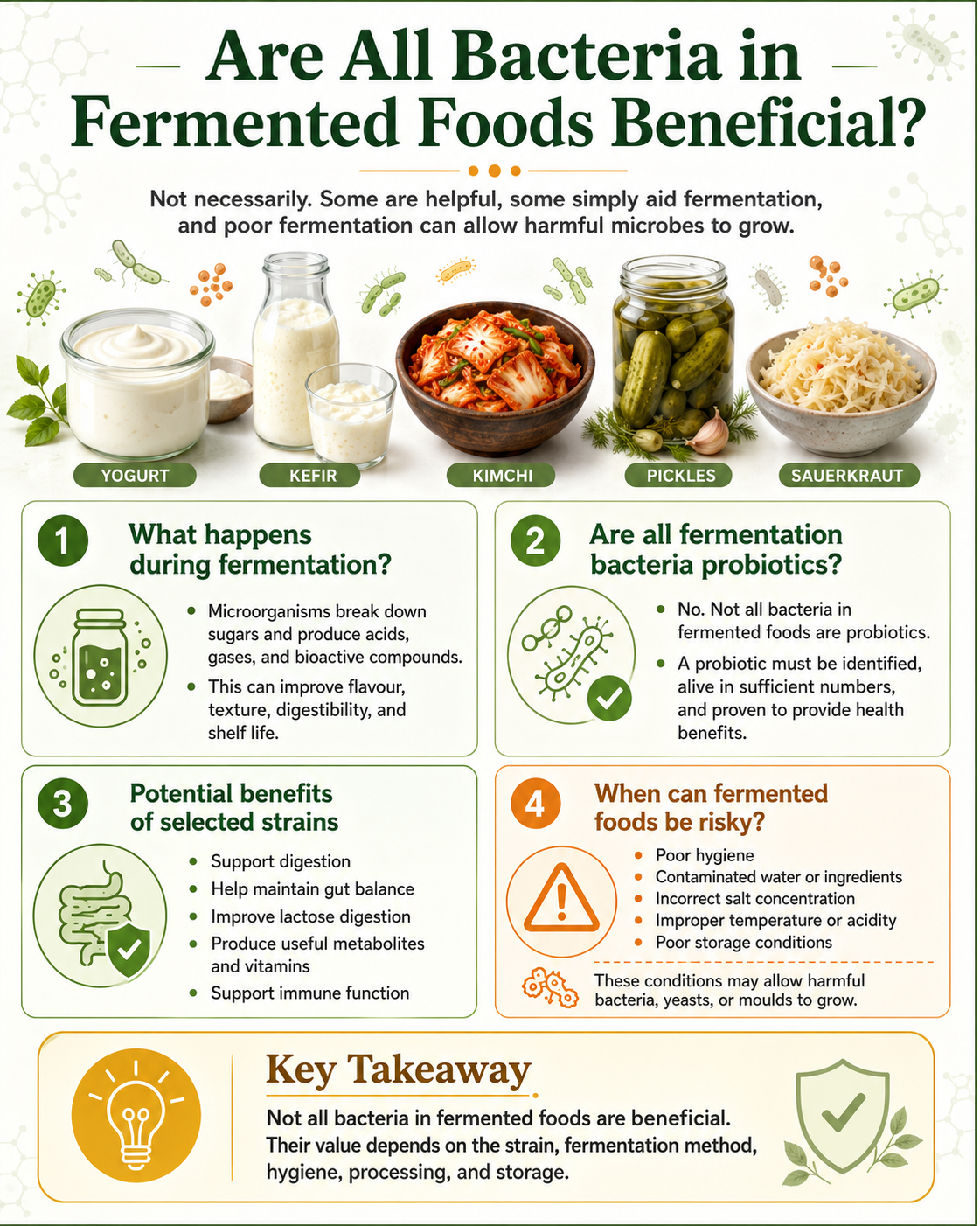
Fermentation is a biological process in which microorganisms break down carbohydrates such as sugars and starches. During this process, they produce compounds including lactic acid, acetic acid, carbon dioxide, and alcohol.
These compounds can improve the flavour, aroma, texture, shelf life, and digestibility of food. The acidic environment created during fermentation can also prevent the growth of many harmful microorganisms.
Common bacteria involved in food fermentation include species of:
>Lactobacillus
>Lactococcus
>Leuconostoc
>Pediococcus
>Streptococcus
>Bifidobacterium
>Acetobacter
Many of these microorganisms are considered useful in food production, but their effects can vary depending on the strain and the amount consumed.
>> Are Fermenting Bacteria the Same as Probiotics?
No. Fermentation bacteria and probiotic bacteria are not always the same.
A fermented food may contain microorganisms that helped produce the food but are no longer alive when the product is consumed. Heat treatment, pasteurization, long storage, and food processing can reduce or completely eliminate living bacteria.
For a microorganism to be considered probiotic, it must be scientifically identified, remain alive in sufficient numbers, and provide a demonstrated health benefit when consumed in an appropriate amount.
Therefore, all probiotic foods are associated with selected beneficial microorganisms, but not all fermented foods can be classified as probiotic.
>> Which Bacteria Are Considered Beneficial?
Certain strains of lactic acid bacteria and bifidobacteria may support health by:
> Improving digestion
> Supporting the balance of intestinal microorganisms
> Helping in lactose digestion
> Producing certain vitamins and bioactive compounds
> Strengthening the intestinal barrier
> Supporting immune function
> Reducing the growth of some undesirable microorganisms
However, these benefits are strain-specific. Two bacteria belonging to the same species may not provide the same health effects.
This means that identifying only the bacterial species may not be enough. Scientific evaluation at the strain level is often necessary to confirm probiotic potential.
>> Can Fermented Foods Contain Harmful Bacteria?
Yes. Poorly prepared or improperly stored fermented foods may contain undesirable or harmful microorganisms.
Contamination can occur through:
> Unclean water or raw materials
> Poor personal hygiene
> Contaminated equipment
> Incorrect salt concentration
> Improper fermentation temperature
> Insufficient acidity
> Exposure to air or insects
> Poor packaging and storage
Potential contaminants may include pathogenic bacteria, toxin-producing microorganisms, yeasts, and moulds. Some microorganisms may also produce harmful compounds such as biogenic amines, which can cause headaches, nausea, or allergic-like reactions in sensitive individuals.
>> Natural Fermentation vs Controlled Fermentation
Traditional fermented foods are often produced through natural or spontaneous fermentation. In this process, microorganisms naturally present in the ingredients and environment initiate fermentation.
Natural fermentation can create unique flavours and microbial diversity. However, it may also result in variations between batches because the exact microbial population is not always controlled.
Controlled fermentation uses selected starter cultures. These cultures contain microorganisms chosen for their safety, stability, flavour development, and fermentation efficiency.
Starter cultures help manufacturers achieve:
> Consistent product quality
> Predictable acidity
> Faster fermentation
> Improved safety
> Better texture and flavour
> Reduced risk of contamination
>> Does Cooking Destroy Beneficial Bacteria?
Heat can destroy many living microorganisms in fermented foods. For example, fermented products that are cooked, baked, boiled, or pasteurized may contain few or no live bacteria by the time they are consumed.
However, these foods may still contain useful fermentation-derived compounds, including:
> Organic acids
> Peptides
> Vitamins
> Antioxidants
> Enzymes
> Cell components from inactive microorganisms
These non-living microbial components and metabolites may still influence health. They are sometimes referred to as postbiotics.