
>> The Future of Farming in a Changing Climate
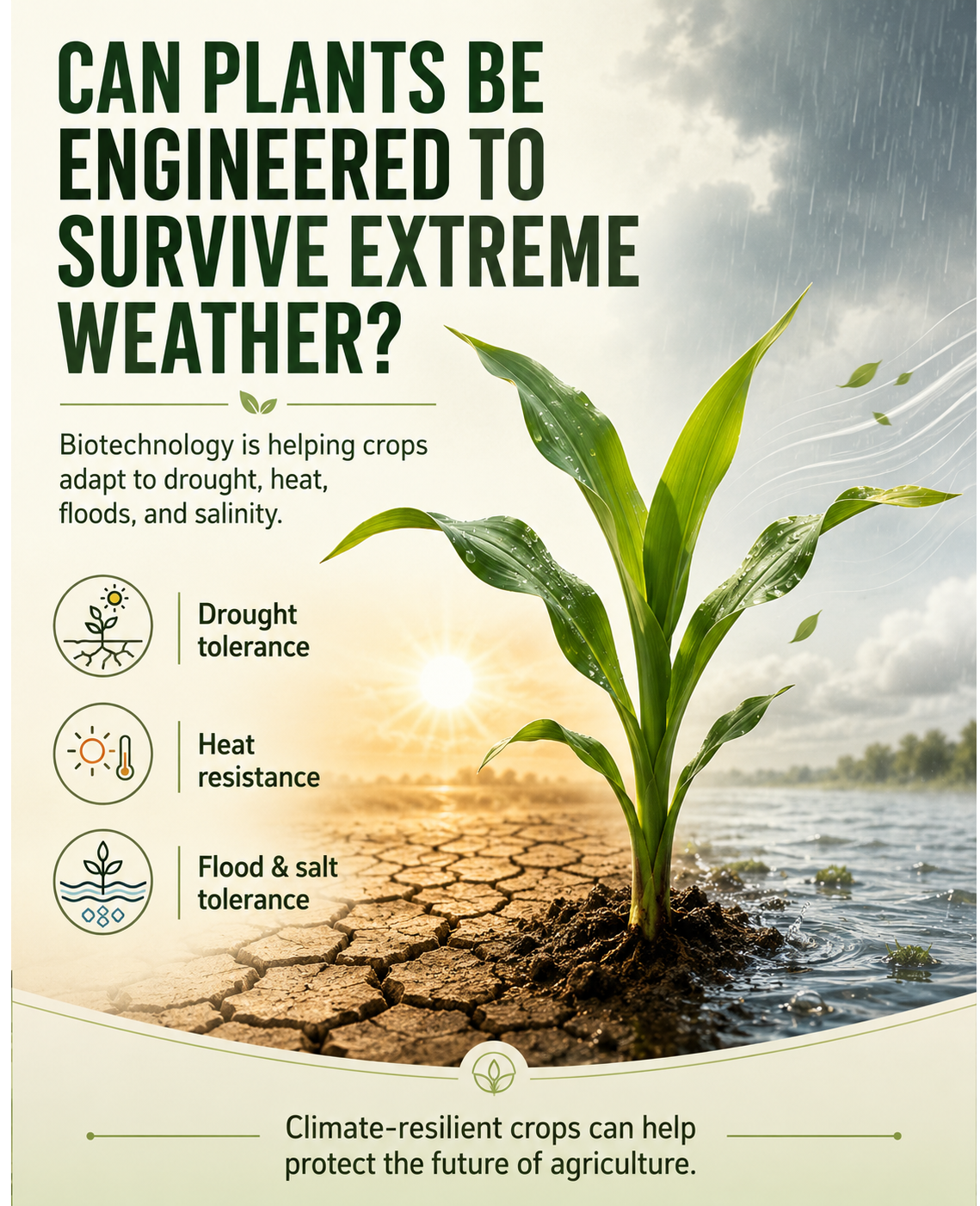
Extreme weather is no longer a rare event. Droughts, floods, heatwaves, strong winds, and sudden temperature shifts are becoming major challenges for farmers across the world. These conditions can reduce crop yield, damage soil health, affect food supply, and increase the cost of agriculture.
This raises an important question: can science help plants survive these harsh conditions? The answer is yes. Through biotechnology, genetic engineering, and gene-editing tools like CRISPR, scientists are working to develop crops that can tolerate extreme weather more efficiently and continue growing even under stress.
>> How Can Plants Be Engineered?
Plants naturally have genes that help them respond to stress. Some genes control water use, root growth, salt tolerance, heat protection, and disease resistance. By identifying and improving these genes, scientists can help plants become stronger and more adaptable.
Modern gene-editing technologies allow researchers to make precise changes in plant DNA. Instead of waiting many years for traditional breeding, biotechnology can speed up the process of developing climate-resilient crops. Recent studies show that CRISPR and related tools are being explored for improving tolerance to drought, salinity, heat, and cold stress in different crops.
>> Surviving Drought and Water Stress
Drought is one of the biggest threats to agriculture. When water is limited, plants may stop growing, lose leaves, or fail to produce seeds and fruits. Engineered crops can be designed to use water more efficiently, develop deeper roots, or reduce water loss through their leaves.
For example, drought-tolerant plants may keep their stomata partially closed to prevent excess water loss while still allowing photosynthesis. This helps crops survive longer during dry periods and maintain better productivity.
>> Protection Against Heatwaves
High temperatures can damage plant cells, reduce flowering, affect pollen quality, and lower crop yield. Scientists are studying genes that help plants produce heat-shock proteins, which protect cells from heat-related damage.
Heat-tolerant crops are especially important for staple foods such as rice, wheat, maize, and pulses. Research on rice has shown that changing heat-sensitive genetic pathways could help maintain grain yield and quality under warmer conditions.
>> Flood and Salinity Tolerance
Heavy rainfall and flooding can deprive plant roots of oxygen, causing root damage and crop failure. Some crop varieties can be improved to survive temporary submergence by slowing growth and conserving energy until floodwater recedes.
Salinity is another major issue, especially in coastal and irrigated agricultural regions. Salt stress affects water absorption and damages plant tissues. Engineered plants can be developed to regulate salt movement, protect cells from ion toxicity, and maintain growth in saline soils.
>> Stronger Plants for Wind and Storms
Extreme weather also includes heavy winds and storms that can physically damage crops. In such cases, scientists may focus on traits like stronger stems, improved root anchorage, and better plant architecture. These features can reduce lodging, where crops bend or fall before harvest.
Climate-resilient crop development is now combining biotechnology, molecular breeding, field trials, and data-based crop improvement to create plants that are not only high-yielding but also better prepared for unpredictable weather.
>> Is Genetic Engineering the Only Solution?
No. Engineering plants is powerful, but it is not the only answer. Climate-resilient agriculture also needs better soil management, smart irrigation, crop rotation, microbial biofertilizers, biostimulants, and sustainable farming practices.
Biotechnology works best when combined with good agricultural practices. A drought-tolerant plant still needs healthy soil. A heat-tolerant crop still needs proper nutrient management. The goal is not to replace farming knowledge, but to strengthen it with science.
>> Why This Matters
As the global population grows and climate change affects food production, developing resilient crops is becoming essential. Engineered plants can help reduce crop losses, improve food security, support farmers, and make agriculture more sustainable.
The future of farming may depend on crops that can adapt faster than the climate changes around them. With the help of biotechnology, plants can be made stronger, smarter, and more capable of surviving extreme weather conditions.
>> Conclusion
Yes, plants can be engineered to survive extreme weather. By improving traits such as drought tolerance, heat resistance, flood survival, salt tolerance, and stronger growth, biotechnology can play a major role in protecting future food systems