
>> The Hidden Role of Bacteria in Food
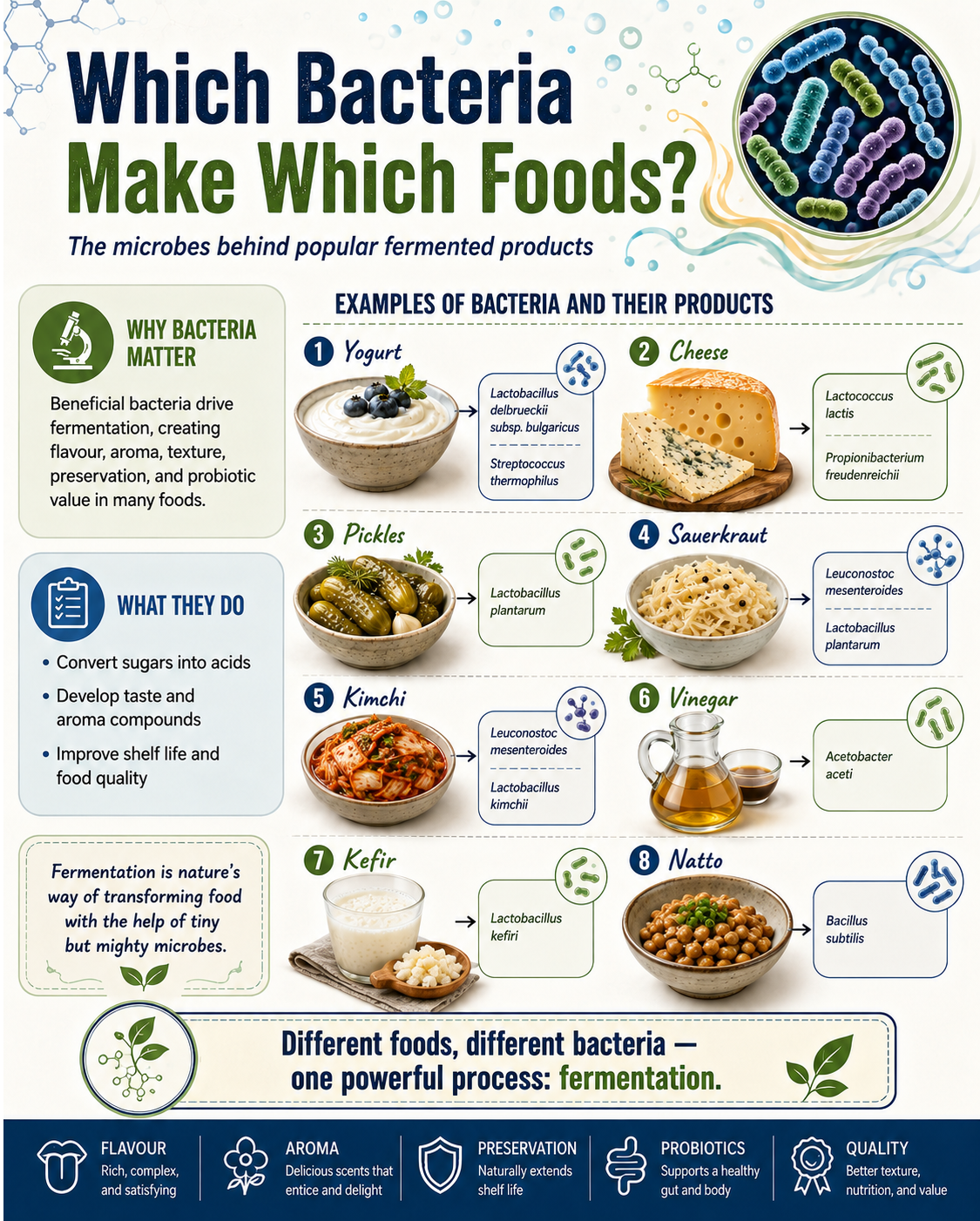
Bacteria play a major role in shaping the taste, aroma, texture, and overall quality of many foods. While some bacteria can cause spoilage or foodborne illness, beneficial bacteria are essential in the production of fermented foods such as yogurt, cheese, pickles, sourdough, kimchi, and cured meats.
During fermentation, bacteria break down sugars, proteins, and fats present in food. This process produces acids, alcohols, gases, and aromatic compounds that create distinctive flavours and smells.
>> How Bacteria Create Flavour
Certain bacteria convert sugars into organic acids such as lactic acid and acetic acid. These acids create the sour, tangy, and sharp flavours commonly found in yogurt, fermented vegetables, vinegar, and sourdough bread.
Bacteria can also break down proteins into amino acids and other compounds that contribute savoury, nutty, creamy, or slightly bitter notes. In cheese production, these reactions are responsible for the complex flavours that develop during ageing.
>> How Bacteria Produce Aroma
The aroma of fermented food comes from volatile compounds released during bacterial activity. These compounds include esters, aldehydes, ketones, sulphur compounds, and organic acids.
For example, Lactococcus and Lactobacillus species can produce buttery, creamy, or tangy aromas in dairy products. Other bacteria generate earthy, fruity, smoky, or pungent smells depending on the food, environmental conditions, and fermentation time.
>> Common Bacteria Involved in Food Fermentation
Beneficial bacteria commonly used in food production include Lactobacillus, Lactococcus, Streptococcus thermophilus, Leuconostoc, Pediococcus, and Acetobacter.
These microorganisms are carefully selected because they produce desirable flavours, improve texture, increase shelf life, and help prevent the growth of harmful microbes.
>> When Bacteria Cause Unpleasant Flavours
Not all bacterial activity is beneficial. Spoilage bacteria may produce unpleasant odours, slimy textures, discoloration, bitterness, excessive sourness, or gas formation.
Compounds such as ammonia, hydrogen sulphide, and certain fatty acids can create rotten, sulphurous, rancid, or putrid smells. These changes often indicate that the food is no longer suitable for consumption.
>> What Determines the Final Taste and Aroma?
The effect of bacteria on food depends on several factors, including the bacterial species, temperature, pH, oxygen availability, salt concentration, moisture content, ingredients, and fermentation duration.
Even small changes in these conditions can alter bacterial activity and produce a completely different flavour and aroma profile.
>> Bacteria as Natural Flavour Creators
Bacteria are natural flavour-producing organisms that transform simple food ingredients into complex and appealing products. Controlled bacterial fermentation can improve taste, aroma, texture, nutrition, and shelf life.
Understanding how bacteria interact with food helps manufacturers create consistent, safe, and high-quality products while preserving the unique characteristics of traditional fermented foods.