

>> The Hidden Community Inside Our Body
The human gut is home to trillions of microorganisms, including bacteria, fungi, and viruses. Together, they form the gut microbiome. Many of these microorganisms are beneficial and support digestion, immunity, nutrient production, and protection against harmful microbes.
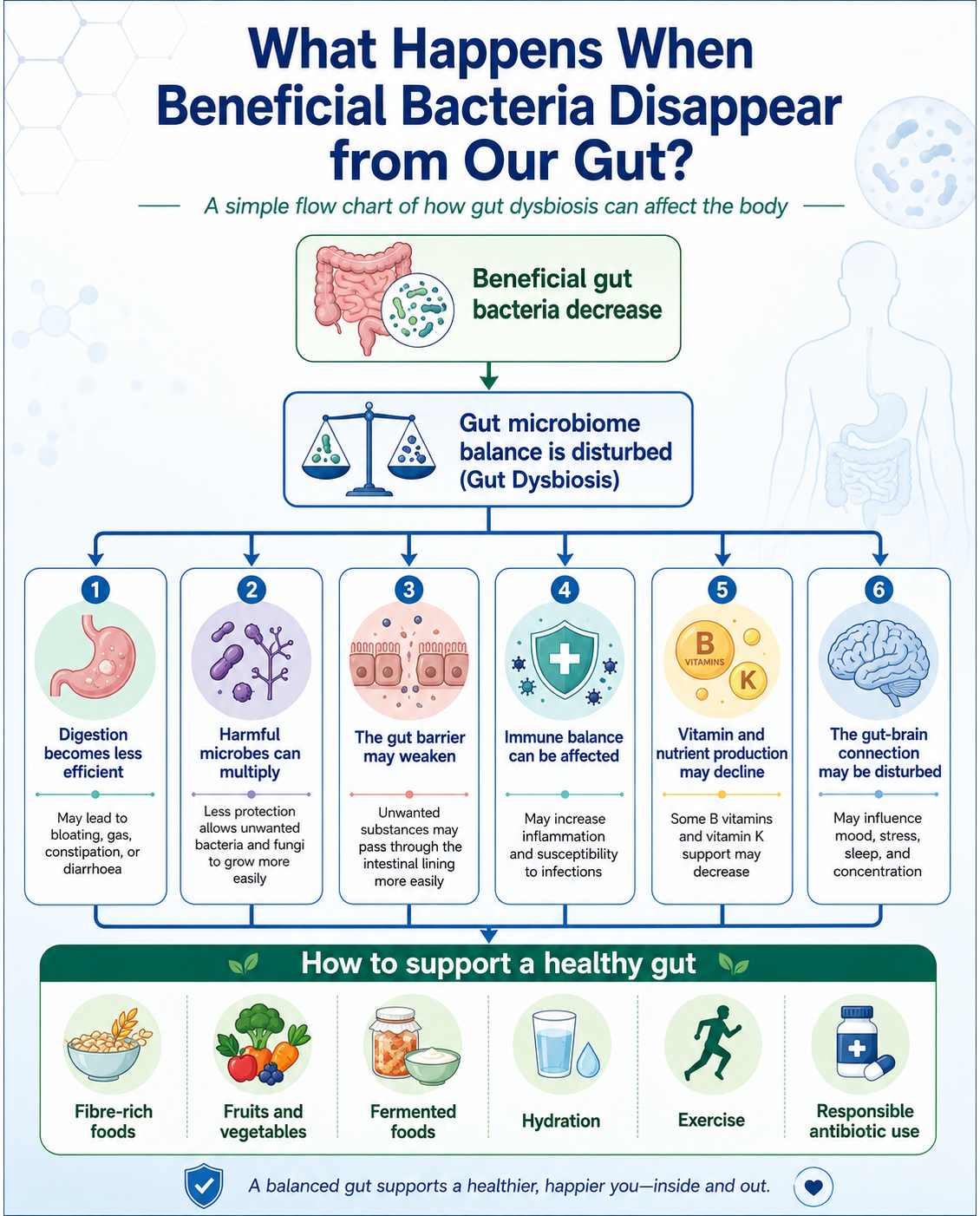
When beneficial bacteria decrease significantly, the balance of the gut microbiome may become disturbed. This condition is commonly referred to as gut dysbiosis.
>> Digestion Becomes Less Efficient
Beneficial bacteria help break down complex carbohydrates and dietary fibre that the body cannot digest independently. During this process, they produce short-chain fatty acids that support intestinal cells and maintain a healthy digestive system.
When these bacteria disappear, a person may experience bloating, gas, constipation, diarrhoea, or difficulty digesting certain foods.
>> Harmful Microorganisms Can Multiply
Beneficial bacteria compete with harmful microorganisms for nutrients and space inside the gut. They also produce substances that limit the growth of potential pathogens.
When beneficial bacteria decline, harmful bacteria or fungi may multiply more easily. This can increase the risk of intestinal infections, inflammation, and digestive discomfort.
>> The Gut Barrier May Become Weaker
The intestinal lining acts as a protective barrier between the digestive tract and the bloodstream. Beneficial bacteria help maintain this barrier by supporting intestinal cells and regulating mucus production.
A disturbed gut microbiome may weaken the intestinal barrier, allowing bacterial components and unwanted substances to pass through more easily. This may contribute to inflammation within the body.
>> The Immune System Can Be Affected
A large portion of the immune system is closely connected to the gut. Beneficial bacteria help immune cells recognise harmful organisms while preventing unnecessary reactions to food and harmless microbes.
When the gut microbiome loses its balance, immune regulation may be affected. This has been associated with increased susceptibility to infections, allergies, inflammatory conditions, and certain autoimmune responses.
>> Vitamin and Nutrient Production May Decline
Some gut bacteria produce important nutrients, including certain B vitamins and vitamin K. They also support the absorption and metabolism of minerals and other dietary compounds.
A reduction in beneficial bacteria may therefore affect nutrient availability, particularly when combined with an unbalanced diet or digestive disorder.
>> The Gut–Brain Connection May Be Disturbed
The gut and brain communicate through nerves, hormones, immune signals, and microbial metabolites. This relationship is known as the gut–brain axis.
Changes in the gut microbiome may influence mood, stress responses, sleep, and cognitive function. Although research is still developing, gut dysbiosis has been associated with anxiety, low mood, fatigue, and difficulty concentrating.
>> What Causes Beneficial Bacteria to Decline?
Several factors can disturb the gut microbiome, including frequent or unnecessary antibiotic use, highly processed diets, low fibre intake, chronic stress, inadequate sleep, infections, excessive alcohol consumption, and long-term digestive disorders.
Antibiotics are particularly important because they may destroy beneficial bacteria along with disease-causing bacteria. Recovery of the microbiome can vary between individuals.
>> How Can We Support a Healthy Gut Microbiome?
A diverse, fibre-rich diet is one of the most effective ways to support beneficial gut bacteria. Vegetables, fruits, whole grains, legumes, nuts, seeds, and fermented foods provide nutrients that encourage microbial diversity.
Regular physical activity, sufficient sleep, stress management, adequate hydration, and responsible antibiotic use can also support gut health. Probiotic or prebiotic supplements may be helpful in selected situations, but they should be chosen based on individual health requirements.
>> A Balanced Gut Supports the Whole Body
Beneficial bacteria are not simply passive residents of the digestive system. They actively contribute to digestion, immunity, nutrient metabolism, intestinal protection, and communication with the brain.
When these microorganisms disappear, the effects may extend beyond the gut. Protecting microbial diversity through healthy food and lifestyle choices is therefore an important part of maintaining overall well-being.