

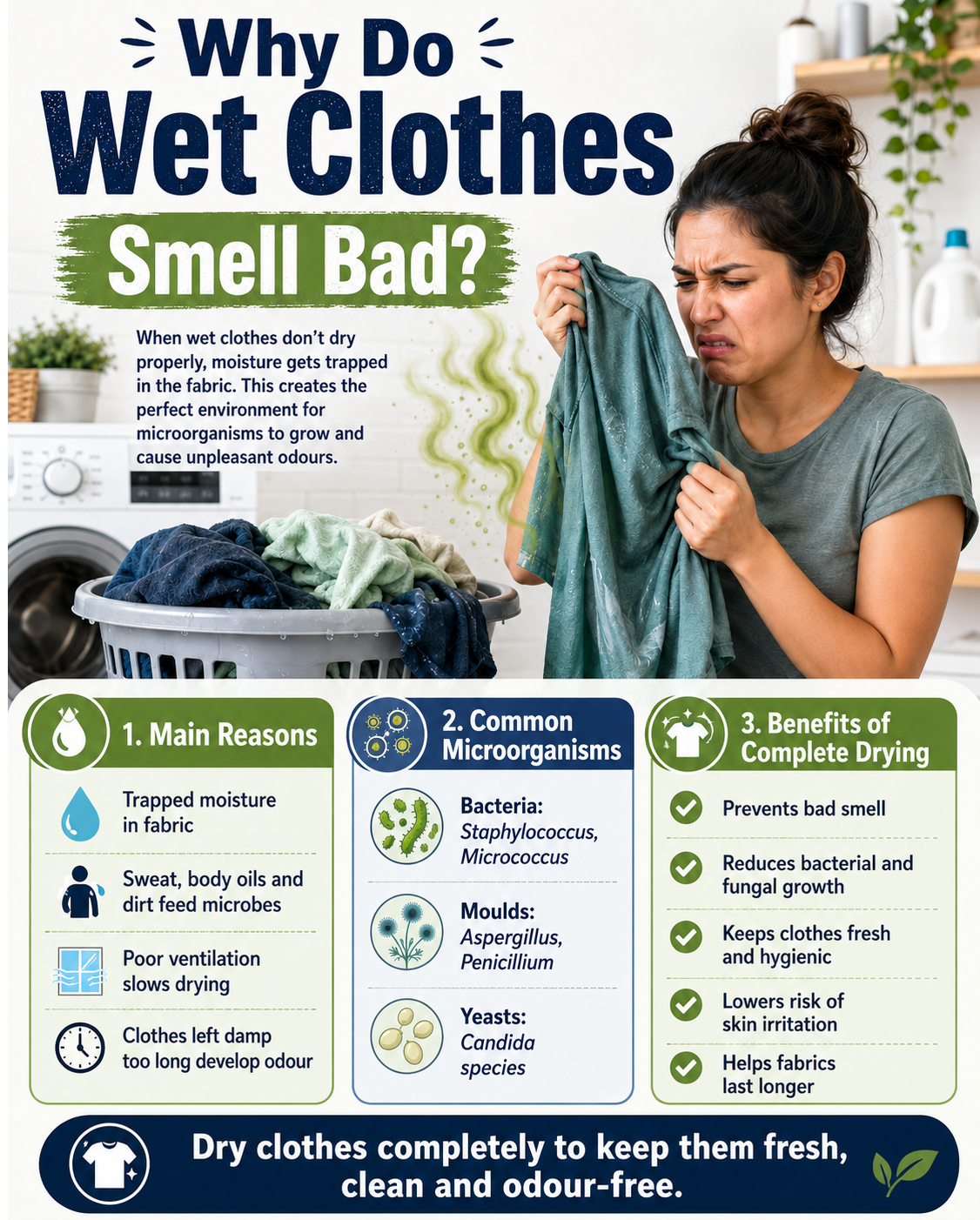
Wet clothes often develop an unpleasant, musty smell when they remain damp for too long. The smell is not caused by water itself. It is mainly produced by microorganisms that grow on the fabric under warm and moist conditions.
>> Moisture Creates the Perfect Environment for Microbes
Clothes naturally carry small amounts of bacteria, fungi and yeast from the skin, sweat, air and surrounding surfaces. When clothes become wet and are not dried quickly, the trapped moisture provides an ideal environment for these microorganisms to multiply.
Warm temperatures, poor ventilation and tightly packed clothes further encourage microbial growth.
>> Sweat and Dirt Act as Food Sources
Sweat contains salts, oils, proteins and other organic substances. Clothes may also carry dead skin cells, food particles and environmental dirt.
Microorganisms break down these substances and release volatile compounds. These compounds are responsible for the sour, musty or unpleasant smell commonly noticed in damp clothes.
>> Why Clothes Smell Even After Washing
Freshly washed clothes can also develop a bad smell when they are left inside the washing machine for several hours. Although washing removes much of the dirt, some microorganisms may remain in the fabric or inside the washing machine.
A damp washing machine drum, detergent compartment or rubber seal can support bacterial and fungal growth. These microbes may then transfer back onto the clothes.
>> Why Some Fabrics Smell More Than Others
Synthetic fabrics such as polyester often retain body oils and odour-producing compounds more strongly than natural fibres. They may therefore develop or hold unpleasant smells even after washing.
Cotton absorbs more water and may take longer to dry, which can also increase the chances of microbial growth when drying conditions are poor.
>> Is the Smell Harmful?
A mild musty smell is usually a sign that microorganisms have grown on the fabric. In most cases, it does not cause serious health problems. However, heavily contaminated clothes may irritate sensitive skin or trigger allergies in some individuals.
People with asthma, fungal allergies or weakened immunity should avoid wearing clothes that smell mouldy or have visible fungal growth.
>> How to Prevent Bad Smell in Wet Clothes
Wet clothes should be dried as soon as possible in a well-ventilated area. Clothes should not be left in washing machines, buckets, gym bags or closed baskets for long periods.
Using the correct amount of detergent, avoiding overloading the washing machine and cleaning the washing machine regularly can also help reduce microbial buildup. Sunlight and proper airflow are especially useful because they speed up drying and limit microbial growth.
>> What to Do If Clothes Already Smell Bad
Smelly clothes should be washed again and dried completely. Warm water may be used when permitted by the fabric care label. The washing machine should also be cleaned if the smell repeatedly returns after washing.
Persistent odour may indicate that microorganisms and body oils remain trapped within the fibres. In such cases, soaking the clothes with a suitable laundry sanitiser or odour-removing product may improve the result.
>> Conclusion
Wet clothes develop a bad smell mainly because moisture allows bacteria, fungi and yeast to grow on sweat, oils and dirt present in the fabric. Quick drying, proper washing and regular washing-machine cleaning are the most effective ways to keep clothes fresh and prevent unpleasant odours.